
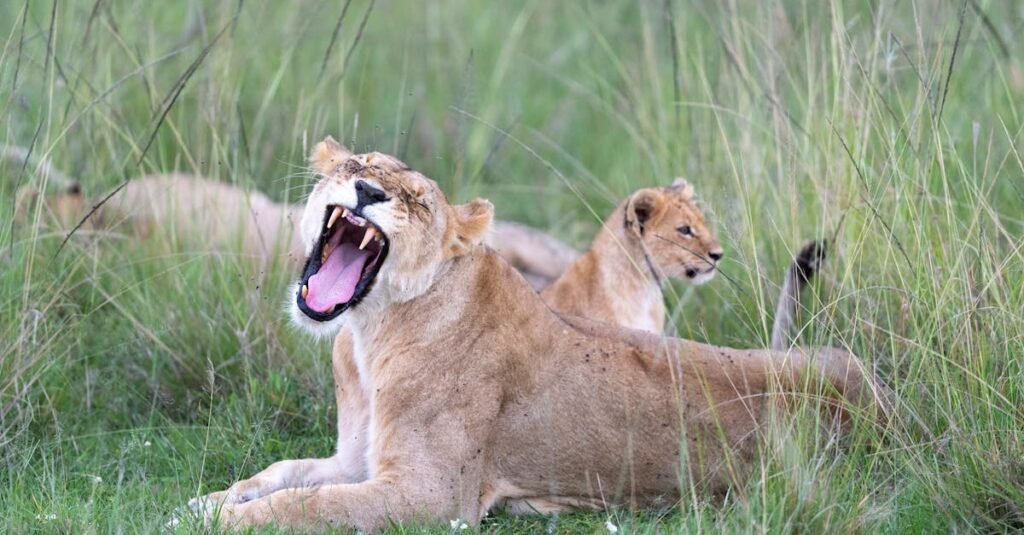
You’re bumping along a dusty track at sunrise, the cool air stinging your cheeks just a little. A lion’s roar rolls across the savannah, low and distant, and your guide quietly kills the engine.
The world goes still, a herd of elephants silhouettes against a pink sky, and you realize you’re finally here: on safari in Kenya.
An African safari in Kenya isn’t just a “bucket list” box to tick. It’s one of those rare trips that can shift how you see the world, nature, communities, and even your own pace of life. This guide walks you through everything: where to go, when to go, what it really costs, how many days you need, and how to do it all in a way that feels both magical and responsible.
Why Kenya Is The Classic African Safari Destination
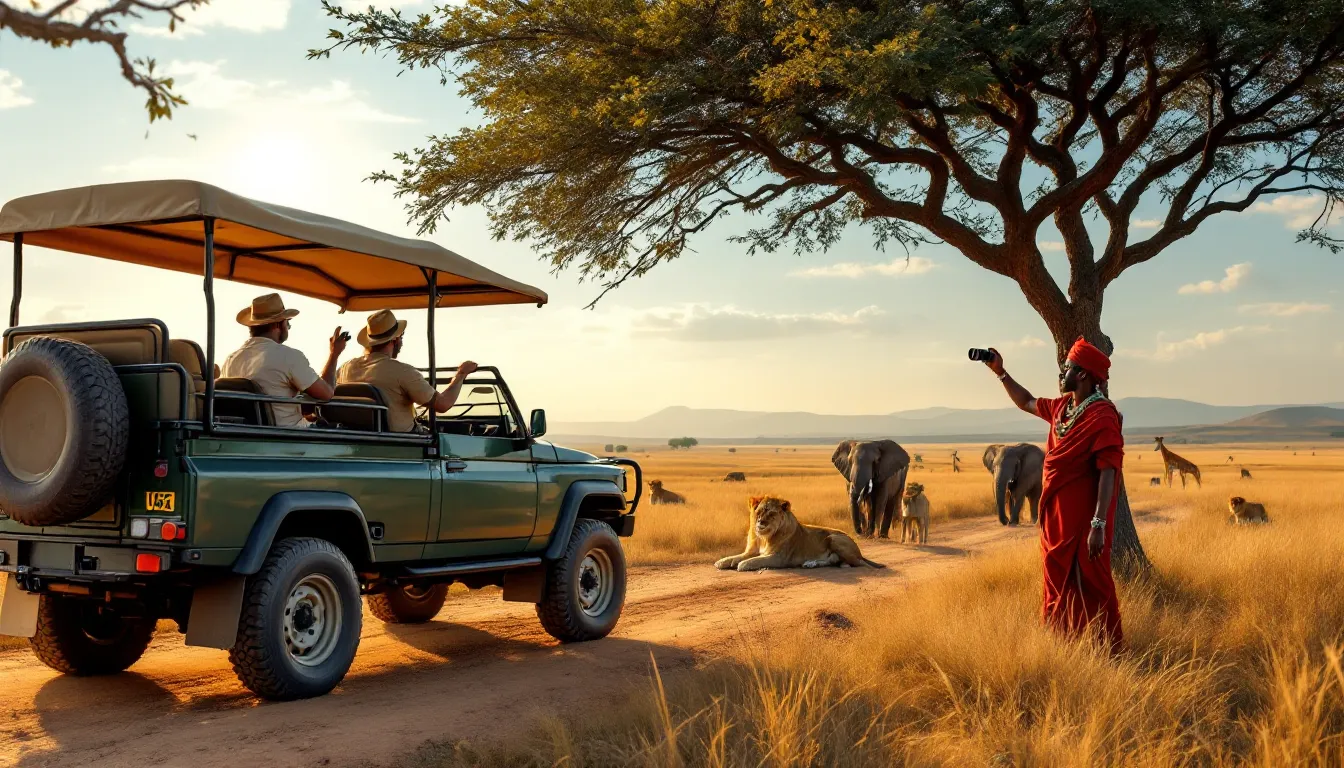
If you close your eyes and picture “safari,” odds are you’re imagining Kenya, rolling golden plains, acacia trees, big cats lounging in the shade, a lone giraffe on the horizon. There’s a reason for that.
Kenya has been at the heart of East African safari travel for decades. The country combines:
- Big Five wildlife (lion, leopard, rhino, elephant, buffalo) in multiple parks
- Diverse landscapes, from savannah and soda lakes to volcanic hills and coastline
- Well-managed national parks and private conservancies with experienced guides
- Strong conservation and community tourism efforts, especially in places like Laikipia and the Masai Mara conservancies
For you as a traveler, that means you can craft the experience you actually want: a shoestring group camping safari, a mid-range tented camp with hot showers and good coffee, or a once-in-a-lifetime luxury lodge where your stay directly funds conservation.
And because Kenya’s parks are relatively open landscapes (fewer dense forests, more wide plains), wildlife viewing is excellent year-round, you’re not just relying on one short season to have good sightings.
Best Time Of Year To Visit For Safari
You can plan an African safari in Kenya almost any month of the year, but your experience will change a bit with the seasons.
July–October: Peak season & the Great Migration
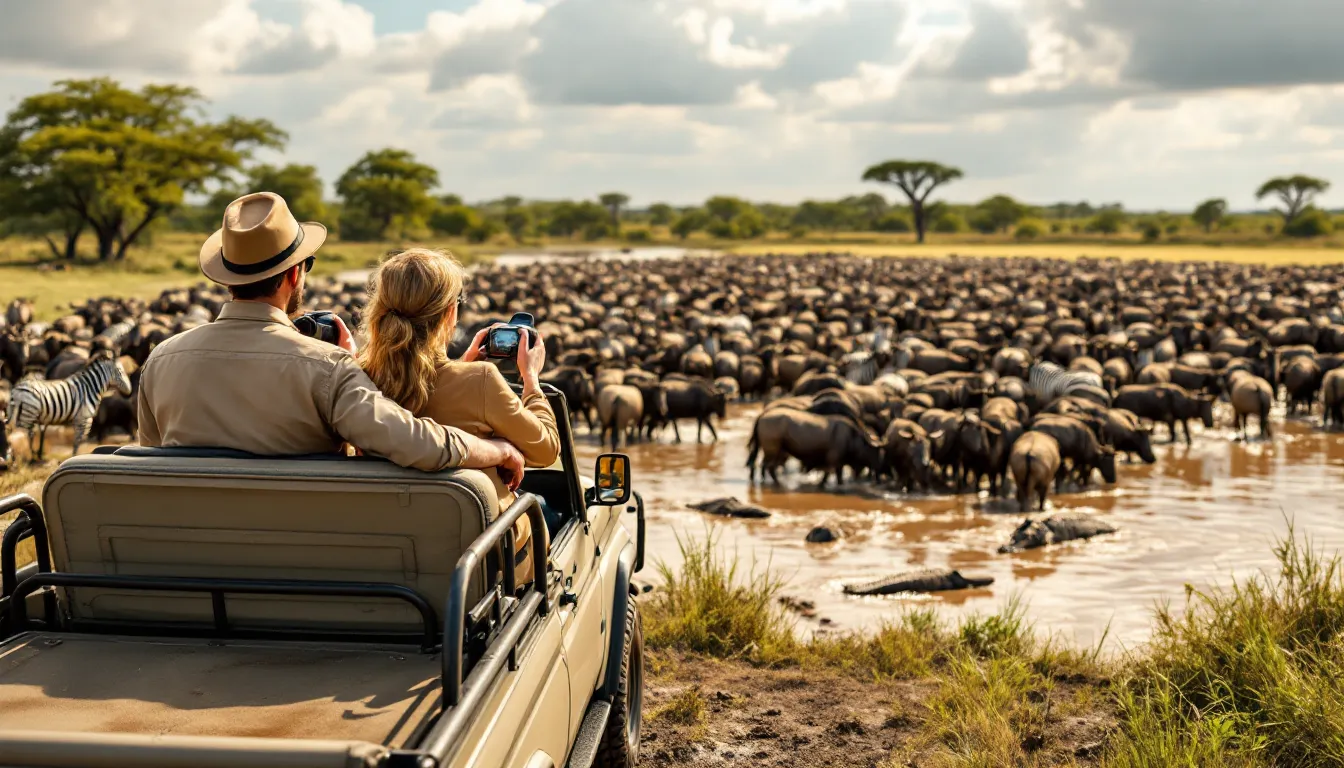
If you’ve seen photos of wildebeest pouring across rivers with crocodiles lurking below, that’s the Great Migration in and around the Masai Mara. While the exact timing varies year to year, the Mara usually sees huge herds from around July through October.
- Pros: Spectacular wildlife density, relatively dry weather, good visibility.
- Cons: Higher prices, more vehicles at sightings, camps book out early.
January–March: Calving, green landscapes & fewer crowds
After the short rains, landscapes are lush, and many animals are giving birth.
- Pros: Great for photography (green backdrop), predator action (they follow the babies), fewer tourists than July–Oct.
- Cons: Some showers, humidity can be higher.
April–June & November: Rains and value
These are typically the wetter months (long rains April–June, short rains around November), but that doesn’t mean “bad”, just different.
- Pros: Lower prices, quieter parks, dramatic skies.
- Cons: Some roads can get muddy, occasional disruptions, not ideal for those who dislike rain.
If this is your first-ever Kenyan safari and you’re dreaming of the Migration, aim for August or early September. If you prefer softer light, lush scenery, and fewer people, you might love late January–February or early June, when there are often shoulder-season deals.
Where To Go: Kenya’s Top Safari Regions
Kenya is bigger than it looks on the map, and trying to “do it all” in one trip is the fastest route to burnout. Instead, pick 2–3 regions that match your style.
Masai Mara: Big Cats, The Migration, And Endless Plains
If you only choose one place for your African safari in Kenya, make it the Masai Mara.
- Why go: Big cats, classic savannah scenery, and (seasonally) the Great Migration.
- What it feels like: Sunrise over golden grasslands, cheetahs on termite mounds, hot-air balloons drifting overhead.
You’ll likely base yourself in a lodge or tented camp either inside the national reserve or in one of the private conservancies bordering it. Conservancies often offer:
- Fewer vehicles and more exclusive sightings
- Possibilities for night drives and walking safaris (not allowed in the main reserve)
- Direct support to local Maasai landowners
Give yourself at least 3 nights here, two full days of game drives is the minimum to really settle into the rhythm.
Amboseli: Iconic Elephants With Mount Kilimanjaro Views
Amboseli is the park you’ve seen on postcards: elephants crossing dusty plains with a snow-capped Mount Kilimanjaro in the background.
- Best for: Elephant lovers, photographers, and anyone who wants those classic Kili vistas.
- Vibe: Wide salt pans, swamps filled with birdlife, and big herds of elephants often wandering surprisingly close to your vehicle.
Amboseli works great as a 2–3 night add-on to Masai Mara or as part of a southern-circuit itinerary that might include Tsavo.
Laikipia And Lewa: Conservancies, Walking Safaris, And Community Tourism
Head north from Nairobi and you’ll hit Laikipia, a highland region of private and community conservancies, with places like Lewa Wildlife Conservancy at its heart.
- Why it’s special:
- More exclusive, low-density tourism (fewer vehicles, more space)
- Chances to see northern “specials” like reticulated giraffe and Grevy’s zebra
- Strong emphasis on community-owned tourism and conservation
- Activities: Walking safaris, horse riding, night drives, visits to local community projects.
Laikipia is perfect if you want your trip to feel more immersive and off-grid rather than strictly “big-ticket sightings.” It pairs beautifully with a few days in the Mara.
Tsavo And The Coast: Red Elephants And Beach + Safari Combos
If the idea of ending your trip with a swim in the Indian Ocean sounds ideal, look at Tsavo East and Tsavo West, combined with the Kenyan coast (Diani, Watamu, or Malindi).
- Tsavo East: Famous for its red-dusted elephants that roll in the iron-rich soil.
- Tsavo West: More varied landscapes, volcanic hills, lava flows, and natural springs.
- The Coast: White-sand beaches, swaying palms, Swahili culture, fresh seafood, and laid-back guesthouses.
You can often take the SGR train or a short flight between Nairobi, Tsavo, and the coast, making this a great option if you want a safari + beach holiday in one trip.
How Many Days You Really Need (Sample 5–10 Day Itineraries)
You don’t have to disappear for three weeks to have a powerful safari experience. With some smart planning, 6–10 days is a sweet spot.
6–8 days: The classic highlights
If you’re short on time but want the essentials:
- Day 1: Arrive Nairobi, overnight (shake off jet lag, maybe dinner at a local spot in Karen or Westlands).
- Days 2–4: Masai Mara (3 nights).
- Days 5–6: Lake Nakuru or Naivasha (2 nights) for rhinos, flamingoes (when present), and boating on the lake.
- Day 7–8 (optional): Amboseli (2 nights) for elephants and Kilimanjaro views.
Many group trips bundle versions of this, with 5-day packages from around $999 and 7-day overland safaris starting roughly from $2,000–$2,300, depending on season and comfort.
5 days: Short but intense
If you can only carve out a week off work door-to-door, try something like:
- 1 night Nairobi
- 3 nights Masai Mara
- 1 night Lake Nakuru or Naivasha
You’ll be tired but happy, it’s a strong first taste of African safari in Kenya.
10 days: Northern + southern circuits
If you have a bit more freedom, 10 days lets you slow down:
- Days 1–2: Nairobi (optional day trips to Nairobi National Park or museums).
- Days 3–5: Masai Mara (3 nights).
- Days 6–7: Laikipia / Lewa (2 nights).
- Days 8–10: Amboseli or Tsavo + coast (3 nights).
This kind of itinerary balances intense game viewing with at least a couple of slower days, which your body (and nervous system) will thank you for.
Choosing Your Safari Style: Budget, Mid-Range, Or Splurge
Your safari style is less about your income and more about how you like to travel. You can absolutely do an African safari in Kenya without blowing your savings, or use it as your big “treat yourself” trip of the decade.
Budget-Friendly Overland And Camp-Based Safaris
If you’re okay with a bit of dust and adventure, an overland or camping safari keeps costs low without sacrificing the wildlife.
- What it looks like: Shared vehicle, group of 6–8 travelers, dome tents or simple permanent tents, shared bathrooms.
- Approximate cost: 5-day group camping safaris can start from around $475–$800 (excluding international flights and some park fees).
- Who it suits: Solo travelers on a budget, younger adventurers, or anyone who’d rather save money for future trips.
Expect early mornings, simple but hearty meals, and long drives between parks. In return, you get campfire nights under the stars and a surprisingly strong bond with your group.
Comfortable Mid-Range Lodges And Tented Camps
This is the sweet spot for many travelers: you want comfort and hot showers, but you don’t need champagne on ice.
- What it looks like:
- En-suite rooms or spacious safari tents with proper beds
- Good food, often buffet or set menus
- Smaller camps like Lechada or Nyati in the Mara are common examples in this tier.
- Approximate cost: A 6–8 day mid-range safari often falls in the $1,500–$3,000+ range per person, depending on season and routing.
You still share vehicles (usually 4–6 guests per car), but the overall experience feels more relaxed: lodge bars, swimming pools, maybe Wi-Fi in the lounge.
Boutique And Luxury Stays With A Purpose
If you’re celebrating something big, a sabbatical, honeymoon, or “I quit my job and I’m finally doing this” moment, a few nights of high-end safari can be incredibly special.
- What it looks like:
- Intimate camps or lodges with fewer rooms
- Highly trained guides and trackers
- Beautifully designed spaces that open onto the bush
- Often, a strong conservation or community focus
- Cost ballpark: You can easily spend $500–$1,500+ per person per night at the top end.
Many luxury properties channel a portion of your stay directly into anti-poaching, education, or community health projects. If you can afford it, this is one of those splurges that doesn’t just feel good, it can also do good.
Practical Planning: Costs, Flights, Visas, And Safety
The romance of safari is in the lions and sunsets: the success of safari is in the logistics. Once you sort the basics, the whole trip gets easier.
Approximate Safari Costs And How To Save Money
For a 5–7 day safari (not including international flights), a rough range is:
- Budget camping/overland: From $475–$1,000
- Mid-range lodges/tented camps: Typically $1,200–$2,500+
- Higher-end/part luxury: $2,000–$4,000+
Ways to save without gutting the experience:
- Travel in shoulder seasons (June, early July, late October, February).
- Join a group departure instead of going fully private.
- Focus on fewer parks for longer instead of trying to hop all over.
- Use overland transfers instead of internal flights where it makes sense.
Getting There, Getting Around, And Park Fees
Most safaris start in Nairobi:
- Fly into: Jomo Kenyatta International Airport (NBO).
- From there, you can:
- Join an overland safari by 4x4 or minibus, or
- Take short internal flights (often 45–60 minutes) to bush airstrips near parks like the Mara, Amboseli, or Laikipia.
Park fees vary by park and whether you’re staying inside or outside. They’re often included in package prices, but for transparency, expect something like $60–$100 per person per day in major reserves.
If you’re piecing things together yourself, always confirm:
- Whether park fees are included in your nightly rate or billed separately.
- How many game drives per day are included.
- Transfer costs between Nairobi and the parks.
Health, Safety, And Travel Insurance Essentials
Kenya is a popular, well-trodden safari destination, and most trips are smooth, but you still want to be smart.
- Health:
- Speak with a travel clinic about recommended vaccines and malaria prophylaxis.
- Pack a small kit: painkillers, anti-diarrheal meds, rehydration salts, personal prescriptions.
- Safety:
- In cities, use reputable taxis or rideshare apps, and keep valuables low-key.
- In the bush, follow your guide’s instructions, don’t wander off at night or approach animals on foot unless it’s a guided walk.
- Insurance:
- Take out comprehensive travel insurance that covers medical evacuation, trip interruption, and lost baggage.
- Many lodges are remote: if anything happens, you’ll want coverage for an air evacuation to Nairobi.
A good operator or local agent is worth their weight in gold here. They’ll help you navigate visas (many nationalities can apply online), transfers, and the nitty-gritty that you don’t see on Instagram.
Cultural Connection And Traveling Responsibly
A safari isn’t just about animals, it’s about people too. If you’re craving more than a drive-by village visit, you can absolutely build real connection and responsible travel into your itinerary.
Meeting The Maasai And Other Local Communities Respectfully
In areas like the Masai Mara and Amboseli, you’ll see Maasai communities everywhere. In the north, you might meet Samburu communities with related but distinct traditions.
To keep your interactions respectful:
- Choose experiences that are community-led rather than staged photo ops.
- Ask before taking photos, especially of people, a smile and “Is it okay?” goes a long way.
- Be curious, but not intrusive. Ask about daily life, education, or grazing rights instead of only focusing on “traditional” dress.
Some conservancies are actually owned or co-managed by local communities, and your park fees support schools, clinics, and livelihoods. When possible, give your money to those structures rather than one-off souvenir stands rushing busloads of tourists.
Ethical Wildlife Viewing And Choosing Responsible Operators
One of the biggest ways you can travel responsibly on an African safari in Kenya is by choosing who you go with.
Look for operators and camps that:
- Keep a reasonable distance from wildlife (no surrounding animals with multiple vehicles).
- Limit the number of vehicles at a sighting, especially with big cats.
- Avoid off-road driving in sensitive areas unless explicitly allowed.
- Support anti-poaching work, habitat restoration, or local employment.
As a guest, you can:
- Skip any facility offering interactions like petting lion or cheetah cubs.
- Keep noise low at sightings: let the animals set the tone.
- Follow the park rules even when others don’t, your guide should back you up on this.
Your presence, and your money, can either put pressure on ecosystems or help protect them. You have more power than you might think.
What To Pack For A Kenyan Safari (Without Overpacking)
It’s tempting to bring half your closet, but you’ll be happier with a lean, thoughtful safari bag.
Clothing basics:
- 2–3 light, neutral-colored shirts (olive, tan, gray)
- 1–2 pairs of lightweight trousers or safari pants
- 1 pair of comfortable shorts
- A warm layer (fleece or light down jacket), early mornings can be chilly
- A light rain jacket if traveling in or near rainy seasons
- Comfortable closed-toe shoes or trainers
Avoid bright white (shows dust) and very dark blue/black (can attract tsetse flies in some areas).
Gear & essentials:
- Binoculars, even a mid-range pair upgrades your experience massively.
- Camera or smartphone with enough storage and a power bank.
- Hat, sunglasses, and high-SPF sunscreen (the sun on the equator is strong).
- Refillable water bottle.
- Small daypack for game drives.
Documents & money:
- Passport with at least six months’ validity.
- Visa confirmation if applicable (often electronic).
- Travel insurance details.
- A mix of card + some cash (USD and Kenyan shillings).
Most mid-range and luxury camps offer laundry services, so you don’t need a fresh outfit for every single day. Think comfort, layers, and sun protection, you’re here for the experience, not a fashion shoot.