
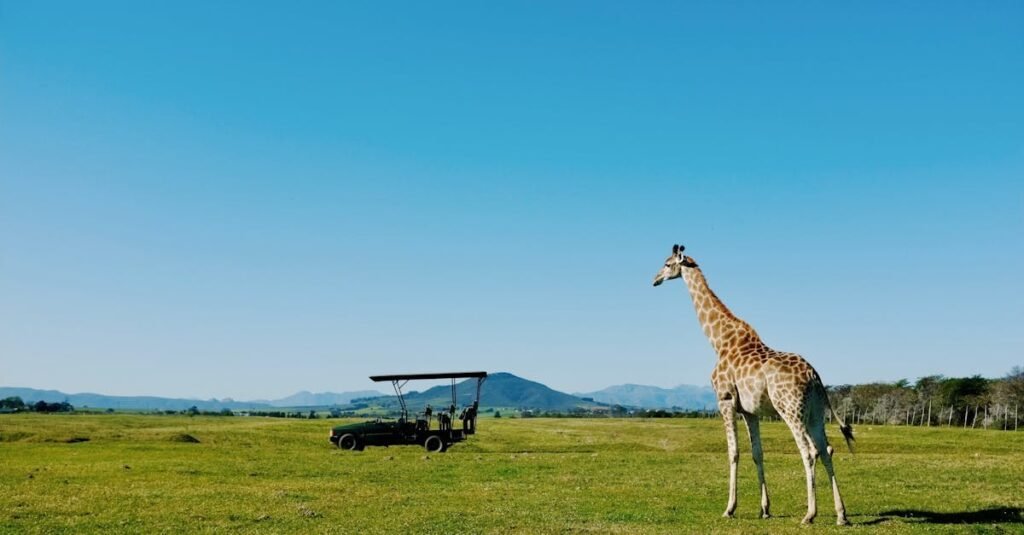
You wake up to the sound of distant lion calls and the soft clink of a mug being placed outside your tent.
Unzipping the canvas, you step into cool, golden dawn light. Somewhere in the papyrus reeds, a fish eagle cries. An elephant has left fresh tracks just beyond camp.
This is what a Botswana safari tour feels like at its best: wild, intimate, and surprisingly calm. It’s not about jeep traffic jams or rushing from sighting to sighting. Instead, you float through reed-lined channels in a mokoro canoe, watch elephants bathe in the Chobe River at sunset, and fall asleep under more stars than you knew existed.
If you’ve been dreaming of an African safari that’s both thrilling and ethical, fewer crowds, more wilderness, and real respect for wildlife, Botswana should be at the top of your list. Here’s how to plan a trip that fits your budget, your travel style, and your values.
Why Botswana Belongs On Your Safari Shortlist
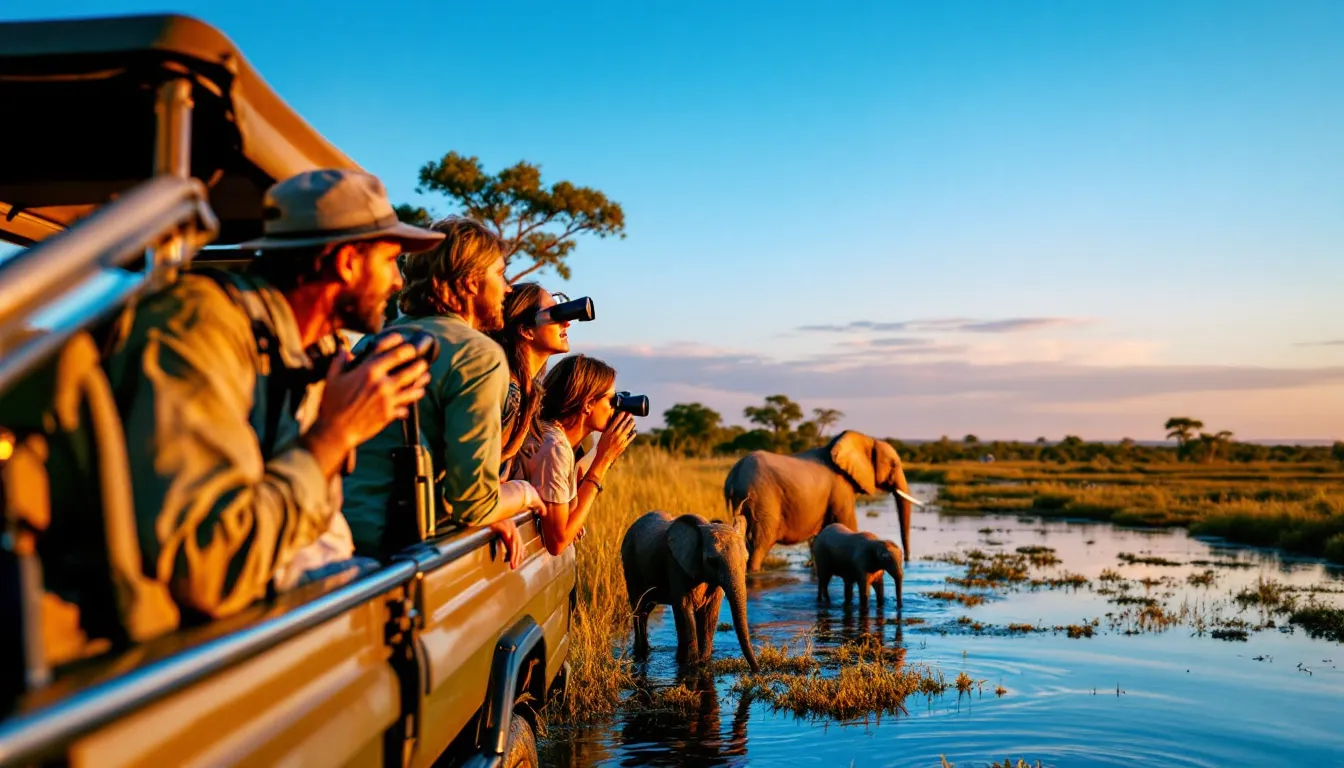
Botswana quietly does what many destinations only claim to do: it prioritizes wilderness over mass tourism. Safaris here are intentionally low-density, which means fewer vehicles around sightings and a much wilder, more immersive feel.
Low-Impact, High-Drama Wildlife Viewing
On a Botswana safari tour, you’re stepping into one of Africa’s most pristine, well-protected ecosystems. The country has a high-value, low-impact tourism model, camps are small, permits are limited, and large parts of the country remain true wilderness.
What that translates to for you:
- Fewer people, more wildlife – It’s common to spend hours on a game drive and see more elephants than other vehicles.
- Big-game drama without the circus – Predator sightings (lions, leopards, wild dogs) can unfold in near silence, without a ring of jeeps.
- Healthy ecosystems – Because visitor numbers are controlled, habitats in places like the Okavango Delta and Chobe National Park stay rich and resilient.
You’re not just ticking off the Big Five: you’re watching real, unscripted behavior. Wild dogs on the hunt. Elephants crossing deep channels in a line. Kingfishers hovering over crystal-clear water. It feels less like a zoo and more like you’ve slipped into another world.
What The Experience Actually Feels Like Day To Day
Safari days in Botswana have a gentle rhythm to them:
- Pre-dawn wake-up: A soft knock on your tent or room, coffee or tea delivered to your deck while the sky turns from indigo to pink.
- Morning game drive or mokoro outing: The coolest, most active time of day, cats are still moving, elephants are on the move, and the light is incredible for photography.
- Late breakfast / brunch back at camp: You swap sightings with other travelers, then rest during the heat of the day.
- Siesta + slow time: Reading on the deck, watching animals at the waterhole, maybe a quick dip in the plunge pool.
- Afternoon activity: Another game drive, a boat cruise on the Chobe River, or a mokoro paddle across mirrored channels.
- Sundowners: Gin and tonic or a cold beer balanced on the jeep hood while the sun drops behind acacia trees.
- Dinner under the stars: Stories around the fire, the Milky Way blazing, and sometimes the low grumble of lions somewhere in the dark.
It’s structured but never rushed. You might be up early, but you’re not doom-scrolling emails or running between meetings. You’re watching the sky, listening for bird calls, and slowly learning to read tracks in the dust.
If you’re a remote worker, this rhythm can feel strangely aligned with a healthier version of your normal life, focus in the early hours, rest mid-day, connection and reflection at night, just with elephants as your neighbors.
Best Regions And Safari Styles In Botswana
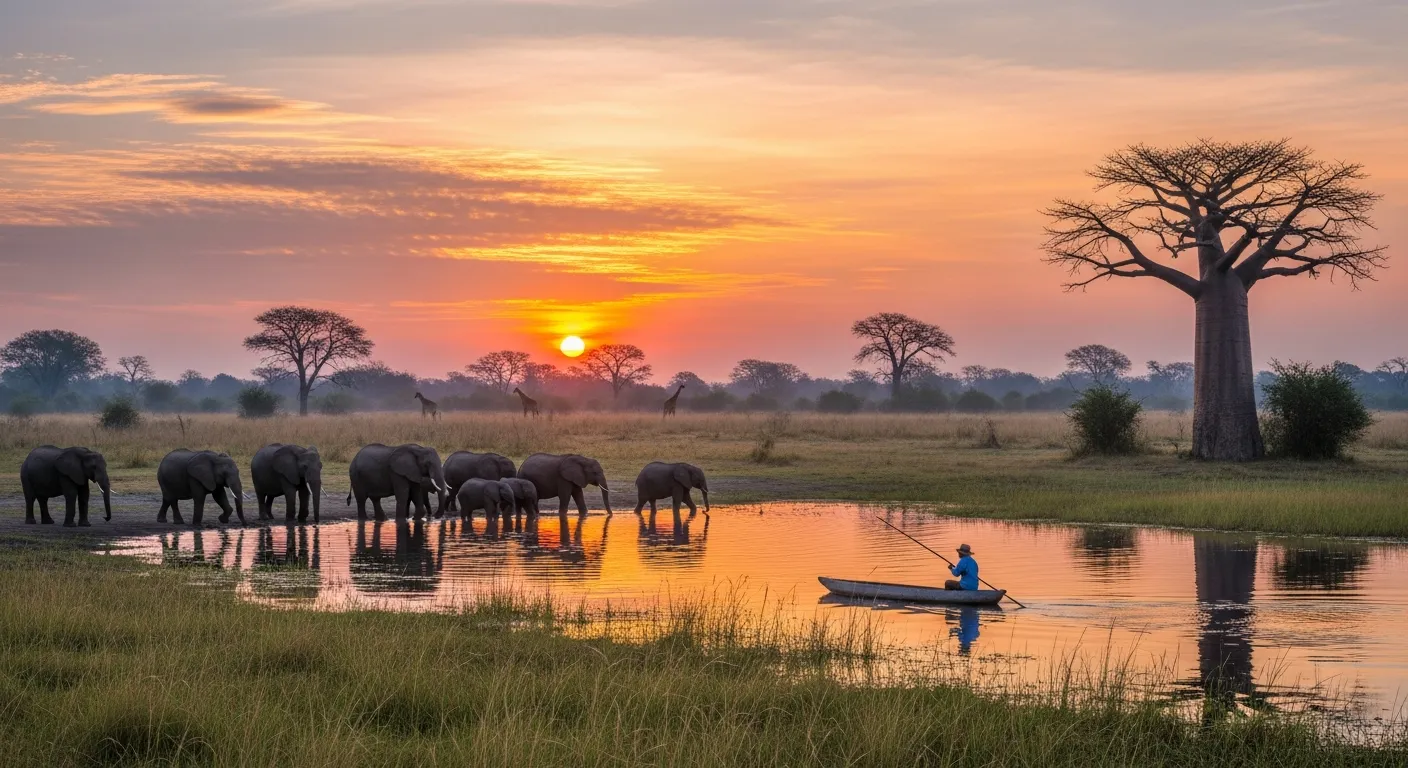
You don’t need to see every corner of Botswana for your trip to feel complete. A well-chosen combination of two or three regions will give you a surprising amount of variety.
Okavango Delta: Water Safaris, Mokoros, And Remote Camps
The Okavango Delta is often the star of a Botswana safari tour. It’s an inland delta where the Okavango River spills into the sands of the Kalahari, creating lagoons, channels, and floodplains teeming with life.
What you can expect:
- Mokoro rides through narrow channels, your guide poling silently as you glide past water lilies and reed frogs.
- Water-based safaris with hippos, crocs, and elephants crossing channels right in front of you.
- Remote camps reached by light aircraft, often with just a handful of tents.
Typical Okavango tours run 3–8 days, with budget wildcamping options starting around $999 for a few days, and more comfortable or luxury lodge stays going much higher.
Chobe National Park: Big Herds And Riverfront Game Viewing
If you want elephants in insane numbers, head to Chobe National Park. The Chobe Riverfront is famous for its huge herds that gather to drink and bathe, especially in the dry season.
Highlights:
- Boat cruises at sunset with elephants silhouetted on the banks.
- Big herds of buffalo and elephant, often together, plus plenty of plains game.
- Good chances to see predators working the riverfront, lions, hyenas, and sometimes leopards.
Chobe is great for 5–7 day trips and pairs well with a side-trip to Victoria Falls, just across the border in Zimbabwe or Zambia.
Moremi, Savuti, And Beyond: For Repeat Or Longer Trips
If you’ve done a safari before, or you want a slightly wilder, more off-the-grid feel, add Moremi Game Reserve or Savuti to your route.
- Moremi (within the larger Okavango system) offers a mix of woodland, floodplains, and islands. Think classic big-game drives, predator-rich areas, and a wilder vibe.
- Savuti, in southern Chobe, is known for its rugged landscapes and intense predator action. It’s a good choice for travelers who want a more remote feel and have a bit more time.
Longer mobile safaris through these areas, often around 8 days, tend to run in the $2,856–$3,650 range for mid-level comfort.
Choosing Between Lodge-Based, Mobile, And Self-Drive Safaris
Botswana doesn’t really do mass-market self-drive the way some other countries do. Distances are long, roads can be deep sand, and many areas are only accessible by 4×4 and local know-how.
Your main options:
- Lodge-based safaris
- You stay in permanent or semi-permanent camps with proper beds, en-suite bathrooms, and sometimes serious luxury (think $4,753+ for multi-day packages, going up to $10,000+ for ultra-lux experiences).
- Game drives and activities are included and led by expert local guides.
- Mobile or wildcamping safaris
- Guides move camp every few days, following wildlife and using remote campsites.
- Tents are simpler, but you’re right in the bush, closer to the sounds and stars.
- Start from around $999 for shorter trips: more comfortable, longer trips cost more.
- Self-drive (for experienced overlanders)
- Possible, but not recommended for first-timers unless you’re confident with 4×4 driving in remote terrain.
- You’ll need serious preparation, recovery gear, and up-to-date local info.
If it’s your first Botswana safari tour, a small-group mobile safari or a mid-range lodge-based itinerary usually strikes the best balance between comfort, cost, and true wilderness.
When To Go And How Long To Stay
Botswana changes dramatically with the seasons. You’re not just choosing dates, you’re choosing an entire mood for your safari.
Dry Season vs. Green Season: Pros And Trade-Offs
Dry Season (May–October)
- Best for wildlife viewing – Animals concentrate around remaining water sources, especially in Chobe and the Delta.
- Cooler, clearer weather – Crisp mornings, warm but not brutal afternoons.
- Higher prices – This is peak season, so camps and tours cost more and book out early.
Green Season (November–April)
- Cheaper rates – You can often find significant discounts on camps and tours.
- Lush landscapes and dramatic skies – Great for photography and birding: migrant birds are in full show-off mode.
- More unpredictable wildlife patterns – With more water around, animals disperse. You’ll still see plenty, but sightings might take more time.
If this is your once-in-a-decade safari and you want maximum big-game viewing, aim for June to October. If you’re budget-conscious or love birding and stormy, cinematic skies, the green season can be magical, and much better value.
How Many Days You Actually Need For A Botswana Safari
You can technically “do” a safari in 3–4 days, but you’ll likely feel rushed.
A sweet spot for most travelers is:
- 7 days if you’re combining Botswana with somewhere like Victoria Falls or Cape Town.
- 8–10 days if you want a more complete circuit: Okavango + Moremi/Savuti + Chobe.
Anything shorter than a week, and you’ll spend too much of your time in transit. Around 7–10 days gives you space for:
- A couple of days to adjust to the rhythm.
- Some slower moments in camp (that often become your core memories).
- Enough game drives and mokoro outings that you’re not stressed if one is quiet, because the next could be unforgettable.
Budgeting Your Botswana Safari Tour
Botswana has a reputation for being expensive, and it can be. But you have more control over costs than you might think if you choose timing and style carefully.
Approximate Costs: From Budget To Blowout
To give you a rough framework (per person, excluding international flights):
- Budget / entry-level
- Short 3-day wildcamping trips from around $999.
- Basic dome tents, shared facilities, simple but hearty food.
- Great guiding but minimal frills.
- Mid-range / classic mobile or lodge combo
- Around $2,856–$3,650 for about 8 days.
- Comfortable tented camps or simpler lodges, hot bucket showers, good meals, expert guides.
- The sweet spot for many travelers who want comfort without hyper-luxury.
- Luxury and high-end
- Expect $10,227+ for 6 days at top-end camps.
- Designer tents or suites, plunge pools, ultra-personalized service, sometimes flights between camps included.
Prices swing with season, green season deals can significantly reduce those numbers.
Where To Save And Where To Spend
Save on:
- Accommodation style – Opt for a well-run mobile safari or simpler tented camps instead of ultra-lux lodges. You’re here for the wildlife, not the thread count.
- Season – Travel in the shoulder or early green season for better rates and fewer people.
- Number of regions – Rather than hopping between four areas, pick two and stay longer in each. You’ll save on transfers and get more depth.
Spend on:
- Guides and operators – A great guide can completely transform your experience, spotting behavior and subtle details you’d miss.
- Flights between key hubs – Light aircraft transfers are often worth it in Botswana. You’ll save hours of rough driving and see the Delta from above.
- Travel insurance – Remote locations + wildlife + light aircraft = don’t skimp here.
Think of it this way: it’s better to do fewer days with a good operator than more days cutting corners on safety and guiding.
Sample 7–10 Day Botswana Safari Itinerary
Use this as a flexible template rather than a fixed rulebook. You can scale it up or down depending on budget and time.
Days 1–3: Arrive In Maun And Explore The Okavango Delta
- Day 1: Fly into Maun, the main safari hub. Meet your guide or transfer to a light aircraft for a scenic flight into the Okavango Delta. First game drive or boat outing in the afternoon.
- Day 2: Full day in the Delta. Morning mokoro trip through narrow channels, afternoon game drive on nearby islands. Look out for lechwe, hippos, elephants, and maybe a stealthy leopard.
- Day 3: Another day to soak in the water-based side of the safari. This extra day is when you stop feeling like a tourist and start feeling like you live here, at least a little.
If your budget is tighter, you might base yourself in or near Maun and join guided day trips to the Delta instead of staying in remote fly-in camps.
Days 4–6: Moremi Or Savuti For Classic Big-Game Drives
- Day 4: Travel overland or by light aircraft to Moremi Game Reserve or Savuti. Settle into camp: afternoon game drive.
- Day 5: Full-day game drive or two shorter drives. This is prime territory for predators, lions, hyenas, sometimes wild dogs, and big herds of buffalo and elephant.
- Day 6: Another day exploring different parts of the reserve. With each drive, you start to recognize individual trees, waterholes, and sometimes even the same pride of lions.
Moremi gives you a blend of woodland and floodplains, while Savuti feels drier and more dramatic. Both are powerful contrasts to the watery Delta.
Days 7–10: Chobe Riverfront And Optional Victoria Falls Add-On
- Day 7: Transfer to Chobe National Park, usually near the town of Kasane. Afternoon boat cruise on the Chobe River, watch elephants wade in to drink, hippos yawning, and crocodiles sunning on the banks.
- Day 8: Morning game drive along the riverfront, afternoon boat cruise or second drive. Chobe is where the sheer number of animals can blow your mind.
- Day 9–10 (Optional): Cross the border to visit Victoria Falls (Zimbabwe or Zambia side). You can walk viewpoints along the gorge, try activities like microlight flights, or just enjoy a slower pace in a river lodge.
If you only have 7–8 days, you can shorten this by spending two nights in Chobe and skipping Vic Falls, or saving it for another trip.
Practical Logistics: Visas, Transport, Safety, And Connectivity
A Botswana safari tour feels wild, but the logistics are more straightforward than you might think once you understand the basics.
Getting There And Around: Flights, Transfers, And Light Aircraft
From the U.S., you’ll typically:
- Fly to a major African hub (often Johannesburg or Cape Town).
- Connect onward to Maun (for Okavango/Moremi) or Kasane (for Chobe).
Within Botswana:
- Light aircraft transfers are common between Maun, Delta camps, and remote reserves. You’ll fly in small planes with strict luggage limits (often around 15kg / 33lbs in soft bags).
- Overland 4×4 transfers or mobile safaris connect regions like Maun–Moremi–Savuti–Chobe.
Factor these transfers into your budget, they’re part of what makes Botswana special, and the views from above the Delta are unreal.
Visas, Money, And Travel Insurance Basics
- Visas: Many nationalities (including most U.S. passport holders) can enter Botswana visa-free for short stays. Always double-check entry rules before you travel, as they can change.
- Currency: The local currency is the Botswana pula (BWP), but many safari operators quote prices in USD. Cards are usually fine in towns and lodges: cash is handy for tips and small purchases.
- Insurance: Make sure your travel insurance covers medical evacuation, especially since you’ll be spending time in remote areas and sometimes flying in small planes.
Safety, Health, And Staying Connected (For Remote Workers)
Botswana is generally considered safe and politically stable, with well-regulated parks.
Health & safety basics:
- Take standard malaria precautions, especially in wet or green seasons (talk to your doctor about prophylaxis).
- Drink safe, treated water (most reputable camps provide this).
- Listen carefully to your guides, especially around animals and at night in unfenced camps.
Connectivity:
- Many remote camps have no or limited Wi-Fi. Some higher-end lodges offer slow satellite internet in common areas.
- If you absolutely need to be connected, consider splitting your time between deep-wilderness camps (offline) and a couple of nights in Maun, Kasane, or a lodge with Wi-Fi before or after.
Think of your offline days as a digital reset. You’ll be surprised how quickly your brain adapts to tracking clouds instead of notifications.
What To Pack For A Botswana Safari Tour
Packing smart matters more here than packing a lot. Small planes and sandy tracks don’t care how many outfits you own.
Clothing And Gear That Actually Makes A Difference
Aim for neutral colors (khaki, olive, beige, gray) that blend into the environment.
Bring:
- 2–3 lightweight long-sleeve shirts (sun and bug protection).
- 2–3 pairs of breathable pants or travel trousers.
- 1 pair of shorts for hot midday hours in camp.
- A warm layer (fleece or light down jacket) for chilly morning drives, especially May–August.
- Comfortable closed shoes or light hiking shoes: sandals or flip-flops for camp.
- Wide-brim hat, sunglasses, and high-SPF sunscreen.
- A light rain jacket if you’re traveling in green season.
Useful extras:
- Headlamp (for walking around camp at night).
- Light scarf or buff (dust protection on drives, quick warmth in the morning).
- Soft-sided duffel bag to meet light aircraft luggage rules.
Camera, Tech, And Carry-On Essentials
You don’t need pro gear to capture incredible moments, but a few choices can level up your photos.
Consider packing:
- Camera with a zoom lens (something in the 100–400mm range is perfect) or a good bridge camera if you don’t want to change lenses.
- Extra batteries and memory cards, you may not be able to recharge as often as you think.
- Binoculars (even if your guide has a pair, having your own is a game-changer).
- A universal travel adapter and a small power strip if you have multiple devices.
In your carry-on, keep:
- Passport, printed or offline copies of key documents.
- A change of clothes and basic toiletries (bags do get delayed sometimes).
- Any essential medications, including malaria tablets if prescribed.
- A reusable water bottle.
Think lean, functional, and comfortable. You’ll wear the same favorites repeatedly, and you won’t care, because there’s an elephant in front of you.
Ethical And Sustainable Safari Choices
One of the best parts of choosing Botswana is that the country already leans toward low-impact safaris. You can take that a step further by being intentional about how and with whom you travel.
Respecting Wildlife And Local Communities
On safari, your presence always has an impact, even if you can’t see it. A few ground rules help keep that impact positive:
- Keep your distance – Trust your guide’s judgment on how close is too close. Harassing animals for a better photo stresses them out.
- Stay quiet at sightings – You’re in their space: loud voices and sudden movements matter.
- Follow camp guidelines – Don’t walk alone at night in unfenced camps, and don’t leave food out.
- Support local economies – Buy crafts from local artisans, tip fairly, and ask about projects your camp supports in nearby communities.
When communities benefit from tourism, they have a stronger incentive to help protect wildlife and wild spaces.
Choosing Responsible Operators And Camps
When you’re picking a Botswana safari tour, look for operators who:
- Run small-group tours rather than packing vehicles to the max.
- Limit the number of vehicles at a sighting.
- Hire and train local guides and staff, with fair wages.
- Use solar power, proper waste management, and low-impact camp design.
- Are transparent about where your money goes and any conservation/community partnerships.
Don’t be afraid to email and ask direct questions like:
- “How many guests per vehicle on game drives?”
- “Do you have a policy on vehicle numbers at sightings?”
- “What percentage of your staff are from local communities?”
A truly ethical operator will be proud to answer, and your trip will feel better knowing it’s contributing to keeping Botswana wild for the long run.