
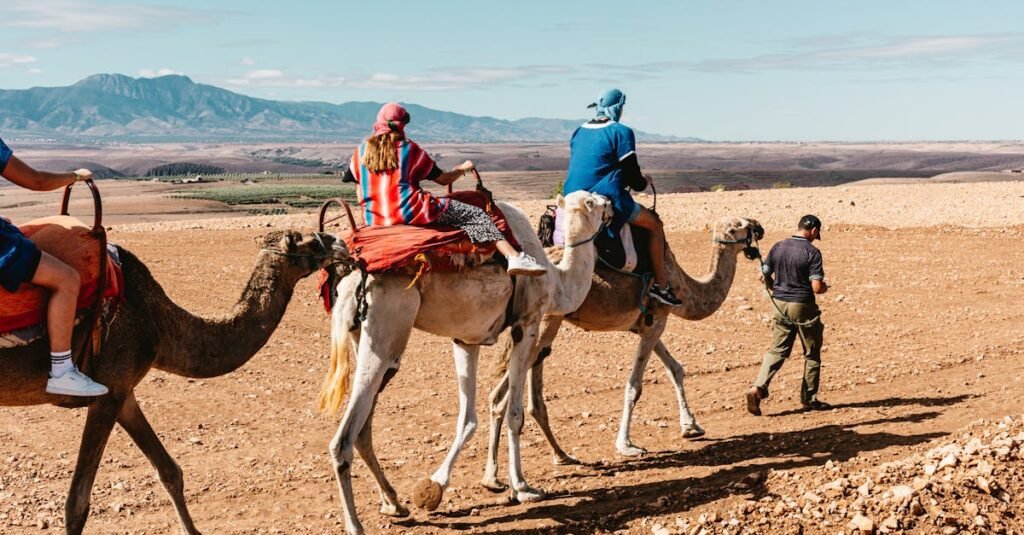
You probably already have a mental image of Morocco: terracotta cities glowing at sunset, mint tea poured from silver teapots, camels silhouetted against rolling dunes.
But what you might not realize yet is how deeply a trip here can shift the way you see travel, and even yourself.
Morocco is where slow, smoky street food stalls sit a few alleys away from glossy rooftop lounges: where you can wake up in a centuries-old riad and fall asleep under a sky thick with desert stars. It’s intense in the best way, full of color, sound, and human connection.
This guide is for you if you want your trip to Morocco to be more than a highlight reel of Instagram spots. You’ll get practical, no-nonsense advice (budget, safety, timing) blended with the kind of sensory details and context that help you travel with intention and respect.
Why Morocco Belongs On Your Travel List Right Now
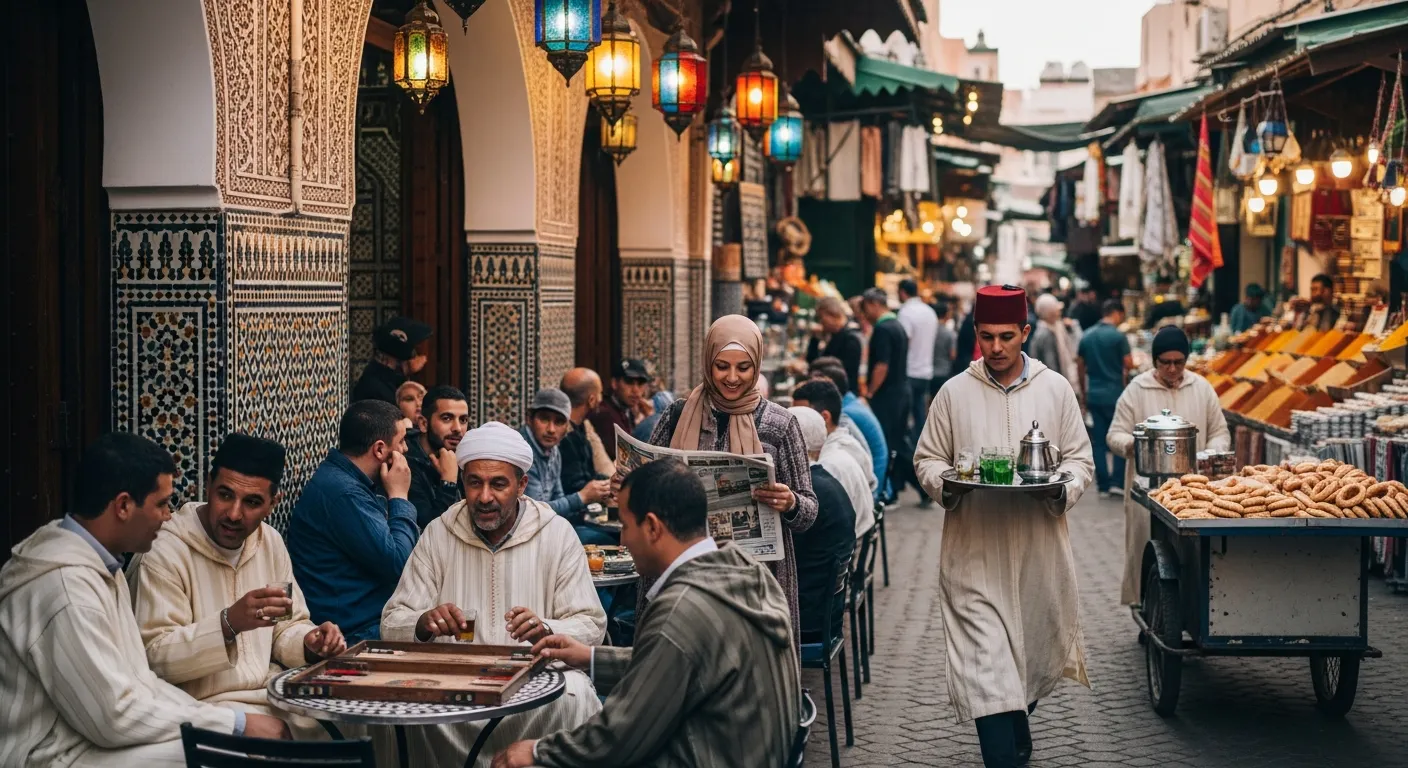
Morocco sits at the crossroads of Africa, the Arab world, and Europe, and you feel that blend everywhere. In one day, you might hear the call to prayer echo over a medieval medina, sip espresso in a French-style café, and haggle for a Berber rug woven in a mountain village.
Trips to Morocco work especially well if you’re craving variety without hopping between multiple countries. Within a single itinerary, you can stack:
- Historic imperial cities like Fes and Marrakech, with maze-like old quarters and centuries of scholarship, trade, and craftsmanship.
- Wild landscapes, from snow-dusted Atlas peaks to rose-colored valleys and the vast Sahara dunes.
- Easy coastal escapes like Essaouira, where Atlantic waves crash against 18th-century ramparts and seagulls wheel over blue fishing boats.
Beyond the visuals, Morocco also hits that sweet spot between accessible and adventurous. English is increasingly spoken in tourist areas, there’s solid tourism infrastructure, and you can choose your comfort level: backpacking between budget riads, or booking a private driver and luxury desert camp.
And there’s something else: Moroccans are, in general, incredibly warm and proud of their culture. Tea is offered constantly. Conversations stretch. When you’re willing to slow down, you’ll find yourself invited into workshops, living rooms, and stories that don’t show up on TikTok.
If you’re looking for a destination that keeps surprising you, from the spice-scented air of the souks to the quiet of a mountain village at dusk, Morocco more than delivers.
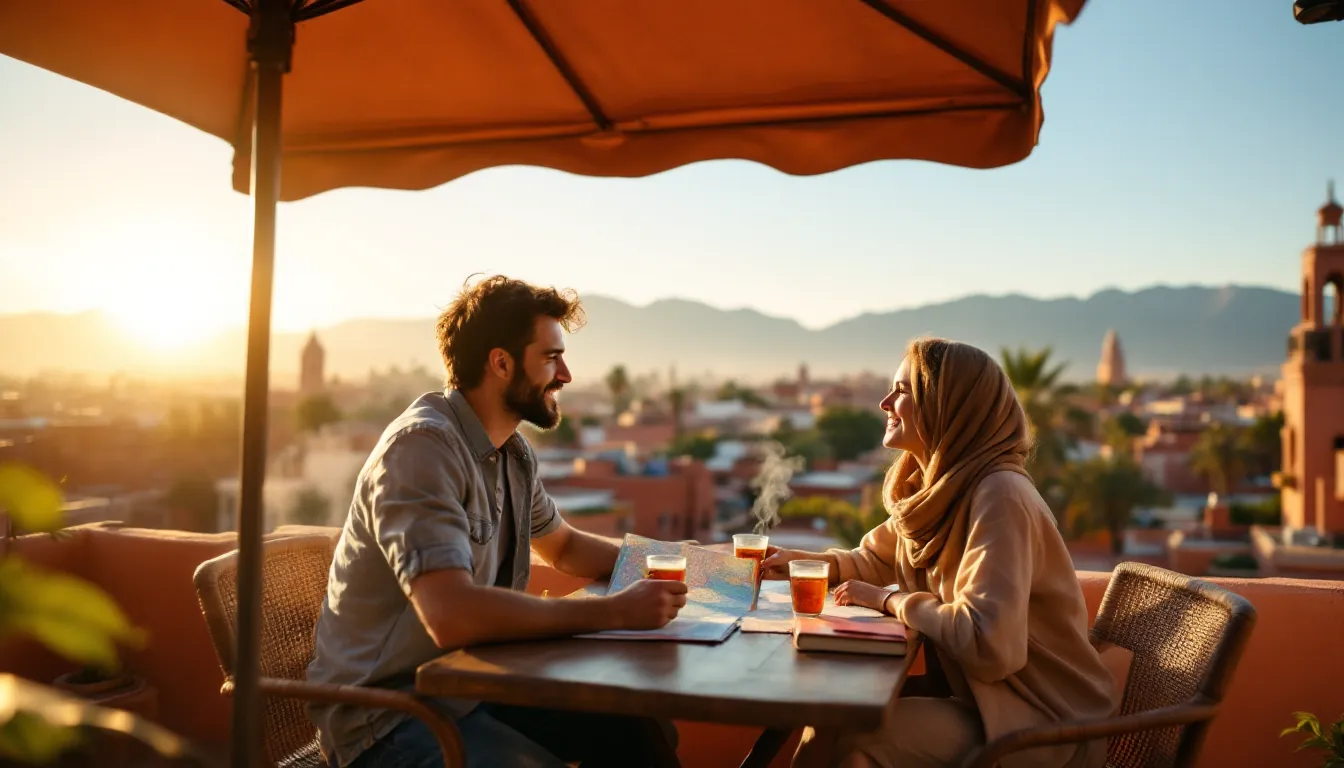
Best Time To Visit Morocco And How Long To Stay
You can plan trips to Morocco year-round, but your experience changes a lot with the seasons.
Best time to visit
- Spring (mid-March to May) – Warm days, cool nights, and blooming landscapes. Ideal for combining cities with the Sahara and the Atlas Mountains.
- Autumn (September to October) – Similar to spring: sunny, comfortable temps without the summer extremes. Great for classic first-time itineraries.
- Summer (June to August) – Hot in the interior and desert, but surprisingly pleasant on the Atlantic coast (Essaouira, Oualidia) and in higher mountain villages. If you’re heat-sensitive, lean into a coastal or mountain-focused trip.
- Winter (November to February) – Clear, often sunny days in the cities with chilly nights. You’ll see snow on the Atlas peaks and crisp desert skies full of stars. Pack layers: many traditional riads can feel cold inside.
If you’re flexible, spring and autumn are the sweet spot: fewer extremes, easier to move between regions, and good light for photography.
How long to stay
- 5–7 days: Enough for one city plus either the desert or the coast. Think: Marrakech + Sahara, or Casablanca–Fes–Chefchaouen.
- 8–12 days: The “Goldilocks” range for most travelers. You can do a proper loop: cities, one desert night, plus a coastal or mountain stop.
- 14–21 days: Perfect if you work remotely or prefer slow travel. You can linger in a couple of bases (say Fes, Marrakech, and Essaouira) and add side trips without rushing.
If you’re flying from the U.S., it’s worth aiming for at least 8–10 days so you’re not spending half your trip fighting jet lag and rushing between cities.
Top Regions To Visit On A Morocco Trip
Morocco isn’t just Marrakech. The magic lives in the contrasts between regions, so you’ll want to mix a few.
Casablanca: Modern gateway with Atlantic energy
Many flights land here, and while Casablanca isn’t usually a long-stay destination, it’s worth a day:
- Visit the Hassan II Mosque (one of the largest in the world), perched right over the ocean. Non-Muslim visitors can join guided tours.
- Stroll the Art Deco downtown, a glimpse into Morocco’s 20th-century history.
Fes: Medieval maze and cultural heart
If you love history and deep culture, Fes will probably be your favorite city:
- Wander Fes el-Bali, the car-free medieval medina, with its narrow alleys, hidden courtyards, and centuries-old madrasas.
- Visit the Chouara Tannery, where leather is still processed using age-old methods.
- Explore tiny workshops where artisans carve wood, hammer brass, or weave textiles.
Fes is often more affordable and less flashy than Marrakech, making it a great base if you’re budget-conscious and curious.
Marrakech: Iconic, intense, and surprisingly luxe
Marrakech is Morocco’s most famous city, and for a first trip, it’s an obvious anchor point:
- Jump into the Djemaa el-Fna square at night for street food, performers, snake charmers, and storytellers.
- Get lost in the souks, where you’ll find spices, lamps, woven baskets, ceramics, and way more.
- Take a breather at Jardin Majorelle and the adjoining Yves Saint Laurent Museum.
The city does “boutique luxury” very well, think photogenic riads, rooftop pools, and hammams.
Sahara Desert: Merzouga and Erg Chigaga
It’s a long drive from the cities, but a desert segment is what turns many trips to Morocco into life-long memories:
- Ride camels or 4×4s over golden dunes near Merzouga or the wilder Erg Chigaga.
- Sleep in a desert camp, from simple Berber tents to high-end glamping with hot showers and plush beds.
- Watch the sky explode with stars: the silence out here is its own kind of therapy.
Coastal Towns: Essaouira and beyond
If you’re a beach or surf person, or you just need a slower rhythm, add the coast:
- Essaouira: A breezy, artsy port town with white-and-blue medina walls, relaxed cafés, and consistent wind (great for kite- and wind-surfing).
- Oualidia: Smaller and calmer, set on a protected lagoon that’s perfect for paddleboarding and fresh oysters.
Atlas Mountains & Berber Villages
For hikes, cool air, and village life:
- Base yourself in Imlil for treks around Mount Toubkal and gentle village walks.
- Visit Berber villages to learn about traditional agriculture and crafts.
Extra gems to consider
- Chefchaouen: The famous “blue city” tucked into the Rif Mountains, dreamy for photographers and slow wanderers.
- Aït Benhaddou: A UNESCO-listed ksar (fortified village) used as a backdrop in countless films.
- Dades Valley / Valley of Roses: Switchback roads, red rock canyons, and springtime rose harvests.
Classic Morocco Itineraries For Different Travel Styles
To make all this more concrete, here are a few ways you might structure your trip, depending on your style.
7–9 days: First-time highlight reel
Good for: Your first trip to Morocco, limited vacation days.
Sample route:
- Days 1–3: Marrakech – Arrive, settle into a riad, explore Djemaa el-Fna and the souks, visit Jardin Majorelle, book a hammam.
- Days 4–5: Sahara desert (Merzouga) – Join a 2–3 day group or private tour across the High Atlas, stopping at Aït Benhaddou and the Dades or Todra Gorges, then sleeping one night in a desert camp.
- Days 6–7: Back to Marrakech – Final shopping, cooking class, or a day trip to the nearby Atlas foothills.
10–12 days: Cities + desert + coast
Good for: You want variety, but still a manageable pace.
Sample route:
- Days 1–2: Casablanca – Land, visit Hassan II Mosque, adjust to the time zone.
- Days 3–5: Fes – Train to Fes: jump into the medina, tanneries, and artisan quarters.
- Days 6–7: Sahara desert – Transfer via Midelt or the Ziz Valley: one night in a camp.
- Days 8–9: Marrakech – City highlights, rooftop dinners.
- Days 10–12: Essaouira – Bus or private transfer to the coast for a softer landing before flying out (often via Marrakech or Casablanca).
14+ days: Slow, immersive circuit
Good for: Remote workers, long-term travelers, or anyone who hates rushing.
Ideas:
- Use Fes and Marrakech as extended bases (4–5 nights each), with day trips into nearby towns and villages.
- Spend a few nights in Imlil in the Atlas Mountains and a few in Essaouira.
- Skip internal flights and rely mostly on trains and buses, giving you time to journal, work, or just watch the landscape slide by.
Whatever route you pick, build in at least one “no-plan“ day in each major stop. That’s when you’ll discover your favorite café, a hidden courtyard, or a conversation that reshapes your trip.
Budget, Costs, And Where To Save Vs. Splurge
Trips to Morocco can be surprisingly affordable, especially compared with Western Europe, but you can also dial things up when you want a little luxury.
Rough daily budgets (excluding flights)
- Budget traveler: $35–$60/day
- Dorms or basic guesthouses, local eateries, public buses, minimal paid tours.
- Mid-range traveler: $70–$140/day
- Comfortable riads, a mix of street food and sit-down restaurants, some guided tours and transfers.
- Comfort / boutique: $150–$300+/day
- High-end riads, private drivers, luxury desert camps, spa days.
Where to save
- Accommodation in less touristy cities: Fes generally offers better value than Marrakech at similar quality.
- Food: Street food and simple local restaurants are both excellent and cheap. Think $2–$5 for a filling tagine or couscous in non-touristy spots.
- Transport: Trains and intercity buses (CTM, Supratours) are clean and affordable. Shared taxis can also keep costs down for shorter hops.
Where to splurge
- Desert experience: If you’re going to allocate money anywhere, make it your Sahara camp. A good camp means better guides, fewer crowds, safer camels/vehicles, and a more comfortable night.
- Guided medina/souk tour: In Fes or Marrakech, a local guide can help you understand the history, avoid scams, and find artisan workshops you’d never stumble into on your own.
- Wellness & views: A hammam treatment, rooftop dinner, or spa day in a riad with a killer terrace is worth every dollar after a few intense days in the medina.
If your budget is tight, aim for simple sleeps + standout experiences, rather than trying to make everything mid-range and cutting out the truly memorable stuff.
Logistics: Visas, Trains, Safety, And Staying Connected
Visas and entry
For U.S. citizens, Morocco has historically allowed visa-free stays for short visits (usually up to 90 days), but rules can change. Before you book, double-check:
- The official Moroccan government or consulate website
- Your airline’s travel requirements page
Make sure your passport is valid for at least six months beyond your travel dates.
Getting around: trains, buses, and tours
Morocco’s intercity transport is generally straightforward:
- Trains: Comfortable and efficient between big cities like Casablanca, Rabat, Fes, and Marrakech.
- Intercity buses: CTM and Supratours are the most popular options for routes where trains don’t go.
- Desert segments: Usually easiest via organized tours (group or private) that include transport, guiding, and accommodation.
For more flexibility, you can hire a private driver for a few days, especially in the desert and mountain areas.
Safety basics
Morocco is considered relatively safe for travelers, including solo visitors, but it’s still a big, complex country. A few tips:
- In busy medinas, pickpocketing and petty scams are more common than violent crime. Keep valuables secure and be cautious with your phone.
- Expect some level of touts and over-eager sellers. A firm but polite “la, shukran“ (no, thank you) goes a long way.
- At night, stick to well-lit, busier streets: ask your riad which routes they recommend.
Travel insurance is a good idea, especially if you’re heading to the mountains or desert.
Staying connected
- Pick up a local SIM card on arrival (e.g., Maroc Telecom, Orange). Data is generally cheap.
- Wi‑Fi is common in riads, cafés, and coworking spaces in major cities, though speeds can fluctuate.
If you’re working remotely, plan your heaviest calls or uploads for Casablanca, Rabat, Marrakech, or Fes, where infrastructure tends to be stronger, and treat the desert and smaller towns as more “offline-friendly“ days.
Essential Cultural Experiences You Should Not Miss
Beyond the big sights, the memories that stay with you are often small, human moments. As you plan your trip to Morocco, make space for these experiences.
Get lost in a medina (with and without a guide)
- Guided: In Fes or Marrakech, start with a local guide who can decode what you’re seeing, from the symbolism on a doorway to the stories behind different guilds of artisans.
- Solo: Later, wander on your own. Turn down side alleys, follow the smell of fresh bread to a communal oven, sit for tea where the locals are.
Watch centuries-old craftsmanship up close
- Visit the Chouara Tannery in Fes and watch workers treat and dye leather using techniques passed down for generations.
- Seek out small workshops where artisans carve cedar wood, weave carpets, or paint ceramics. Buying directly from these spaces keeps more money in local hands.
Jump into the souks with all your senses
The markets are chaotic in the best way:
- Breathe in piles of cumin, saffron, and paprika in the spice section.
- Taste street food: sizzling brochettes, snail soup if you’re brave, msemen (layered pancakes) with honey for breakfast.
- Listen for the rhythm of Arabic, French, Berber languages, and the clank of metalworkers at their benches.
Visit Berber villages in the Atlas
Take a day or overnight trip into the Atlas Mountains:
- Hike between villages, stopping for tea with families who still farm terraced fields.
- Learn about traditional weaving or pottery from the people who actually make the goods you see in city souks.
Soak in Djemaa el-Fna at dusk
In Marrakech, be in Djemaa el-Fna as the sun drops:
- Food stalls fire up grills and tagines.
- Musicians and storytellers gather crowds.
- Smoke, drumbeats, and orange-juice stands blur into a scene that feels half-carnival, half-time-machine.
You don’t have to love every second, it can be overwhelming, but you’ll definitely remember it.
Traveling Responsibly And Respectfully In Morocco
Showing up respectfully doesn’t make your trip more restrictive: it actually makes it richer.
Dress and behavior
Morocco is diverse and generally tolerant, but it’s still more conservative than most U.S. cities:
- In cities, covering shoulders and knees is appreciated, especially in medinas and rural areas.
- In mosques and religious sites that allow visitors, follow posted rules and your guide’s instructions.
Money and markets
- Support small artisans by buying directly from workshops when you can, rather than only from big, touristy stores.
- Haggling is normal, but keep it light. If a price feels fair for both of you, that’s a win.
Ethical choices
- Be cautious with any activities involving animals (snake charmers, monkeys, underfed horses). If it feels exploitative, skip it.
- Choose local guides and family-run stays when possible: your money will ripple through communities more directly.
When you travel this way, you’re not just taking something from Morocco, you’re participating in a fair exchange, and people can feel that.