

You know those trips that shift something inside of you? Cambodia is one of those places.
You land in Phnom Penh and the air feels thick and sweet, with diesel, incense, and food smells all blending together. A few days later you’re standing in front of Angkor Wat as the sky turns from inky blue to gold, monks in saffron robes walking past like it’s the most normal thing in the world.
By the time you’re sipping iced coffee by the river in Kampot or watching the bioluminescent plankton glow off Koh Rong, you realize: this isn’t just another Southeast Asia stop.
If you’re considering a Cambodia trip package but you don’t want a cookie-cutter, rush-through-the-temples kind of tour, this guide is for you.
You’ll figure out what kind of itinerary actually fits you, how much to budget, when to go, and how to keep things both meaningful and practical. Whether you’re on a tight budget, mixing in remote work, or planning a once-in-a-decade big trip.
Why Cambodia Belongs On Your Travel Shortlist
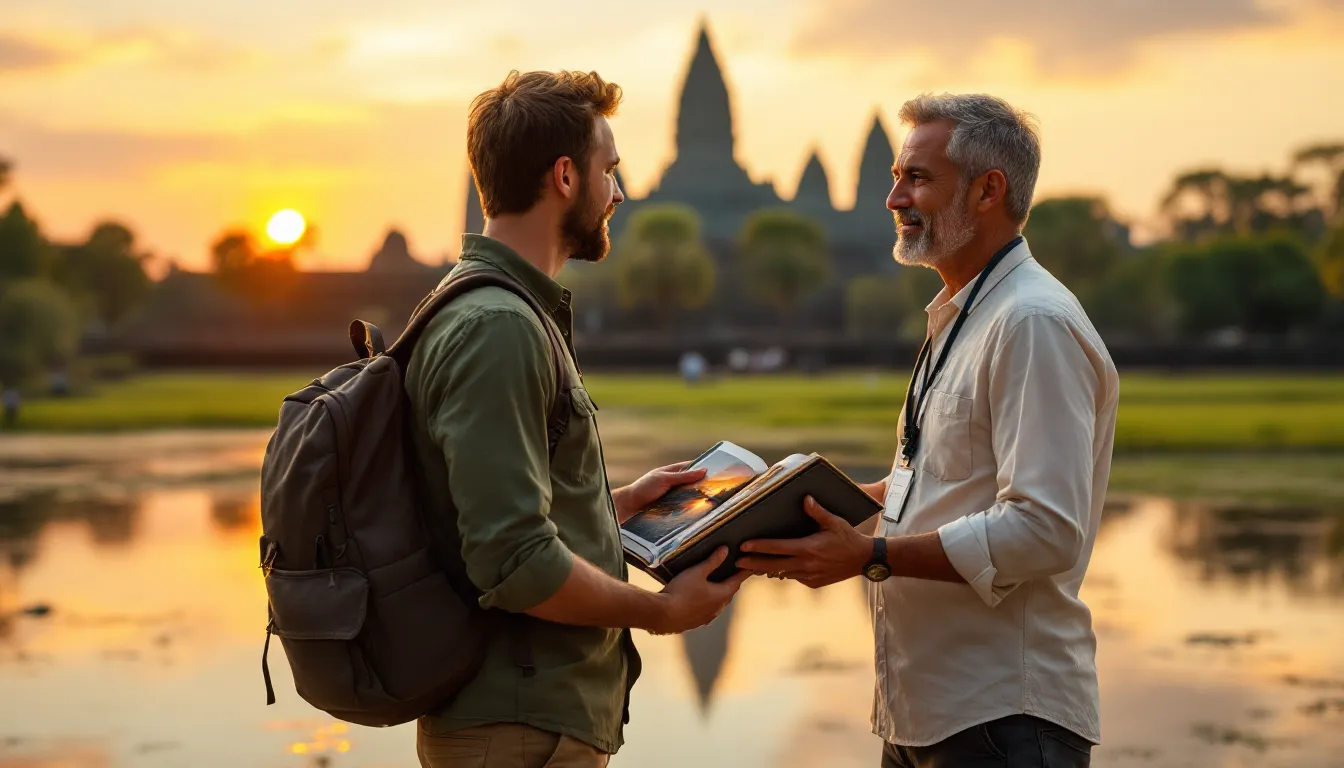
You probably know Cambodia for Angkor Wat, and yes, the temples really are that incredible. But that’s just the doorway.
Imagine a country where you can:
- Wander through 12th-century ruins at dawn, tree roots swallowing ancient stone
- Kayak on the Mekong at sunset while pink light hits the water
- Spend a lazy morning in a riverside café in Kampot, then bike out to a pepper farm in the afternoon
- Hop a boat to white-sand islands with almost absurdly blue water
Cambodia packs a lot into a relatively small, easy-to-navigate country: temples, history, islands, jungle, and village life. That makes a Cambodia trip package surprisingly flexible, you can build a fast-paced, highlight-reel itinerary in 7–9 days or a deeper, slow-travel loop that soaks up the quieter corners.
And then there’s the human side. Cambodia’s recent history is heavy: the legacy of the Khmer Rouge is still within living memory. When you visit the Killing Fields or Tuol Sleng (S21) in Phnom Penh with a thoughtful guide, it changes the way you see resilience and joy in everyday Cambodian life. Many travelers come for the temples and leave talking about the people.
If you value culture, connection, and getting under the surface, Cambodia punches way above its weight.
Defining Your Ideal Cambodia Trip Package

Before you start clicking “Book now,“ get clear on what you actually want from this trip. Cambodia tour packages tend to fall into a few big buckets, and knowing your style helps you pick the right one, or design your own.
1. Temple-Focused & Culture-First
If Angkor has been on your bucket list forever, build your trip around Siem Reap.
You’ll likely:
- Start or end in Siem Reap (the base for Angkor Wat and dozens of surrounding temples)
- Spend 2–3 days exploring a mix of “greatest hits” (Angkor Wat, Bayon, Ta Prohm) and quieter sites
- Add in cultural stops like the floating villages of Tonlé Sap (aim for Kampong Phluk or Kampong Khleang rather than the more touristy Chong Khneas)
Look for a Cambodia trip package that:
- Includes at least a 2-day Angkor temple pass
- Builds in downtime (temple fatigue is real)
- Adds local touches: food tours, circus/theater (like Phare), or craft workshops
2. City-To-Beach Combo
If you want a bit of everything, history, food, then beach time, this is your lane.
Typical flow:
- Phnom Penh for history, rooftop bars, and riverside walks
- Down to the coast: Sihanoukville (as a transit hub) and then out to Koh Rong or Koh Rong Sanloem
You’ll want a package that:
- Balances the emotional weight of Phnom Penh’s genocide sites with lighter experiences
- Includes ferry logistics to the islands
- Gives you at least 2–3 full days on the beach so it doesn’t just feel like a box ticked
3. Multi-Activity & Adventure
More of an active traveler? You can:
- Bike between villages and temples
- Trek in the Cardamom Mountains near Koh Kong
- Kayak mangroves or paddle the Mekong
Multi-activity tours are great if you like to move your body and still want cultural depth. These itineraries often run 6–10 days and start around $827 for more budget-conscious options, especially if local payments are built in.
If none of the packaged options fit perfectly, that’s your sign you might want a semi-DIY approach: book a basic route (e.g., Phnom Penh → Siem Reap → islands) through a trusted operator, then customize with local day tours as you go.
Choosing Your Route: Classic Highlights Vs. Slow Travel
Once you know your style, decide on your rhythm: hit the classic circuit, or slow it way down.
Classic Highlights Route (5–9 Days)
This is ideal if you’re short on time, it’s your first time in Southeast Asia, or you’re adding Cambodia to a bigger regional trip.
A typical 7–9 day Cambodia trip package might look like:
- Day 1–2 – Phnom Penh
Explore the Royal Palace, riverside, and cafés. Visit Tuol Sleng (S21) and the Killing Fields with a knowledgeable guide.
- Day 3–6 – Siem Reap & Angkor
Sunrise at Angkor Wat, then Bayon and Ta Prohm. Another day or two for less-crowded temples like Banteay Srei or Beng Mealea and a visit to a responsible floating village like Kampong Phluk.
- Day 7–9 – Optional Beach or Countryside Add-On
If you have extra days, some packages add Kampot, Kep, or a quick island stay.
This route is full, but it doesn’t have to feel rushed if the tour is well-designed.
Slow-Travel Loop (10+ Days)
If you’ve got more flexibility, or you work remotely and can stretch your stay, Cambodia really shines at a slower pace.
A 10–14 day slow-travel style itinerary could look like:
- Phnom Penh (2–3 nights) for history and orientation
- Kampot (3–4 nights) for riverside chill, pepper farms, caves, cycling
- Kep or Kep countryside (1–2 nights) for crab market and quiet coastal walks
- Siem Reap (4–5 nights) with temples spread out over several mornings, plus village visits and creative experiences
- Optional: Koh Rong / Koh Rong Sanloem (3–4 nights) to end with empty beaches and hammock time
Slow travel lets you:
- Revisit your favorite spots (that café you loved in Kampot, that sunset bar in Siem Reap)
- Actually talk to people beyond small talk
- Work a few days from riverside guesthouses or co-working spaces if you’re on a hybrid trip
If that’s your style, look for packages labeled “in-depth,“ “slow travel,“ or “off-the-beaten-path“, or plan a loose route and fill in on arrival.
Budgeting Your Cambodia Trip Package
The good news: Cambodia is still one of Southeast Asia’s more affordable destinations, especially once you’re on the ground.
Package Costs
You’ll find Cambodia trip packages starting from around $827 for 6–9 day active itineraries. These often include:
- Accommodation (usually mid-range guesthouses or 3-star hotels)
- Some transport (buses, transfers, maybe a flight)
- A number of guided activities
Always check what’s not included. Common extras:
- Angkor temple passes – approx:
- 1-day: ~$37
- 3-day: ~$62
- National park or conservation fees for certain treks
- Some meals (breakfast is usually included: lunch/dinner often not)
Daily Costs (If You’re Mixing DIY With a Tour)
On a typical day in Cambodia, you might spend:
- Meals: $10–20 (street food and simple restaurants on the lower end, cafés and cocktails on the higher)
- Coffee / drinks: $1–3 for iced coffee: $2–6 for beers or cocktails
- Transport: $2–6 for tuk-tuks around town: $10–15 for longer transfers
- Accommodation outside a package:
- Budget guesthouse: $10–20
- Nice boutique stay: $30–70
Where To Spend vs. Save
Worth spending a little more on:
- A great guide for Angkor and Phnom Penh’s historical sites
- Ethical, small-group tours for Tonlé Sap and village experiences
- Island accommodation (you’re here for the setting, not just a bed)
Easy places to save:
- Buses instead of flights between major hubs
- Eating local (markets and family-run restaurants)
- Skipping overpriced, heavily staged “cultural shows” in favor of local arts like Phare circus or small venues
When To Go And How Long To Stay
Cambodia’s weather can shape your whole experience, so it’s worth timing your trip.
Best Time To Visit
- Dry season (November–May):
Ideal for both temples and beaches. Clearer skies, less mud, easier transport.
- Peak sweet spot (November–February):
Cooler (relatively), popular with festivals and more travelers. Angkor will be busier, but the atmosphere is vibrant.
- Green/rainy season (June–October):
Short, heavy showers, especially in the afternoons. The upside? Lush rice fields, fewer crowds, and better prices. If you don’t mind some heat and humidity, it can be beautiful.
How Long You Actually Need
- 7–10 days: Enough for Phnom Penh + Siem Reap, with maybe a quick Kampot or island add-on.
- 10–14 days: You can do a slow loop: cities, countryside, temples, and some beach time.
- 3+ weeks: Perfect for combining Cambodia with Thailand or Vietnam, or settling into slow travel or remote work.
If you’re flying all the way from the U.S., 10–12 days is a solid minimum so you’re not just recovering from jet lag when it’s time to leave.
Designing Your Day-To-Day: Culture, Nature, And Beaches
This is where your Cambodia trip stops being an idea and starts feeling like specific moments.
Sample “Perfect Day” in Siem Reap
- 5:00 a.m. – Tuk-tuk to Angkor Wat for sunrise. It’s early, but watching the towers silhouette against the sky is one of those core memories.
- 9:00 a.m. – Breakfast back in town and a slow coffee at a café with Wi‑Fi.
- Late morning – Explore Bayon (the one with all the faces) and Ta Prohm (the “Tomb Raider” temple swallowed by trees).
- Afternoon – Pool, nap, or a massage. The midday heat isn’t the time to push it.
- Evening – Street food dinner, then a performance at Phare, the Cambodian circus, which supports local artists.
A Day in Kampot or the Countryside
- Morning bike ride through rice paddies and villages, stopping for sugarcane juice
- Visit a pepper farm to see why Kampot pepper is on menus around the world
- Late afternoon boat cruise on the river, a cold beer, orange-pink sky, bats swooping overhead
Island Vibes on Koh Rong / Koh Rong Sanloem
- Sleep in a bungalow a few steps from the sand
- Swim before breakfast when the water is flat and clear
- Snorkel, kayak, or read under a palm tree
- If you’re lucky, head out at night to see glowing plankton swirl around your hands in the dark water
When you’re reviewing Cambodia trip packages, skim the day-by-day and ask yourself:
- Does each day have a clear highlight?
- Is there downtime built-in, or is it just transfer–activity–transfer?
- Is there a mix of culture, nature, and rest that feels like you?
Remote Work–Friendly Cambodia: Visas, Wi‑Fi, And Workday Rhythm
If you’re a remote worker or digital nomad, Cambodia can slide surprisingly well into your lifestyle.
Visas
For many nationalities, including U.S. citizens, Cambodia offers:
- Visa on Arrival or e-visa options for short stays (usually 30 days, extendable).
Always double-check the latest requirements before you go, as rules can change.
If you’re planning to stay longer-term or work from Cambodia for months, look into business or longer-stay visas through official channels or reputable visa services.
Wi‑Fi & Work Spots
- Siem Reap & Phnom Penh: Solid Wi‑Fi in most hotels, cafés, and co-working spaces. Speeds are usually fine for calls, uploads, and regular work.
- Kampot: Growing café scene with decent connections: great for a “deep work” + slow travel combo.
- Islands & rural areas: Expect patchier Wi‑Fi and occasional power cuts. Perfect for unplugged days, not ideal for Zoom marathons.
Ideal Workday Rhythm
To combine a Cambodia trip package with work:
- Do cultural or outdoor activities early morning (before the heat peaks)
- Work late morning to afternoon in A/C cafés or your hotel
- Save evenings for night markets, riverside walks, or that one more mango shake you definitely need
Many travelers treat Cambodia as a “soft work” destination: a week or two of mostly exploring, with a few lighter workdays baked in.
Booking Smart: Tours, Local Operators, And DIY Options
You don’t have to choose between full-on group tour and total DIY. There’s a sweet spot.
Big Platforms & Small Groups
Sites like TourRadar aggregate Cambodia trip packages with plenty of reviews (over a thousand across operators), so you can compare styles and budgets easily. You’ll also find small-group specialists like G Adventures, which tend to focus on responsible, culturally aware tours.
What to look for:
- Group size (smaller usually means more flexibility and less herding)
- How many activities are included vs. optional add-ons
- How they talk about local communities and responsible travel
Local Operators
Local Cambodian companies, such as Legend Travel and others, often offer good value, custom itineraries, and sometimes hefty discounts (you’ll occasionally see promotions up to 50–55% off standard rates).
Benefits of going local:
- Money stays in the country
- Guides often have deeper local context and personal stories
- Easier to tweak your route or add days
DIY + Targeted Tours
If you like control, consider:
- Booking your own flights and main city-to-city transport (buses or domestic flights)
- Reserving flexible stays in Phnom Penh, Siem Reap, and maybe Kampot
- Plugging in day tours only for the complex stuff: Angkor, genocide history sites, Tonlé Sap, remote treks
This hybrid approach gives you structure where you need it and freedom everywhere else.
Responsible And Respectful Travel In Cambodia
Cambodia is stunning, but it’s not just a backdrop for your photos. Traveling thoughtfully here makes a real difference.
A few grounded guidelines:
- Choose ethical village and floating village tours.
Avoid places known for “human zoo” vibes, like rush-in-rush-out tours to over-commercialized floating villages. Ask operators how they work with local communities and where your money goes.
- Support social enterprises and local businesses.
Eat at training restaurants, buy from artisan collectives, and book homestays or family-run guesthouses when you can.
- Be mindful at genocide memorials.
Tuol Sleng and the Killing Fields are emotionally heavy. Dress modestly, keep your voice down, and follow your guide’s lead. This isn’t the place for selfies.
- Temple etiquette.
Cover shoulders and knees, remove hats, and move calmly. Angkor is still an active spiritual site for many Cambodians.
- Environmental care.
Avoid single-use plastics when possible, don’t touch coral or wildlife, and stick to marked trails in national parks and jungle areas.
Traveling this way doesn’t limit your experience, it deepens it. You walk away with stories you can feel good about telling.