
There’s a moment in almost every California national park trip when everything goes quiet.
Sometimes it’s halfway up a trail in Yosemite, when the roar of a waterfall turns into white noise and the granite walls feel like a cathedral. Sometimes it’s on a boat pushing toward the Channel Islands, when the mainland shrinks behind us and dolphins race the bow.
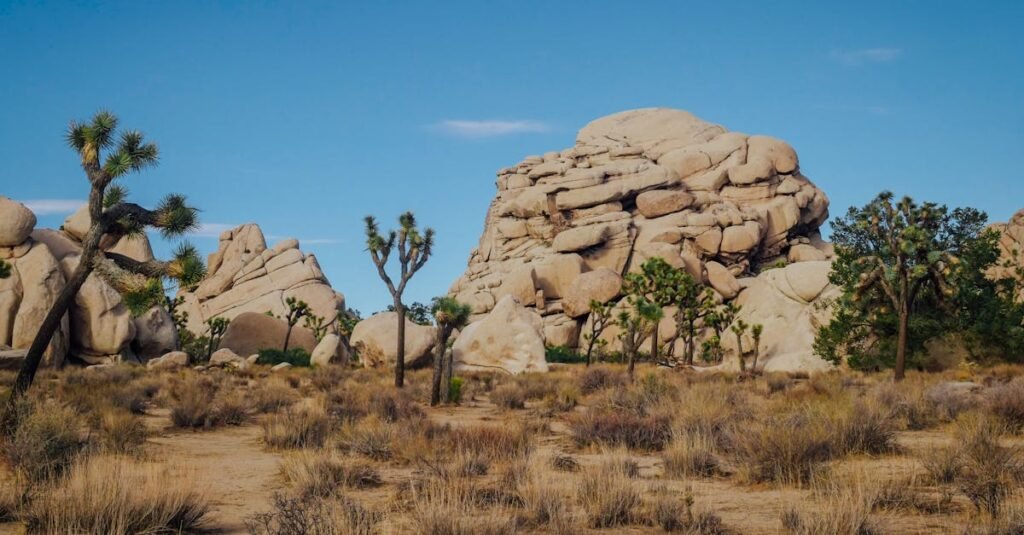
Or in Joshua Tree, lying on a slab of warm rock, watching the Milky Way spill across the sky.
California has nine national parks, more than any other state, and each one has its own personality. Some are perfect for big-mile hikers and climbers. Others are made for sketchbook afternoons, remote work mornings, and slow travel days where we barely check the time.
In this guide, we’re focusing on the best national parks in California for adventure, creativity, and unhurried travel. We’ll share who each park is really for, the best seasons to visit, and the kind of experiences you can expect, so you can build a trip that actually fits the way you like to travel.
How To Choose The Right California National Park For You
Match Your Park To Your Travel Style
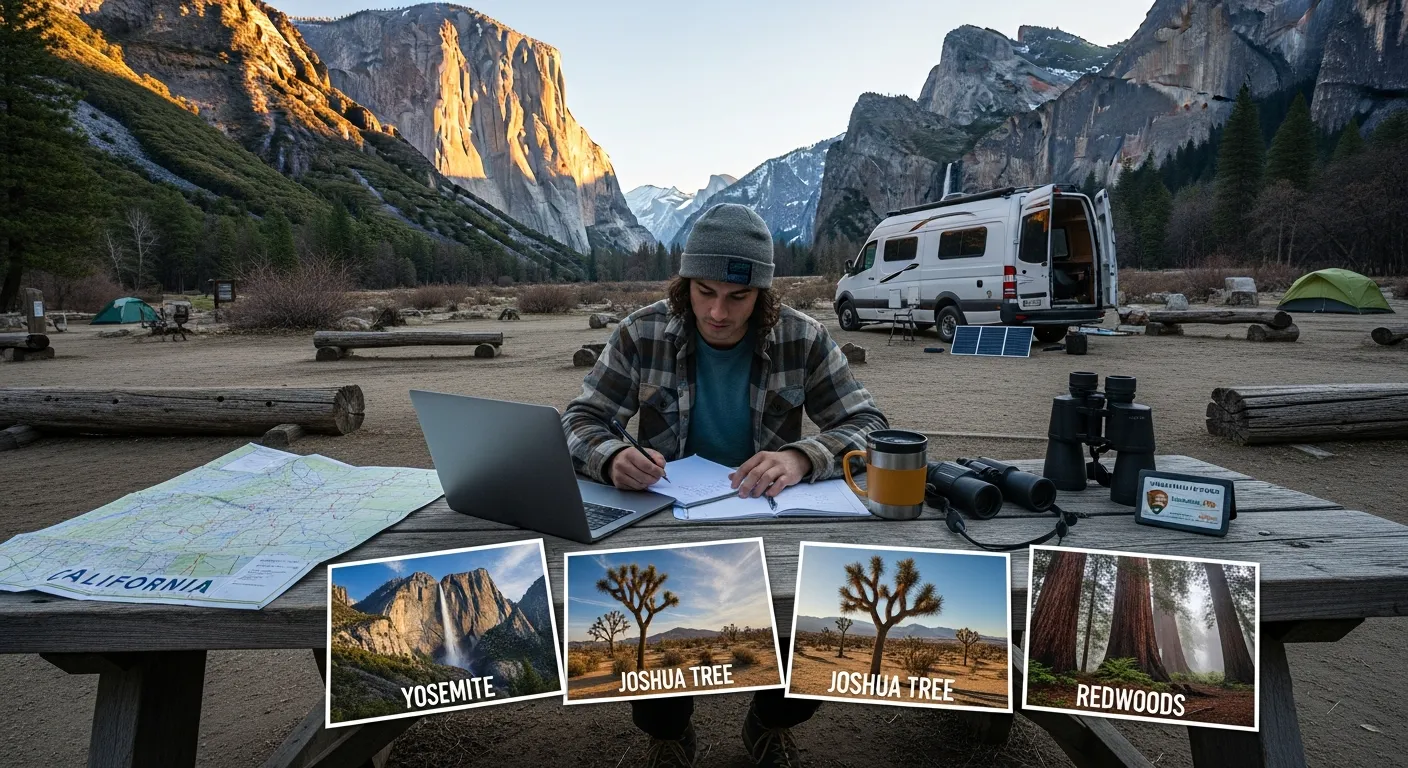
California’s parks fall into three big “moods”:
- Mountain parks – Yosemite, Sequoia, Kings Canyon, Lassen Volcanic, Pinnacles
Think dramatic cliffs, alpine lakes, and big elevation gain. These are for us when we want to sweat on the trail by day and sink into that campfire tiredness at night.
- Desert parks – Joshua Tree, Death Valley
Wide horizons, surreal rock formations, and some of the best stargazing in the country. Perfect when we’re craving headspace, creative resets, and winter sun.
- Coastal parks – Redwood National and State Parks, Channel Islands
Fog, ferns, ocean spray, and wildlife. Ideal if we love moody forests, wild beaches, and quiet over crowds.
Ask yourself:
- Do we want big hikes or mellow walks?
- Are we okay with crowds if the scenery is iconic (Yosemite), or do we want solitude (Channel Islands, Kings Canyon)?
- Are we trying to mix travel with remote work, or go fully offline for a few days?
That honest check-in will narrow things quickly.
Best Seasons And Crowd-Avoiding Strategies
Spring (March–May)
- Yosemite’s waterfalls are peaking.
- Deserts (Joshua Tree, Death Valley) are still relatively cool and sometimes carpeted with wildflowers.
- Crowds start ramping up but are still manageable midweek.
Summer (June–August)
- High Sierra trails in Yosemite, Sequoia, and Kings Canyon finally melt out.
- Redwood’s cool, misty climate is a refuge from heat.
- Desert parks are brutally hot, skip Death Valley then unless we’re extremely prepared.
Fall (September–November)
- Our personal sweet spot for many parks. Fewer families, kids back in school, stable weather in the mountains, golden light for photographers.
Winter (December–February)
- Death Valley shines: mild temperatures and crystal-clear skies.
- Joshua Tree is crisp and perfect for hiking and night skies.
- Mountain roads and some higher-elevation trails in Yosemite and Sequoia can close due to snow.
Crowd hacks for the best national parks in California:
- Aim for Sunday–Thursday instead of Friday–Saturday.
- Start hikes at sunrise, we get the best light and an hour or two of near solitude on popular trails.
- Visit big-name parks (Yosemite, Joshua Tree) in shoulder seasons: late April–early May, late September–October.
Logistics For Remote Workers And Road-Trippers
If we’re mixing adventures with laptop time, a few things matter more than usual:
- Signal & Wi-Fi:
- Inside the parks, cell service is often spotty or non-existent.
- Base ourselves in nearby gateway towns (Mariposa for Yosemite, Twentynine Palms for Joshua Tree, Arcata/Trinidad for Redwoods) for decent Wi-Fi and then day-trip into the park.
- Power & workspace:
- Vanlifers: a solar setup or reliable battery is gold.
- Otherwise, plan partial work days from cafes or cabins, and keep park days more offline.
- Passes & fees:
- The America the Beautiful annual pass (~$80) pays off fast if we’re hitting 3+ parks in a year.
- Driving distances:
- These parks are spread out. Seeing all nine realistically takes about three weeks on the road.
- For a 7–10 day trip, choose a region: Sierra loop (Yosemite + Sequoia/Kings), desert loop (Joshua Tree + Death Valley), or north coast (Redwoods + nearby state parks).
Yosemite National Park: Iconic Cliffs, Waterfalls, And Creative Inspiration
Why Yosemite Is Worth The Hype
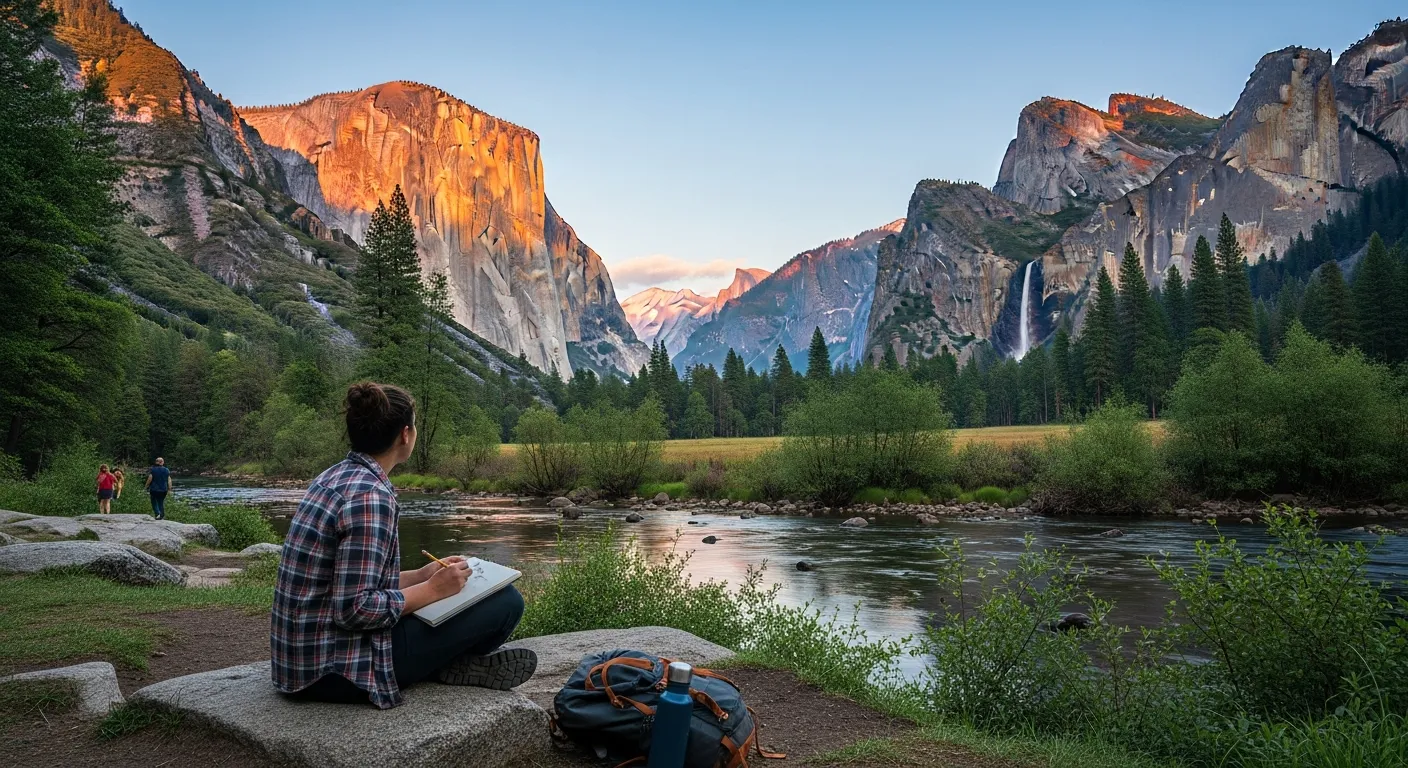
There’s a reason Yosemite sits at the top of almost every best national parks in California list. The first time we drive into Yosemite Valley and see El Capitan rising straight out of the meadow, it feels like walking into a painting we’ve seen our whole lives.
Yosemite packs in:
- The tallest waterfall in North America (Yosemite Falls, 2,425 feet).
- Iconic granite monoliths like Half Dome and El Capitan.
- Meadows, rivers, alpine lakes, and high-country domes in Tuolumne.
It’s crowded, yes. But if we treat Yosemite less like a bucket-list selfie stop and more like a place to slow down, picnic by the Merced, sketch from the meadow, linger at sunrise, it becomes an incredible creative retreat.
Must-Do Hikes And Viewpoints
If it’s our first visit and we’ve got 2–3 days:
- Glacier Point (Seasonal road) – Jaw-dropping views over Half Dome and Yosemite Valley. At sunrise or sunset it’s pure magic. In peak summer, a must. In heavy snow years the road may open late.
- Mist Trail to Vernal Fall (2–4 miles, moderate) – We climb stone steps alongside roaring water. Prepare to get soaked in spring. Continue to Nevada Fall if we’re feeling strong.
- Taft Point & Sentinel Dome (5-ish miles combined) – One of the best effort-to-view ratios in the park. Sunset at Taft Point is unforgettable.
- Lower Yosemite Fall & Valley Loop – Easy walks with big payoff when we want something low-key but beautiful.
Advanced hikers can look at Half Dome (permit required) or the Four Mile Trail up to Glacier Point, but those are big days.
Where To Stay, Work, And Eat Nearby
Inside the park:
- Yosemite Valley Lodge and Curry Village are convenient but book up early and can be pricey. Great if we’re all-in on park time and okay with weaker Wi-Fi.
- Campgrounds (Upper Pines, Lower Pines, North Pines) offer that classic pine-scented, stars-through-the-trees experience. Reservations required in season.
Gateway towns:
- Mariposa (west entrance) – Cute main street, decent cafes, Wi-Fi, and more flexible lodging from budget motels to boutique inns. Good for remote work days.
- Groveland and Oakhurst – Smaller, more laid-back bases with cabins and vacation rentals.
Food-wise, Yosemite Valley has basic options (think pizza, burgers, groceries). For something a bit better, we’ve had nicer meals and coffee outside the park, another reason to base in a nearby town if we’re staying longer or working remotely.
Sequoia And Kings Canyon: Giant Trees And Quiet Mountain Escapes
Walking Among Giants: What Makes These Parks Special
Sequoia and Kings Canyon are technically two national parks, administered together, and they feel like Yosemite’s quieter, more introspective cousins.
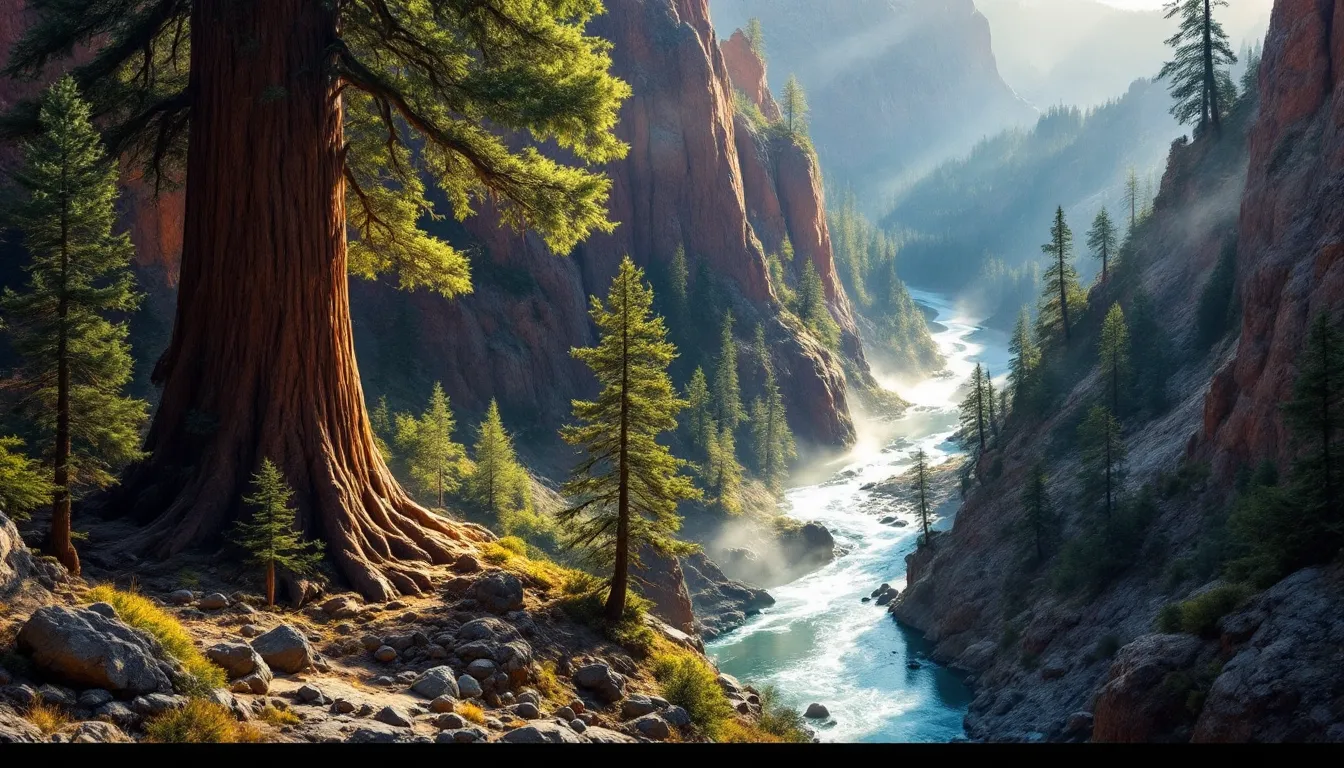
We come here when we want to feel small in the best possible way. Standing at the base of a giant sequoia, staring up at living beings that are 2,000+ years old, our sense of time shifts.
Highlights:
- The General Sherman Tree, the largest tree on Earth by volume.
- Dense sequoia groves with soft, fragrant forest floors.
- Glacially carved valleys, alpine lakes, and meadows in Kings Canyon.
Best Trails, Scenic Drives, And Stargazing Spots
A few favorites:
- Congress Trail (2–3 miles, easy) – A loop through some of the most impressive sequoia groves near General Sherman. Quiet if we start early.
- Big Trees Trail (1.3 miles, easy) – Boardwalk loop around a meadow surrounded by sequoias, perfect for slow walkers and anyone easing into altitude.
- Moro Rock – Short, steep stair climb to a panorama of the Great Western Divide. Don’t go if we’re terrified of heights, but otherwise: worth it.
- Kings Canyon Scenic Byway – When open, this drive drops us deep into a granite-walled canyon along the Kings River. Picnic stops everywhere.
Stargazing is underrated here. On clear summer nights, we can lay back near the Giant Forest or at an overlook and watch the Milky Way spill across the sky with far fewer people than in Yosemite.
Cabins, Campgrounds, And Year-Round Practicalities
- Lodging:
- Wuksachi Lodge (Sequoia) and John Muir Lodge (Kings Canyon) offer comfy, woodsy rooms. Think: no-frills but atmospheric basecamps.
- Simple cabins and multiple campgrounds exist inside the parks: summer reservations are essential.
- Seasonality:
- Snow can close some roads and higher trails in winter and early spring.
- Late June through September is prime for hiking: May and October are quieter shoulder months.
- Road note: The mountain roads are winding and slow, factor that into drive times, especially if we’re sensitive to motion sickness.
Joshua Tree National Park: Desert Magic, Stargazing, And Creative Retreats
Vibe Check: Who Joshua Tree Is Perfect For
If Yosemite feels like a granite cathedral, Joshua Tree feels like an open-air studio for artists, musicians, and wanderers.
Two deserts, the Mojave and the Colorado, collide here, creating a landscape of Dr. Seuss–like Joshua trees, massive boulders, and pastel sunsets. It’s a place to:
- Climb on rocks like we’re kids again.
- Photograph endlessly.
- Journal, write, or sketch between hikes.
It’s also just a two-hour drive from Los Angeles, which makes it a perfect long weekend escape.
Short Hikes, Sunset Spots, And Photo-Worthy Rock Formations
Joshua Tree is full of low-commitment, high-payoff trails and stops:
- Hidden Valley (1 mile) – Short loop through a rock-enclosed valley: great intro to the park’s vibe.
- Barker Dam (1.3 miles) – Easy walk past petroglyphs and, after wet winters, a small desert reservoir.
- Cholla Cactus Garden – The light at sunrise or sunset makes the cacti glow. Stay on the path: these guys are unforgiving.
- Keys View – Sunset viewpoint looking toward Coachella Valley and, on clear days, the Salton Sea.
Nighttime is when Joshua Tree really flexes. On moonless nights, we can see the Milky Way with the naked eye. Bring a tripod if we’re into astrophotography.
Cool Stays, Remote-Work Options, And Local Culture
The communities around the park, Joshua Tree, Yucca Valley, Twentynine Palms, have become mini creative hubs.
- Stays:
- Mid-century desert cabins, A-frame homes, and design-forward Airbnbs are everywhere. Some have hot tubs under the stars and outdoor soaking tubs.
- For camping, Hidden Valley, Jumbo Rocks, and Ryan Campground put us right among the boulders.
- Remote work:
- Cell signal is spotty inside the park but generally decent in town.
- We like to book a cabin with good Wi-Fi, work mornings, then head into the park for golden hour hikes.
- Local culture:
- Check out music at Pappy & Harriet’s in nearby Pioneertown.
- Browse vintage shops and local art galleries in Joshua Tree and Yucca Valley.
- Cafes like Frontier Coffee (Yucca Valley) and others rotate as laptop-friendly bases.
Death Valley National Park: Otherworldly Landscapes And Winter Sun
Why Death Valley Is More Than Just Extreme Heat
Death Valley has a dramatic reputation, triple-digit temps, cracked salt flats, the lowest point in North America at Badwater Basin (282 feet below sea level). But visit in winter and the park becomes something else entirely: spacious, oddly peaceful, and full of strange beauty.
We come here when we want:
- Big, cinematic landscapes with almost no visual clutter.
- Warm days in December–February.
- That surreal feeling of standing somewhere that feels off-planet.
Unmissable Viewpoints, Drives, And Sunrise/Sunset Stops
A good first-timer loop might include:
- Zabriskie Point (sunrise) – The badlands here look like a watercolor painting. Watching the first light hit the ridges is worth the early alarm.
- Badwater Basin – Walk out on the salt flats and feel the scale. In cooler months, we can wander for a while: in summer, keep it short.
- Artist’s Drive & Artist’s Palette – A one-way scenic drive past technicolor hills. Late afternoon brings out deep reds and purples.
- Dante’s View – High viewpoint with sweeping views across the valley: especially good at sunset or under a bright moon.
If we have more time, the Mesquite Flat Sand Dunes near Stovepipe Wells are incredible for sunrise photos.
Safety, Seasonal Timing, And Budget Tips
- When to go:
- November–March is ideal. Days are usually in the 60s–70s°F: nights can be cold.
- Summer can hit 120°F+. It’s dangerous if we’re not extremely prepared, honestly, we’d skip it then.
- Safety basics:
- Carry more water than we think we need and don’t rely on cell service.
- Make sure our gas tank is topped off: distances between services are big.
- Stay close to the car in extreme heat.
- Budget tips:
- Camping keeps costs down and gives us absurdly good night skies.
- Lodges (like Furnace Creek) can be pricey in peak winter, so book early or look at nearby towns like Beatty or Pahrump for cheaper motels.
Death Valley pairs well with Joshua Tree on a 7–10 day desert road trip, especially if we’re chasing winter sun and starry nights.
Channel Islands National Park: Wild Islands Close To The City
What Makes The Channel Islands Feel So Remote
We don’t have to fly to Hawaii or hop on an overnight ferry to feel like we’ve disappeared off the grid. The Channel Islands, just off the coast of Ventura and Oxnard, feel surprisingly wild given how close they are to Los Angeles.
There are no cars, no shops, no hotels, just cliffs, sea caves, foxes, and sea birds. Once the boat pulls away, we’re committed for the day or night, and that commitment is part of the magic.
Kayaking, Hiking, And Wildlife Experiences
Each island has its own flavor, but for a first visit, Santa Cruz Island is a great starting point.
- Sea kayaking:
- Guided tours take us into sea caves (conditions permitting), through turquoise water and around kelp forests. On calm days, it’s otherworldly.
- Hiking:
- Trails range from short coastal walks to longer ridge hikes with sweeping views. Nothing technical, but it feels adventurous because of the isolation.
- Wildlife:
- Look out for the tiny, endemic island foxes, pods of dolphins on the boat ride, and seasonal whale sightings.
How To Plan Boats, Overnights, And Minimalist Packing
- Boats:
- Trips depart mainly from Ventura and Oxnard with outfitters like Island Packers. Boats often sell out in summer and on weekends: we book ahead.
- Day trip vs. overnight:
- Day trips are perfect if we’re short on time: morning crossing, hike or kayak, late-afternoon return.
- Camping overnight turns the islands into our own private world once the day-trippers leave. Facilities are basic: we bring everything.
- Packing light:
- There are no shops, so think backpacking style: water, snacks, layers, sun protection, and any camera gear we care about.
- The boat limits gear weight, which nudges us toward true minimalist packing, kind of freeing, honestly.
Redwood National And State Parks: Forest Bathing On California’s Wild North Coast
Why These Ancient Forests Hit Different
Redwood National and State Parks, on California’s far north coast, aren’t just about tall trees, they’re about scale and stillness. Some of these coastal redwoods soar over 350 feet. When we walk among them, conversations naturally get quieter.
Unlike Yosemite’s big vistas, Redwoods feel intimate. Trails wind past ferns, mossy logs, and filtered light. It’s the perfect place for forest bathing, slow photography walks, and letting our nervous system finally downshift.
Best Groves, Scenic Drives, And Coastal Detours
A few highlights that consistently deliver:
- Lady Bird Johnson Grove – Often misty, with a loop trail that feels like walking through an old storybook.
- Fern Canyon – A narrow canyon with 30–50 foot walls covered in ferns. It’s popular, but stepping stones and creek crossings make it feel playful.
- Prairie Creek Redwoods State Park – Some of the best old-growth trails, plus a chance to spot elk in nearby meadows.
- Newton B. Drury Scenic Parkway – A slow, scenic drive under towering redwoods, with trailheads all along the route.
Don’t skip the coastline. Short drives lead to wild, often foggy beaches where we can watch waves smash into sea stacks.
Weather, Lodging, And Road-Trip Pairings
- Weather:
- Expect cool temps, frequent fog, and light rain even in summer. Layers and waterproof shoes make everything more comfortable.
- Where to stay:
- Base in Arcata, Trinidad, or Crescent City for motels, inns, and vacation rentals.
- State park campgrounds tuck us right into the forest.
- Road-trip ideas:
- Pair Redwoods with the Oregon coast on a longer Pacific Northwest loop.
- Or drive Highway 101 south, threading through Mendocino and Sonoma wine country.
For remote workers, this region is better for unplugged days, Wi-Fi exists in town, but once we’re in the parks, we’re offline, and that’s kind of the whole point.