
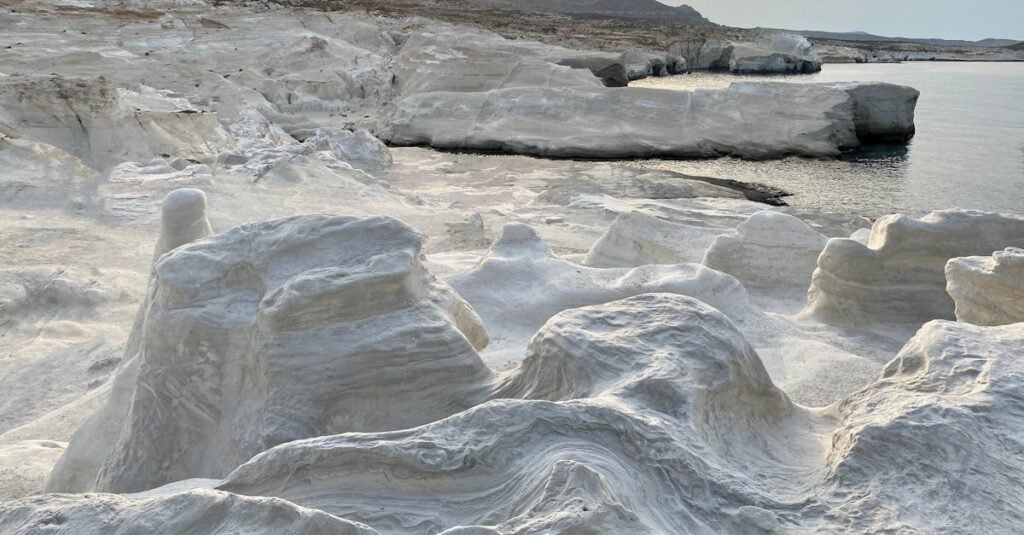
We came to Milos for the color of the water and stayed for the way the light slides across white volcanic rock. The best beaches in Milos aren’t just “nice swims”, they’re a mood board of lunar landscapes, hidden ladders, fishing villages with candy-colored boathouses, and south‑coast sands that feel purpose-built for lazy days.
With wind-aware planning and a little gear, you can hit the island’s greatest hits in 3–4 days without rushing.
Here’s how we choose the right beach each day, what to pack, and the exact spots that make Milos unforgettable, whether you want cliff jumps, calm water, or that perfect golden-hour photo.
Quick Planning For Beach Days In Milos
Wind And Swell: North Vs. South Shores
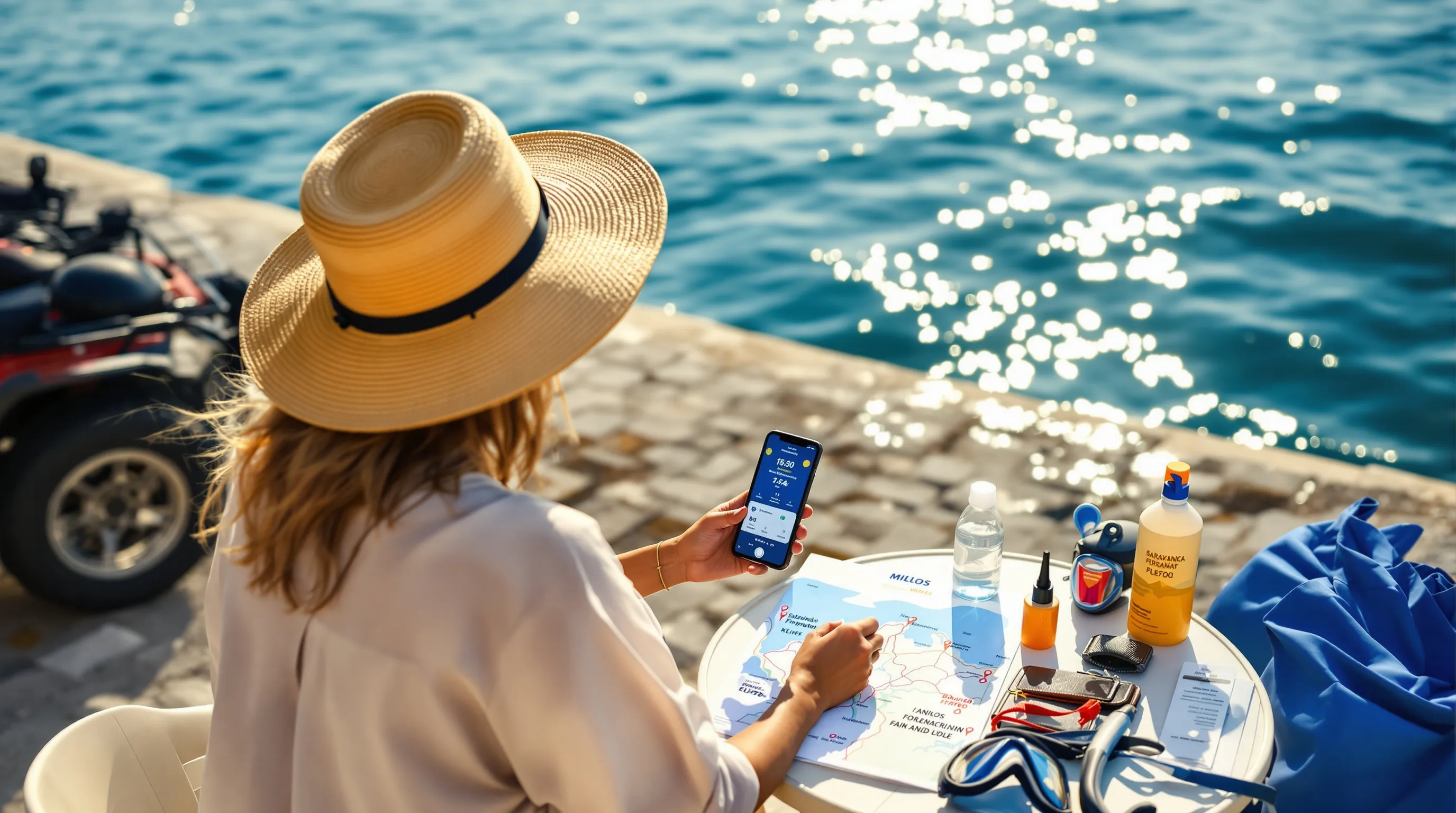
Summer’s Meltemi winds usually pound the north. On gusty days we pivot south, Firiplaka, Provatas, Paleochori, and Agia Kiriaki are typically calmer and safer for swimming. When the forecast shows lighter winds, we sprint north for the dramatic stuff: Sarakiniko, Papafragas, Firopotamos, and Mandrakia.
A simple rule: if your hat is trying to fly away in Adamantas (Adamas), head south.
Getting Around: Car, ATV, Bus, And Parking
- Car: Best flexibility, especially for Tsigrado‘s rough access road and farther south beaches. Expect €40–€70/day in high season. Dirt lots are free but fill by late morning at Sarakiniko, Firiplaka, Tsigrado, and Firopotamos.
- ATV/Scooter: Fun, but windy and dusty: not ideal at night. Helmet up and watch for loose gravel.
- Bus (KTEL): Seasonal routes connect Adamas, Pollonia, Sarakiniko, Firiplaka, and Paleochori with limited frequency. Great if you’re unhurried: check the day’s timetable before committing.
We aim for two beach stops per half-day and allow buffer for parking and short walks.
Boat Days: West-Coast Gems And When To Book
Kleftiko is the headliner and it’s boat-access only for most travelers. Cruises often tack on Gerakas, Sykia (sea cave views), Klima from the water, and sometimes Poliegos. Book 1–2 weeks ahead in July–September: morning departures are calmer and better for photography. Expect €70–€120 per person depending on boat size and inclusions. Bring a dry bag, water, and your own mask if you’re picky about snorkel gear.
Timing For Light, Crowds, And Photography
- Sarakiniko: Sunrise or golden hour for softer light and fewer crowds. Midday gives the wildest white‑on‑electric‑blue contrast but harsh shadows.
- Kleftiko: Late morning to early afternoon when the sun pours into caves and arches.
- Tsigrado & Papafragas: Smaller coves that lose sun earlier: late morning to early afternoon works best.
- Organized south beaches: Firiplaka, Paleochori, Provatas, Agia Kiriaki are all-day options, arrive before 11:00 for parking and shade.
What To Pack: Footwear, Shade, Cash, And Water
- Footwear: Water shoes or sturdy sandals for Sarakiniko, Tsigrado, Papafragas, Mandrakia, and Firopotamos (rocky paths and pebbles).
- Shade + Sun: Hat, high‑SPF reef‑safe sunscreen, light cover‑up. Umbrellas are rentable at Firiplaka, Paleochori, Provatas, Pollonia, and occasionally Firopotamos.
- Cash: Sunbeds and small beach bars may be cash-only: keep €20–€50 handy.
- Water & Snacks: Crucial for Sarakiniko, Tsigrado, Papafragas, and all boat days, facilities are limited or nonexistent.
Iconic Landscapes You Can’t Miss
Sarakiniko
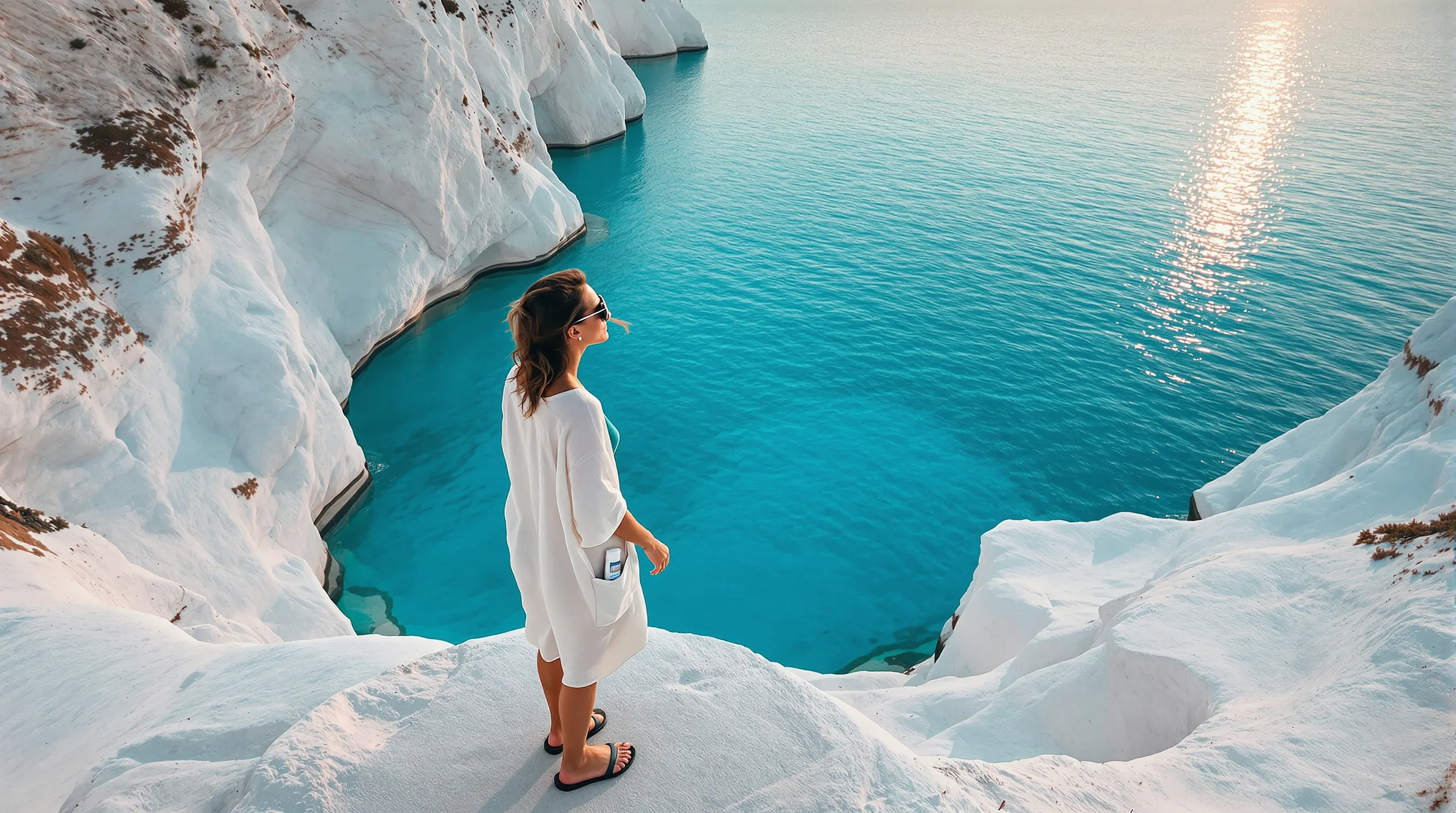
The moon landed on Milos and decided to stay. Smooth white volcanic rock tumbles into neon-blue water, with natural pools and cliff‑jumping ledges carved by wind and time. There’s almost no sand and zero natural shade, so sunglasses and sunscreen are non-negotiable, the light bounces off the rock like a mirror.
How we do it: sunrise for quiet exploring, then a quick swim and coffee back in town. If we return at midday, we bring a light cover‑up and set expectations: you’ll bake, but the photos slap.
Good to know: On windy days, avoid jumping and stay clear of the rugged edges where swell rebounds off the rock.
Kleftiko (By Boat)
Imagine white sea stacks, arches, and a protected bay where the water shifts from mint to sapphire. Kleftiko is that postcard, and it’s better in motion. Boat tours pause for cave swims and snorkel sessions: some captains bring out feta and watermelon after the last dip and you’ll swear it’s the best you’ve ever tasted.
How we do it: Morning departure, dry bag with a towel, a liter of water per person, and a long‑sleeve rash guard for the sun. The caves are at their most luminous late morning to early afternoon. No facilities here, just rock, sea, and that big grin you can’t wipe off.
Adventure Coves For Thrill-Seekers
Tsigrado
Part beach, part obstacle course: you descend through a narrow crack in the cliff using a steep path, ropes, and wooden ladders. At the bottom, you’re rewarded with a tiny cove of glassy water and honey‑colored rock. Space is limited: if it feels crowded, we swim, smile, and bounce to Firiplaka five minutes away.
Quick tips:
- Wear grippy sandals and keep one hand free for the ladders.
- Avoid hauling big beach bags: a daypack is plenty.
- Not ideal for small kids or anyone with a fear of heights.
Papafragas
A narrow rock corridor opens into a cinematic lagoon hemmed by tall cliffs. It’s dramatic from above, and the short, steep path down demands care. There are no services, and in wind or swell, currents near the rock can get tricky. We stay close to shore, swim when it’s calm, and treat it as a scenic stop even if we don’t get in.
Relaxed Beaches With Amenities
Firiplaka
A long sandy bay with shallow turquoise water and cliffs painted in pastels. Sunbeds, umbrellas, a beach bar, and seasonal toilets make it an easy all‑day base for couples and families. It’s popular for a reason, arrive by 10:30 to snag parking and shade. Typical sunbed sets run €20–€30 in high season.
Pair it with: a morning adventure at Tsigrado or a lazy lunch in nearby tavernas along the south road.
Paleochori
Think organized comfort: sunbeds and beanbags, tavernas, and even beach clubs that lean chill rather than thumping. The multicolored cliff backdrop is striking, and geothermal activity warms pockets of sand and shallow water, surreal when a cool breeze is blowing. Easy by car or bus, and great when you just want to read, nap, swim, repeat.
Provatas
Sheltered southern bay with buttery sand, shallow entry, and a low‑key vibe. A handful of umbrellas and nearby tavernas make it a smart call on windy days or with kids. We like it as a gentler alternative when Firiplaka feels too busy.
Agia Kiriaki
A pebbly‑sandy mix with crystal water, sunbeds, and a few laid‑back tavernas. It’s often quieter than Firiplaka or Paleochori but still easy and comfortable. Bring water shoes if you prefer soft entries: stay for an early dinner when the light goes pink over the bay.
Photogenic Fishing‑Village Swims
Firopotamos
White houses, blue shutters, and “sirmata“ boat garages right on the water. The bay is a gentle arc of turquoise with mixed sand and pebbles, plus a small church that completes the postcard. We swim, take a few photos (respecting privacy), and grab something from the occasional food truck, cash helps. Parking is limited: go early or late.
Mandrakia (Tourkothalassa Cove)
A tiny harbor lined with rainbow boathouses and a calm swimming cove around the corner. Bring water shoes for pebbles and stay for lunch at Medusa, one of the island’s most beloved tavernas. It’s a perfect half‑day: dip, dry in the sun, plates of grilled octopus, then another dip.
Responsible Etiquette And Safety
Leave No Trace And Protect The Rock Formations
Pack out everything, bottles, snack wrappers, cigarette butts. Trash bins are scarce at remote coves. The white rock at Sarakiniko, Kleftiko, and Papafragas is soft volcanic material: carving initials or chipping edges accelerates erosion. Take the photo, not the souvenir.
Sea And Sun Safety On Exposed Shores
Windy day? Skip cliff-jumping and avoid swimming near rocks where rebound waves and currents are strongest. Use reef‑safe sunscreen and reapply often: shade is minimal at the most dramatic spots. Carry more water than you think you’ll need.
Respect Fishermen, Homes, And Chapels
Firopotamos, Mandrakia, and Klima are living villages. Keep noise low, don’t block boathouse doors, and avoid stepping onto terraces or into garages. Dress modestly around chapels and never climb on roofs or bells for a shot, even if you see someone else doing it.
Conclusion
We plan Milos like this: one sunrise or sunset at Sarakiniko, one boat day to Kleftiko and the west coast, one south‑coast beach day (Firiplaka + Tsigrado), and one day split between a fishing village swim (Mandrakia or Firopotamos) and an organized beach (Paleochori or Provatas). That mix gives you the lunar drama, the hidden ladders, the calm swims, and the slower village moments that make Milos stick.
Key Takeaways & Travel Tips
- Choose by wind: North for drama on calm days: south for shelter when the Meltemi blows.
- Move smart: Car offers the best flexibility: buses work if you time them: ATVs are fun but watch the wind and dust.
- Book the boat: Reserve Kleftiko 1–2 weeks ahead in high season: mornings are smoother and brighter.
- Pack light, pack right: Water shoes, sun protection, cash, and extra water cover 90% of needs.
- Time the light: Sunrise/golden hour at Sarakiniko: late morning–early afternoon for Kleftiko‘s glow.
- Mix your days: Pair small coves (Tsigrado, Papafragas) with roomy beaches (Firiplaka, Paleochori) so you’re never fighting for space.
But you map it, the best beaches in Milos reward curiosity. Walk one bend further, peek behind the next rock, and keep an eye on the wind. The island does the rest.