
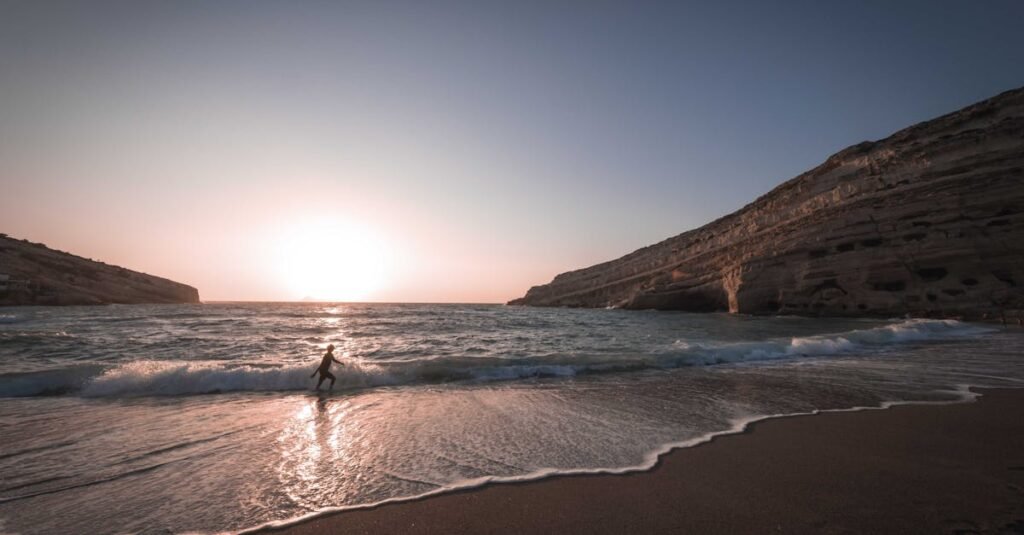
We’ve chased the Aegean’s changing blues from ferry decks, driven dusty roads to hidden crescents, and napped under pines with sand still clinging to our ankles.
When people ask where to find the best sandy beaches in Greece, we think in textures and tones: flour-soft Naxos dunes, pink-white Crete lagoons, pine-framed Skiathos gold. This guide blends story with specifics, where to base, how to get there, what it costs, so we can all spend less time scrolling and more time barefoot in the shallows.
How To Choose Your Greek Beach Base
Island Versus Mainland
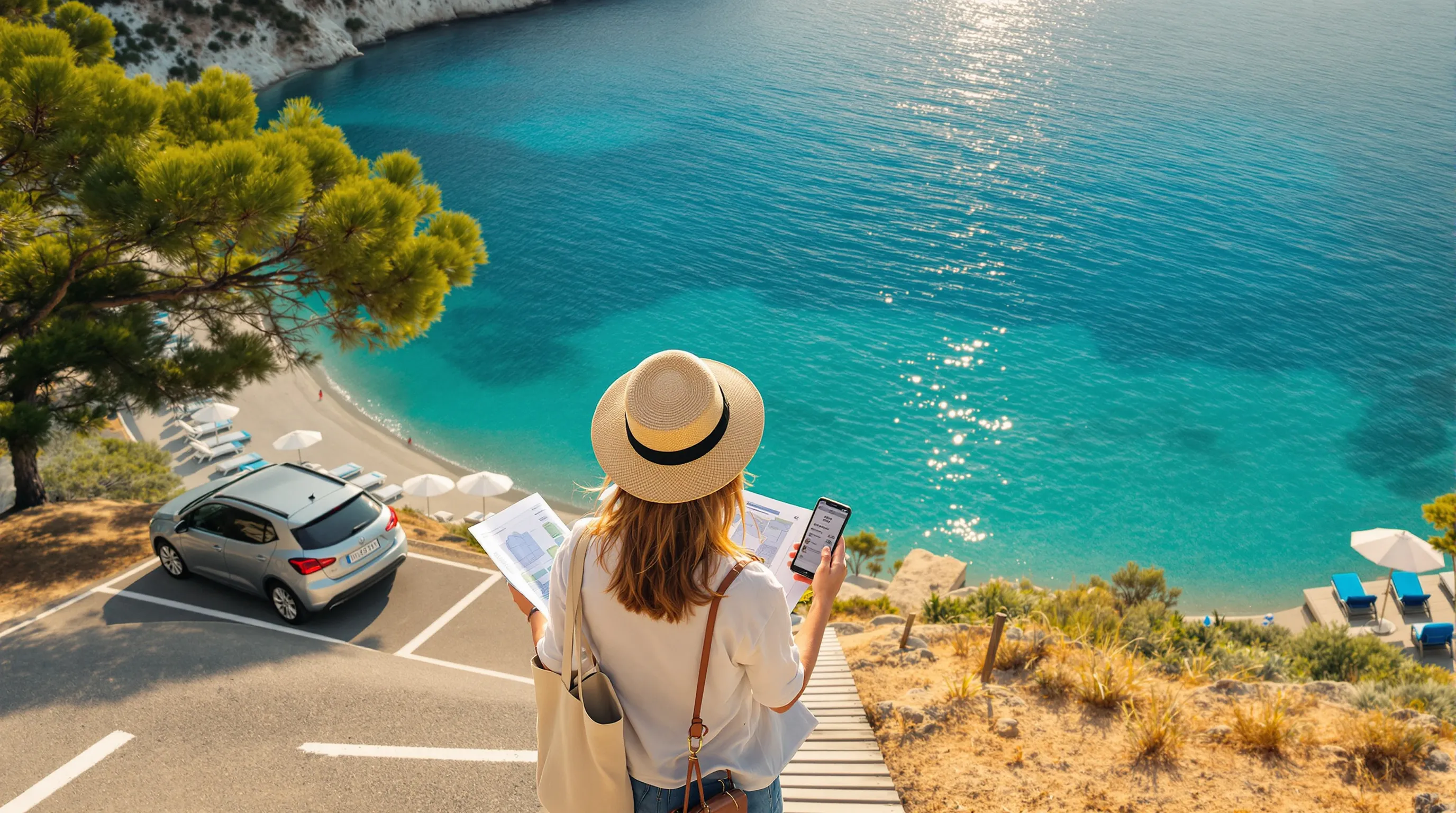
Islands like Naxos and Paros feel tailor-made for sandy, lazy days, compact, charming, and ferry-linked to neighbors for easy beach-hopping. The trade-off? You’re at the mercy of ferry schedules and the seasonal Meltemi winds. The mainland (think Sithonia in Halkidiki or the Peloponnese) wins on road-trip freedom, often fewer crowds, and lower prices. We’ve had blissfully empty mornings on Toroni and Voidokilia in June, then capped the day with taverna sunsets without worrying about last ferries.
Crowd Levels, Vibe, And Accessibility
Ask yourself: do we want wild and photogenic, or social and serviced? Balos Lagoon in Crete is gasp-worthy but popular: Lindos and Tsambika in Rhodes buzz with beach clubs and village energy. Pine-backed Koukounaries in Skiathos splits the difference, soft sand, calm water, and just enough facilities. Accessibility varies: some beaches require a short hike or dirt road (Simos, Balos), while others are roll-up-and-swim easy (Agios Prokopios, Golden Beach). If mobility is a concern, pick spots with paved parking and organized areas.
Best Time To Go (And Why It Matters)
May–June and September–October are the shoulder-season sweet spots: warm seas (especially late summer), softer prices, and mellow crowds. July–August brings peak heat, stronger Meltemi winds in the Cyclades, and higher rates. If we’re set on August, we book early, aim for larger islands (Crete, Rhodes, Corfu) with flight access, and plan wind-sheltered beaches on the leeward sides.
Best For Easygoing Island Days
Agios Prokopios And Plaka, Naxos
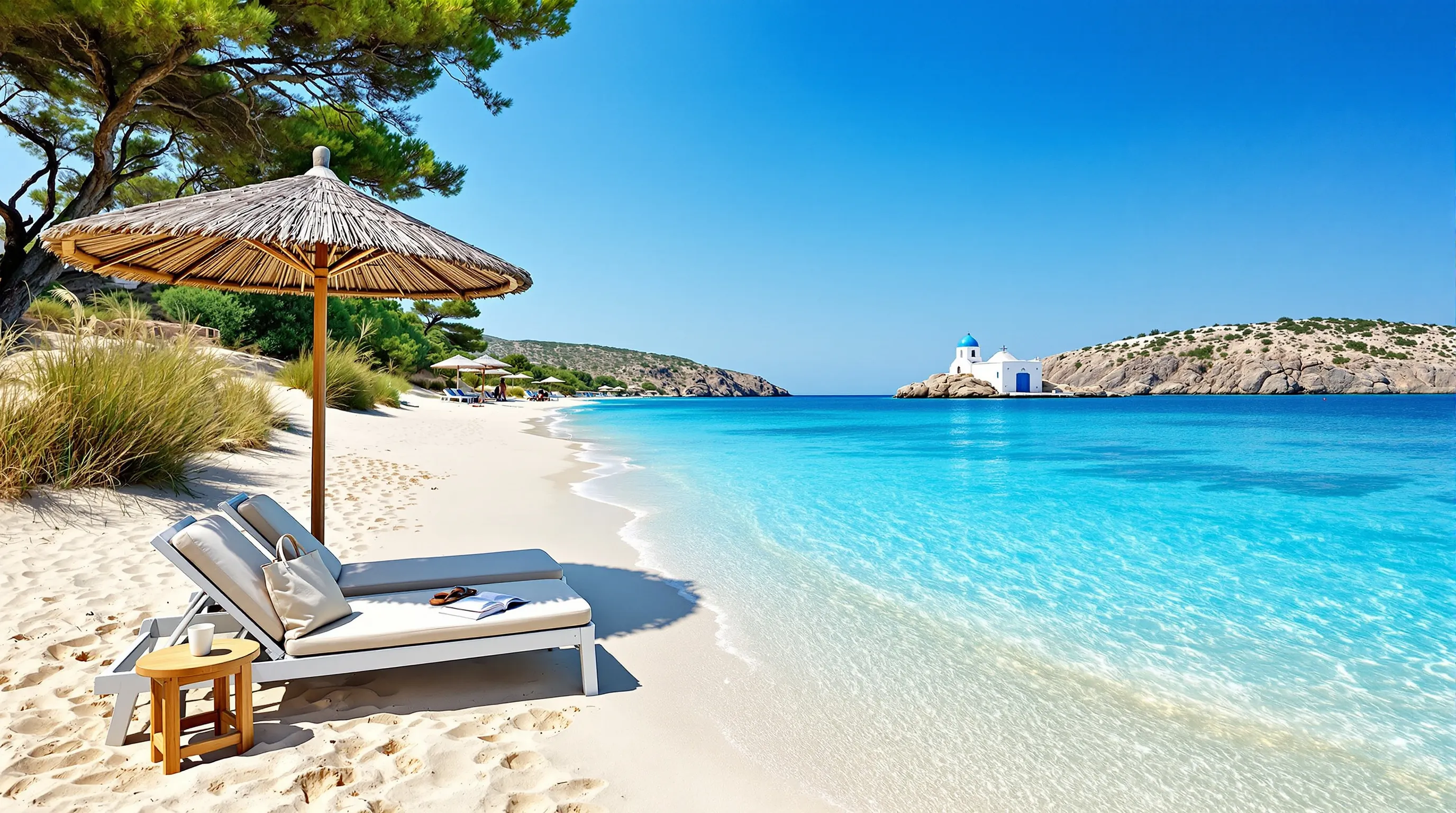
These two beaches feel like a living postcard, powdery sand, shallow turquoise water, and a low-key vibe. Agios Prokopios is more organized, with sunbeds (~€10–18/day for two plus umbrella in shoulder season) and cafés. Plaka stretches wilder, with dunes and plenty of towel space between simple beach bars. Stay in Agios Prokopios or Agia Anna for walkability and bus links to Naxos Town. Go early if the wind picks up: mornings are glassy.
Golden Beach (Chrissi Akti), Paros
Long, wide, and made for easy days. Families love the gentle entry: kitesurfers love the breezes. We like to base nearby in Dryos or Piso Livadi for small-harbor evenings. Expect organized sections, showers, and a couple of chill tavernas. If the Meltemi is howling, hop around to sheltered Piso Livadi or Kolymbithres on the north side.
Koukounaries, Skiathos (Sporades)
A crescent of golden sand framed by pines that smell like summer. The water is generally calm, perfect for long, lazy swims. Facilities are excellent, snack bars, loungers, even water sports, and there’s a lagoon nature reserve behind the beach for a leg-stretch. We bus in from Skiathos Town (frequent, cheap) to skip parking stress.
Best Wild And Photogenic Sands
Elafonissi And Balos Lagoon, Crete
Crete spoils us with two of the most photogenic beaches on earth. Elafonissi glows pink-white at the shoreline, with shallow lagoons that warm quickly by late spring. Balos is a swirl of blues and sandbars: you’ll either hike down (and up) or take a boat from Kissamos. Both get busy, arrive before 10 a.m. or after 4 p.m. Pack water, a hat, and reef-safe sunscreen: dunes and flora here are fragile.
Voidokilia, Peloponnese
A perfect omega-shaped curve linked to Homeric lore. No facilities, just dunes, a salt lagoon behind, and clear water that turns pale jade by midday. We bring a picnic and shade, then hike up to the old castle for panoramic photos. Nearby Gialova has mellow cafés and a few boutique stays: prices stay friendlier than the islands in summer.
Simos, Elafonisos
Two twin bays of unbelievably fine sand, separated by a spine of dunes. When the wind is calm, the water is a giant natural pool: when it’s up, expect dancing whitecaps and kite-surfers. Facilities are limited (seasonal umbrellas and a couple of canteens), so treat it like a day trip with supplies. The drive plus short ferry from the Peloponnese keeps numbers down compared to bigger-name beaches.
Falassarna, Crete
Wide, cinematic, and west-facing, translation: show-stopping sunsets. It’s more open-ocean than a lagoon, so expect a playful shore break some days and milder swimming on others. Several organized sections mix with long stretches of free sand: parking fills for sunset, so arrive with time to spare and wander to the quieter northern ends.
Best For Remote Workers And Longer Stays
Glyfada, Corfu
A proper sandy arc with dramatic green hills behind it. The village has a handful of hotels and cafés, and you’re 20–25 minutes from Corfu Town’s co-working spots and reliable fiber. We split days between morning deep work (espresso at the balcony) and late-afternoon swims. Nearby Paleokastritsa adds snorkeling coves, bring water shoes for rocky entries there.
Agia Marina And Platanias, Crete (Near Chania)
If you want a base with everything, supermarkets, bakeries, bus to Chania‘s Old Town, this strip works. The beach is sandy with organized sections and plenty of laptop-friendly cafés one street back. Internet is generally solid: many apartments include 100 Mbps+ lines now. On weekends, rent a car for Balos, Falassarna, or Elafonissi adventures.
Tsambika And Lindos Area, Rhodes
Tsambika is a deep swath of sand with a simple, sunny vibe. Down the coast, the Lindos area blends soft-sand beaches with a whitewashed village and ancient acropolis views. For remote work, stay just outside the old village for quieter nights and better parking. Surf spots are limited, but early mornings are glassy for long swims.
How To Get There, Budget, And Timing
Ferries Versus Flights
Flights to major islands (Crete, Rhodes, Corfu, Santorini, Mykonos) are fastest, especially if we’re short on time. Ferries make sense for Cyclades hopping, scenic, flexible, and fun, though schedules are seasonal and winds can cause delays. Tip: Book high-speed catamarans for time savings, but know they’re pricier and less roomy than conventional ferries.
Shoulder-Season Sweet Spots
Late May–June and September–early October mean 20–30% savings on stays, easier restaurant reservations, and water warm enough for long swims (especially in fall). If we’re budget-focused, we target June or late September for the best balance of price and weather.
Car Rentals, Local Buses, And Scooters
On Crete and the Peloponnese, a car unlocks the best beaches. Daily rates in shoulder season hover around €25–45 for compact manuals: automatic cars can be €10–15 more. On smaller islands, buses are cheap (€1.80–€3.00 per ride) but infrequent: scooters/ATVs fill the gaps for €20–40/day, always wear a helmet and check insurance. Parking at major beaches is usually free but fills fast.
Budget Tips And Hidden Fees To Watch
- Sunbeds: Expect €10–20/day for two beds plus an umbrella: some spots credit part of that toward drinks.
- Ferry extras: Seat class, fuel surcharges, and luggage can add up: compare total cost before booking.
- Self-cater: A beach picnic from the local market keeps lunch under €8/person. Dinner at a taverna runs €12–18 for mains.
- Cash: Small beach kiosks may be cash-only: ATMs can be sparse near wild beaches.
Beach Etiquette, Safety, And Sustainability
Leave No Trace On Dunes And Turtle Habitats
Dunes are living barriers, stick to paths, don’t pitch umbrellas in delicate grasses, and pack out everything. In known nesting zones (like parts of Zakynthos and Peloponnese), avoid roped-off sections and keep lights low at night. We skip plastic bags and bring a reusable trash sack, just in case bins overflow.
Sun, Wind, And Meltemi Safety
UV in Greece is no joke. A wide-brim hat, UPF shirt, and reef-safe sunscreen reap big dividends. The Meltemi blows hardest June–August in the Cyclades: if whitecaps rise, swim parallel to the shore and choose lifeguarded, organized beaches. Families and new swimmers do best in mornings before wind and chop pick up.
Respect For Local Spaces, Sound, And Dress
Greece is chill, but villages remain lived-in spaces. Keep music low, cover up when leaving the beach, and park considerately, don’t block farm tracks or olive grove entrances. If a church is nearby, dress modestly and be mindful during services. A little Greek, kalimera, efcharistó, goes a long way.
Conclusion
We come to the best sandy beaches in Greece for that simple ritual: wade, float, breathe, repeat. Whether it’s the Cycladic ease of Naxos and Paros, the wild drama of Crete and Elafonisos, or the long-stay comfort of Corfu and Rhodes, there’s a stretch of sand with our names on it, ideally in shoulder season, with a bakery and a sunset nearby.
Key Takeaways / Travel Tips
- Go shoulder season for warm water, space to spread out, and better rates.
- Match vibe to base: Cyclades for island-hopping, Peloponnese/Sithonia for road-trip freedom.
- Book a car for Crete and the mainland: use buses or scooters on smaller islands.
- Budget smart: watch sunbed and ferry fees: self-cater lunches.
- Tread lightly: protect dunes, use reef-safe sunscreen, and respect local rhythms.
Next step? Pick one beach that pulls at you, then plan two more within day-trip range. That’s how great Greek beach weeks happen, one soft-sand morning at a time.