
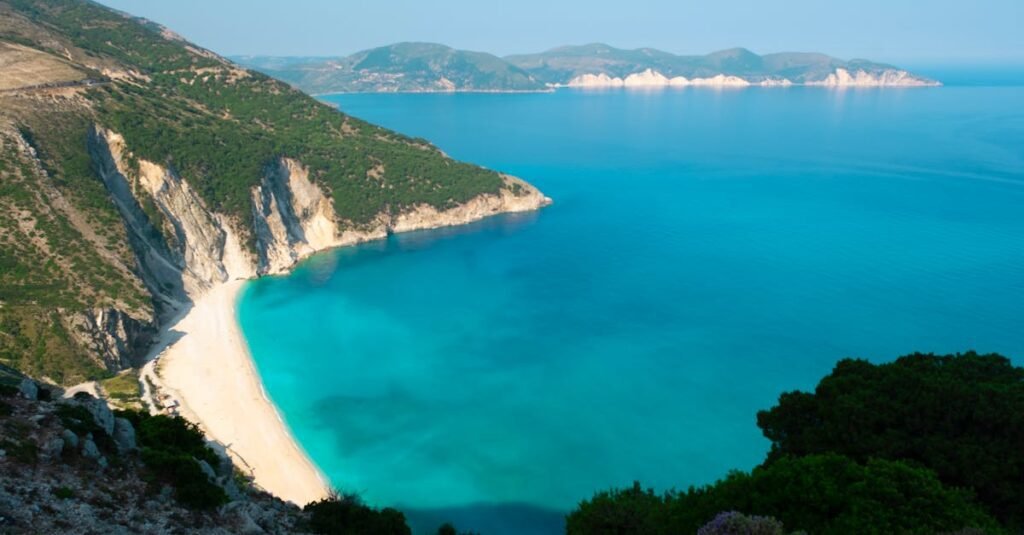
You leave the paved road behind and the scent of wild thyme takes over. The trail dips toward a slice of electric-blue water, a cove you can’t see from the highway or a glossy brochure.
Greece’s hidden beaches aren’t secrets, exactly, they’re small acts of effort: a 20-minute scramble, a boat taxi, a dirt road that tests your rental’s suspension. Put in a little work and you’re rewarded with crystalline water, quiet coves, and those long, lazy swims you’ll replay in your head all winter.
This guide helps you pick the right secret cove for your vibe, then shows you how to reach it, where to base yourself, and what to bring so you don’t get stranded without water or shade. You’ll find both story and strategy, because hidden beaches in Greece are best enjoyed when you’re prepared to do nothing at all.
How To Choose Your Hidden Beach In Greece
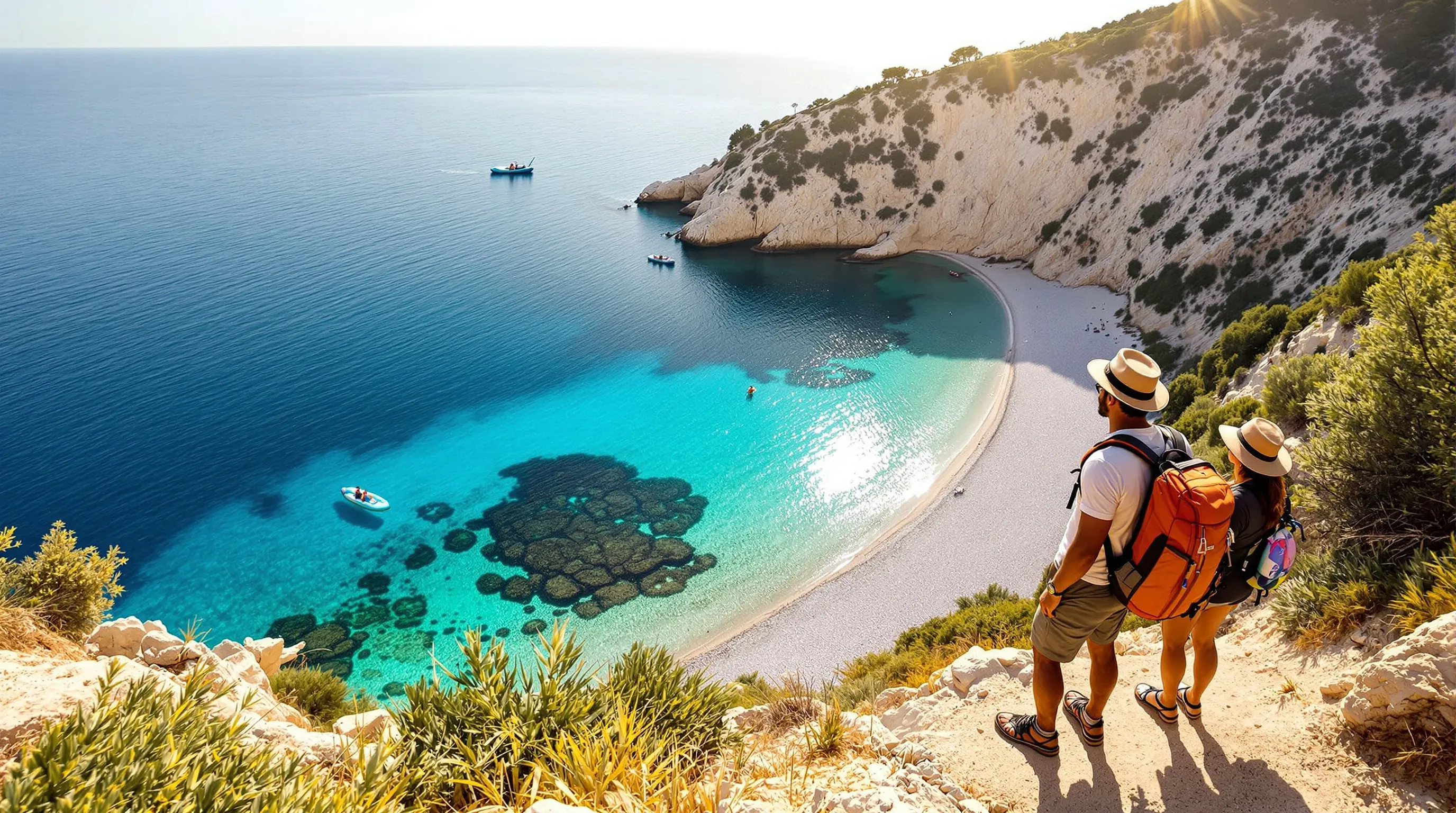
If you’re chasing seclusion, start by choosing the right island and the right access.
- Access and effort: Some gems are hike-in only (Porto Timoni, Voidokilia), others are boat or foot (Glyka Nera), and a few are a sandy descent from a dirt lot (Kedrodasos). Your knees and your footwear matter more than you think.
- Water clarity and bottom type: Pebbles often mean glassy, reef-like visibility (great for snorkeling) but bring water shoes. Fine sand is dreamy for lounging but can stir up if it’s windy.
- Wind and exposure: The meltemi (north winds) can make the Aegean choppy in July–August. South-coast Crete coves are often calmer when the north blows: mornings are generally gentler everywhere.
- Facilities (or lack thereof): Hidden usually means no beach bar or lifeguard. Plan shade, water, and snacks. If you want an easier day, pick a cove within 10–15 minutes of a village.
- Crowd patterns: Even “secret” spots get popular at midday and on weekends. Sunrise and late afternoons are magic: shoulder season is gold.
- Family-friendly options: If you’re traveling with kids, aim for gentle entries like Elafonisi‘s lagoon edges or Simos (Elafonisos). They’re not totally off-grid, but you’ll still find quiet corners away from umbrellas.
Rule of thumb: pick one anchor beach to plan around and give yourself a backup in case of wind. On Crete, base near Chania or the south coast for multiple coves within a 45–90 minute drive.
Five Standout Hidden Beaches To Plan Around
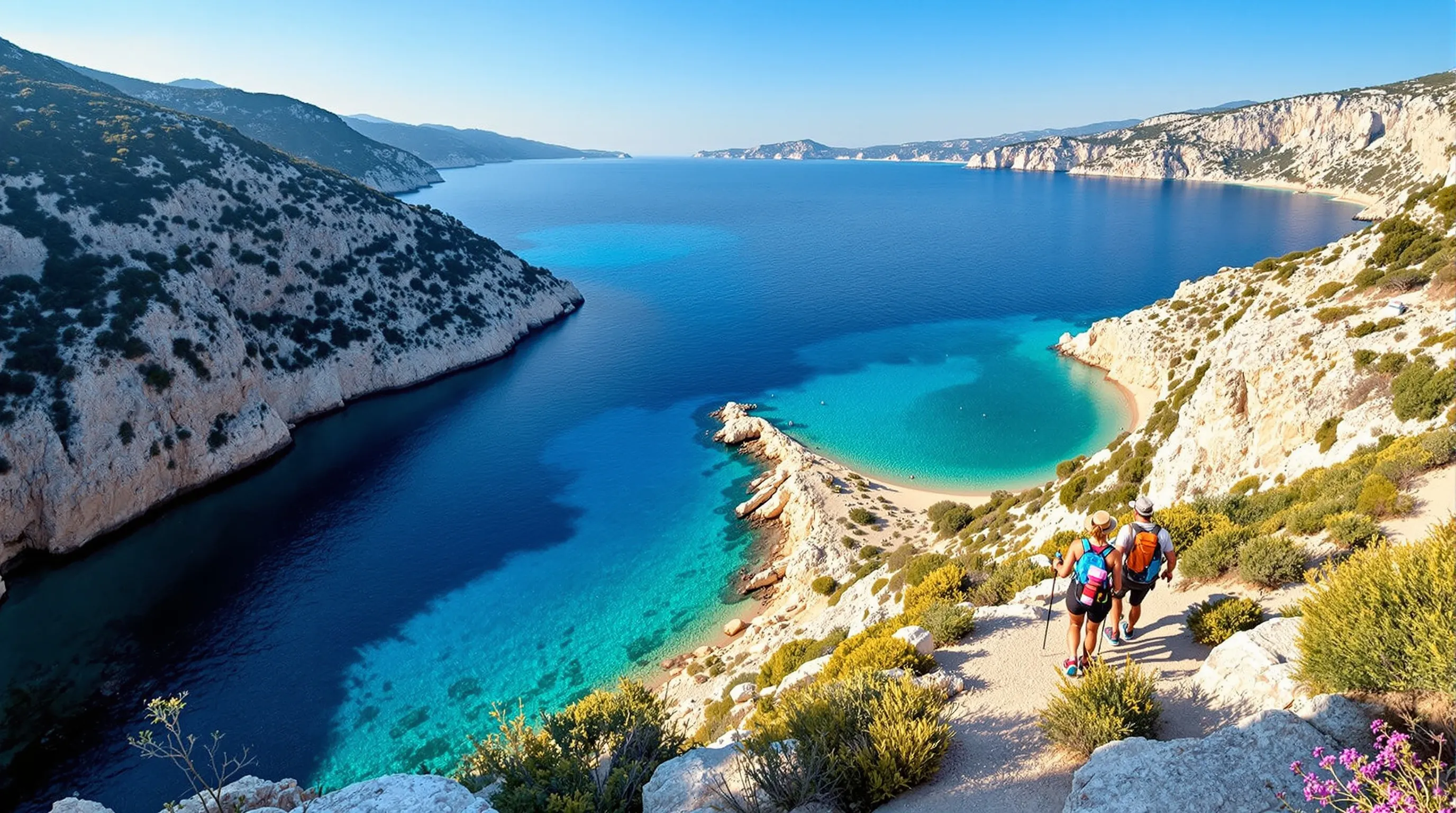
Here are five places where the water looks Photoshopped and your screen time drops to zero.
1) Glyka Nera (Crete), Sweet Water Beach
- Where: South coast, between Chora Sfakion and Loutro.
- Why you’ll love it: A crescent of pale pebbles backed by cliffs, with freshwater springs seeping through the stones (dip your toes and you’ll feel it, cool ribbons under warm sea). It’s naturist-friendly and blissfully car-free.
- Getting there: 60–90 minutes along a coastal path from Chora Sfakion or Loutro, or take a boat taxi from the Sfakia harbor (about €10–€15 one way: cash). In light swell, rides are smooth: in strong winds, hikes are safer.
- Good to know: Shade is minimal. Bring a hat, 2 liters of water per person, and reef-safe sunscreen. Pebble bottom, water shoes help.
2) Kedrodasos (Crete), Juniper Dunes
- Where: A short drive from Elafonisi: final approach on a dirt road and a 10–15 minute sandy trail.
- Why you’ll love it: Wild, burnished dunes dotted with ancient juniper trees, turquoise patches over pale sand, and pockets of total quiet if you keep walking east. It’s one of Crete’s last low-key dune systems, tread lightly.
- Getting there: Park in the informal lot (no facilities) and follow the path down. Google Maps gets you close: offline maps make it easier. Avoid windy afternoons.
- Good to know: No services, pack in everything. Camping is discouraged to protect the junipers. Occasional naturist areas: be respectful.
3) Voidokilia (Peloponnese), The Perfect Horseshoe
- Where: Near Pylos and the Gialova Lagoon, on the west coast of the Peloponnese.
- Why you’ll love it: A perfect omega-shaped bay of soft sand with calm, shallow water, the kind of place where you float for an hour and forget time. Climb to Paleokastro fort for the overhead postcard view.
- Getting there: Park near the lagoon and walk 10–20 minutes through dunes. Add the 20–30 minute hike up to the fort if you want that classic shot.
- Good to know: Protected area (Natura 2000). No organized facilities on the beach itself: tavernas sit a short drive away.
4) Porto Timoni (Corfu), Twin Blue Bays
- Where: Below the village of Afionas, on Corfu’s northwest coast.
- Why you’ll love it: Two narrow coves back-to-back, each a different shade of blue, choose your side based on wind. The higher you climb on the way down, the more the sea fans out like glass.
- Getting there: Park in Afionas and hike 20–30 minutes down a rocky, sometimes slippery path. Trail runners or sturdy sandals are your friend.
- Good to know: There’s no shade after midday. Bring a lightweight umbrella or a sarong and trekking poles if you’ve got cranky knees.
5) Foki (Kefalonia), Olive Trees and Sea Caves
- Where: A short hop from Fiskardo, in the island’s north.
- Why you’ll love it: A silent pebble pocket framed by olive trees, with caves along the side for easy snorkeling. The water’s gin-clear and usually calm.
- Getting there: Drive and park along the road: a taverna sits just behind the beach for a Greek salad and grilled octopus after your swim.
- Good to know: Great for beginners with masks, watch for sea urchins near the rocks.
Bonus nearby gems to note for your map: Mikro Ammoudi (south Crete, near Plakias), Macherida (Akrotiri Peninsula, near Chania), and Kolokytha (a hidden cove off the Spinalonga peninsula near Elounda).
When To Go And How To Reach Them
Timing matters as much as the pin on your map.
- Best months: May–June and September–October. You get warm water, fewer crowds, easier parking, and gentler winds. July–August has heat, higher prices, and the meltemi, go early in the day.
- Flights vs ferries: Athens to Chania or Heraklion is a 45–55 minute flight (often $50–$140 one way if booked early). Ferries from Piraeus to Crete or the Ionian/Peloponnese region run €35–€80 for deck seats: cabins cost more. Corfu and Kefalonia also have seasonal direct flights from European hubs.
- On-island transport: A compact rental car is the move for hidden beaches. Expect $25–$45/day in shoulder season and $60–$90/day in peak. Manual cars are cheaper: get full insurance for dirt roads. On Crete, KTEL buses reach hubs, but the last mile to trailheads is tricky without a taxi.
- Boat options: For Sweet Water (Glyka Nera), boat taxis from Chora Sfakion run frequently in calm weather. Around Elounda, small boats can drop you near Kolokytha. Always check winds that morning and carry cash.
- Hike times you can bank on: Afionas to Porto Timoni is 20–30 minutes down, 30–40 minutes up. Voidokilia‘s dune walk is gentle at 10–20 minutes. Kedrodasos is 10–15 minutes from the lot. Build in buffer to linger and swim twice.
Pro tip: Save your longest hike-in beach for a day with light winds and an early start. You’ll have the place to yourself until 11 a.m.
Where To Stay, Eat, And Work Nearby
Hidden beach days pair well with a base that feels like a home you’ll remember.
Great bases on Crete
- Chania (Akrotiri side): Close to Macherida and a straight shot to the highway for west/south missions. Boutique stays in the Old Town ($120–$220/night shoulder season) mix Venetian charm with good coffee culture. Beans worth your laptop time: Kross Coffee Works, Monogram.
- Plakias: A laid-back south-coast town within 10–30 minutes of Mikro Ammoudi, Damnoni, and an hour-ish to the Sfakia/Loutro zone for Glyka Nera. Expect $70–$140/night guesthouses, sea-view rooms, and a mellow promenade. Solid Wi‑Fi is common: cowork when you need focus days.
- Elounda/Agios Nikolaos: Good for Kolokytha and boat hops. More resorty, but you can find character stays and quiet coves if you time it right.
Peloponnese and the Ionian
- Near Pylos/Gialova (Voidokilia): Eco-lodges and apartments sit around the lagoon: you’ll wake to birdsong and be 15 minutes from that perfect horseshoe. Budget $80–$160/night.
- Fiskardo, Kefalonia (for Foki): A postcard harbor with pastel houses. Prices climb in August: shoulder season brings $90–$180 rooms, kafeneia for strong coffee, and sunset strolls.
- Afionas/Agios Georgios, Corfu (for Porto Timoni): Family-run studios, cliff views, and tavernas that do grilled sardines right. Decent 4G if the Wi‑Fi wobbles.
Food you’ll crave after a swim
- Order like a local: Horiatiki (Greek salad) with capers in the Peloponnese, dakos and mizithra cheese on Crete, fresh grilled fish priced by the kilo (ask the price per kg first), and amygdalota in the Ionian.
- Beach-adjacent gems: The taverna behind Foki is an easy win. Around Chora Sfakion, try simple spots on the harbor after Glyka Nera. In Chania, wander the market streets for bougatsa and espresso.
Working while you wander
- Wi‑Fi: Most boutique hotels and apartments now deliver 30–100 Mbps. Always message hosts to confirm speeds if you’ve got calls.
- Coworking: Chania and Heraklion have a handful of cowork spots: elsewhere, you’ll rely on cafes and your hotspot. Greek SIMs with generous data plans cost ~€15–€20 for 10–20GB.
- Rhythm: Stack deep work in the morning shade, swim at noon, and finish light tasks at golden hour. Greece rewards a split shift.
Safety, Access, And Leave-No-Trace Essentials
Hidden beaches are low on services by design, so you’ll bring the essentials and your best behavior.
- Footing and footwear: Trails can be crumbly, especially on limestone. Wear grippy sandals or trail shoes. Trekking poles help on the Porto Timoni descent.
- Sun and hydration: Bring at least 2 liters of water per person, a wide-brim hat, and a lightweight umbrella if there’s no natural shade. Electrolytes aren’t overkill.
- Sea conditions: Check wind apps (Windy, Poseidon) in the morning. If whitecaps are building, boat rides can be canceled or bumpy. Swim within your comfort: currents rise with wind.
- Respect naturist zones: Some coves are clothing-optional. A smile and a wide berth go a long way, no photos.
- Pack in, pack out: No bins means your trash, peels, and cigarette butts go back with you. Don’t camp in juniper groves at Kedrodasos: roots are fragile.
- Parking etiquette: Don’t block farm tracks: leave room for locals and emergency access. If you see a chain or sign, respect it, private land is common.
- Wildlife and reefs: Watch for urchins on rocks: water shoes help. Use reef-safe sunscreen and skip touching seagrass meadows.
If in doubt, choose the safer option: hike instead of boat on windy days, turn back before dark, and keep a headlamp in your daypack just in case.
Conclusion
Hidden beaches in Greece reward curiosity. You trade a paved parking lot for a goat path and, in return, get water so clear your shadow looks like a stingray gliding over sand. Pick one or two coves to anchor your trip, travel in shoulder season if you can, and keep your days spacious. The best moments usually happen after everyone else leaves.
Travel Tips (Quick Hits)
- Best time: May–June, Sept–Oct for soft light, warm seas, and lower prices.
- What to pack: Trail shoes, water shoes, 2L water bottle, lightweight shade, reef-safe sunscreen, dry bag, small first-aid kit, headlamp.
- Getting around: Compact car with full insurance: download offline maps. Boat taxis for Glyka Nera when winds are light.
- Money: Carry cash for boat rides, small tavernas, and remote parking lots.
- Budget: Shoulder-season rooms $70–$160: car rentals $25–$45/day: boat taxi €10–€15 each way.
- Etiquette: Leave no trace, respect naturist zones, and keep music off, let the cicadas have the soundtrack.
One last nudge: set your alarm and reach the trailhead at sunrise. When the first light hits the water at Porto Timoni or the shadows slide off the cliffs at Glyka Nera, you’ll remember exactly why you came.
Meta description: Discover five hidden beaches in Greece, how to choose the right cove, when to go, how to get there, and where to stay, plus safety tips and on-the-ground advice for a crowd-free, crystal-clear swim.