
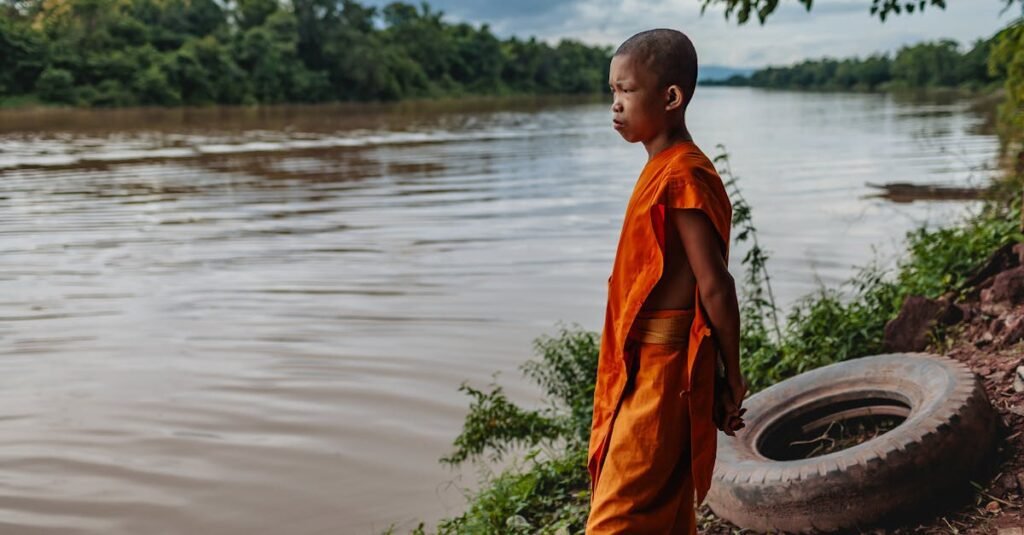
You first notice the quiet.
Even if you’ve already been through Luang Prabang or Vientiane, Pakse feels different. The air is thicker, the streets wider, the pace slower. Tuk-tuks hum lazily past French-era buildings, saffron-robed monks cross the road at sunrise, and the Mekong slides by like it has all the time in the world, because here, it kind of does.
Pakse, Laos isn’t the place people brag about on Instagram. And that’s exactly why you should go. It’s the relaxed gateway to southern Laos: waterfalls, coffee country, ancient temples, and the dreamy 4,000 Islands are all within reach. But it’s also a place where you can check into a simple guesthouse, wander the markets, sip unreal coffee, and remember what unhurried travel feels like.
This guide walks you through how to make the most of Pakse, from when to go, where to stay, and what to do, to a realistic 3–5 day itinerary you can actually follow.
Why Pakse Belongs On Your Laos Itinerary
If you look at a map, Pakse sits right where the Mekong and the Se Don Rivers meet, acting like a little junction box for everything in southern Laos. That location is the reason it should be on your route.
You’ll probably pass through Pakse anyway if you’re:
- Heading to the Bolaven Plateau (waterfalls + coffee plantations)
- Continuing south to Si Phan Don (4,000 Islands) near the Cambodian border
- Visiting the UNESCO-listed Wat Phu temple complex near Champasak
But Pakse is more than just a transit stop. Compared to many provincial towns in Laos, it’s surprisingly livable. You get:
- A good mix of local eateries and Western-friendly cafes
- Banks and ATMs that actually work (most days)
- Decent Wi-Fi and mobile coverage in town
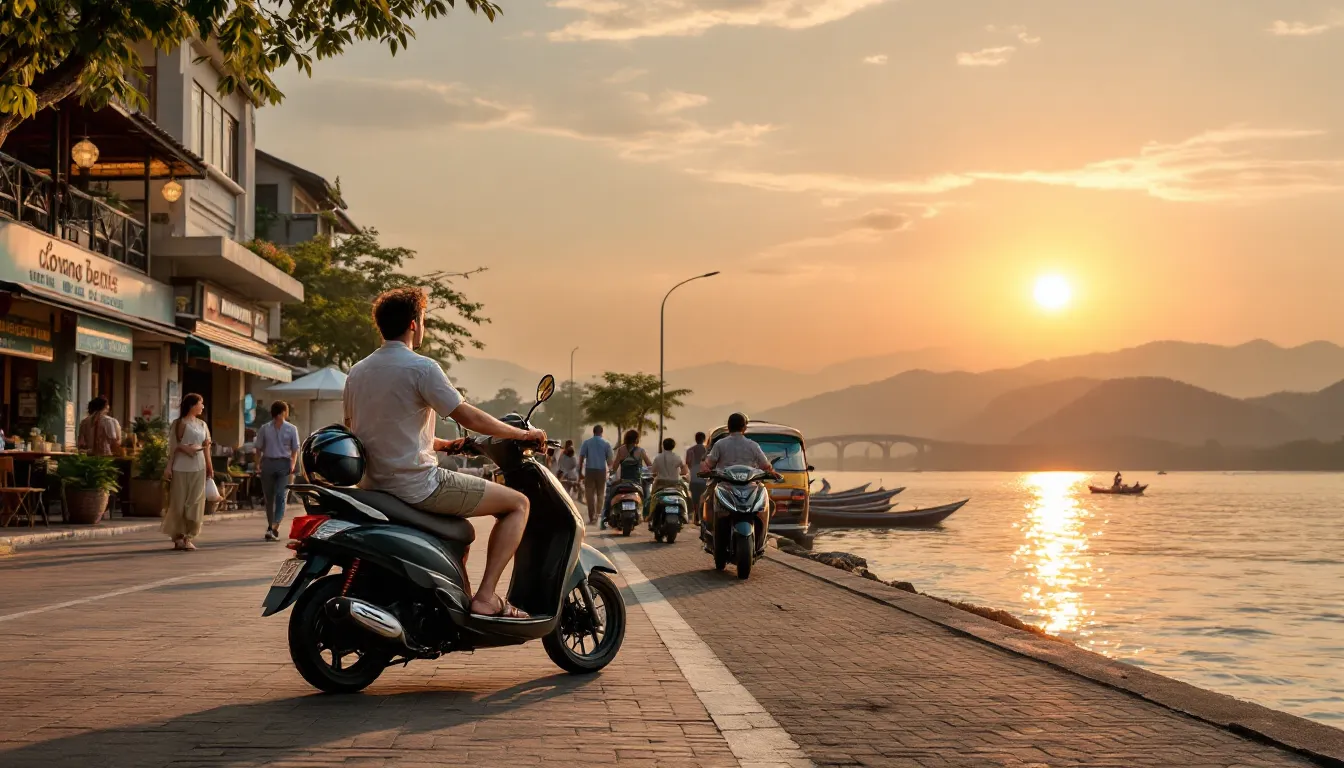
- A walkable riverfront with sunset views over the Mekong
It’s the kind of place where you can base yourself for a few nights, unpack a little, rent a scooter, and do day trips instead of constantly packing up and moving on.
If you’re into slow travel and like seeing how ordinary life unfolds outside the big-name cities, Pakse gives you that, without sacrificing basics like a comfortable bed, good coffee, and easy onward transport.
Best Time To Visit Pakse And How Long To Stay
Southern Laos is warm year-round, but when you go to Pakse will shape your experience a lot.
When to visit Pakse
- December – February (Peak Season):
Clear skies, cooler nights, and more comfortable days (think mid-70s to mid-80s °F / mid-20s to low-30s °C). This is the most popular time, waterfalls are still flowing from the rainy season, but it’s not too hot.
- March – May (Hot, but cheaper):
Temperatures climb and afternoons can be sticky and intense, but you’ll often find lower hotel prices and smaller crowds. If you can handle heat and plan early starts with midday siestas, this can be a sweet spot.
- June – October (Rainy season):
Expect regular showers, lush landscapes, and fewer tourists. Roads on the Bolaven Plateau can get muddy, but the waterfalls are spectacular at this time. If you’re flexible and don’t mind rain, it’s very atmospheric.
How long to stay in Pakse
Think about Pakse less as a single city stop and more as a hub for the entire region.
- 1–2 nights: Enough for a taste of Pakse itself – riverside sunset, a temple or two, a market wander, and one short excursion.
- 3 nights: Ideal minimum if you want a full-day trip to the Bolaven Plateau or the 4,000 Islands.
- 4–5 nights: Best if you’re slow traveling and want to do both Bolaven and Si Phan Don, plus Wat Phu, without rush.
If you’re a remote worker, you could easily spend a week here: do your deep work in the mornings, then schedule a different small adventure each afternoon.
Getting To Pakse And How To Get Around
Even though Pakse feels laid-back, it’s one of southern Laos’ key transit hubs, so getting there is easier than you might expect.
Getting to Pakse
By air:
- Pakse International Airport (PKZ) has intermittent regional flights, often from Vientiane, sometimes from Luang Prabang or neighboring countries depending on season and airlines. Schedules can change, so double-check close to your trip.
By bus / minivan:
- From Vientiane: Long-haul sleeper buses and VIP buses run overnight (roughly 10–12 hours). Good option if you’re on a budget and don’t mind sleeping semi-horizontally.
- From Thakhek or Savannakhet: Day or evening buses connect these Mekong towns to Pakse.
- From Ubon Ratchathani, Thailand: Cross-border connections operate via the Chong Mek–Vang Tao border. Many travelers enter Laos here and end up in Pakse the same day.
Getting around Pakse
Once you’re in town, distances are short, but attractions are spread out in the wider area.
- Tuk-tuks:
Readily available, especially near markets and the bus station. Always agree on the price first: short hops around town might be 20,000–40,000 LAK (a couple of dollars), but it varies.
- Motorbike / scooter rental:
This is the classic way to explore Pakse‘s surroundings.
- Look for well-reviewed places like Miss Noy or B’Trail, or ask your guesthouse.
- Daily rates typically range from 80,000–120,000 LAK (around $4–7 USD+), depending on bike type and season.
- Take photos of the bike before you leave, test the brakes, and always wear a helmet.
- Car / scooter apps and rentals:
Services like Lao Go Car Rental sometimes have scooters and small cars if you prefer more comfort or are traveling as a pair or small group.
- On foot:
The central area around the riverfront, markets, and a few main temples is walkable. Even just wandering the quieter side streets around sunset is a lovely way to feel the town’s slower rhythm.
Where To Stay In Pakse: Neighborhoods And Vibes
Pakse doesn’t have sharply defined neighborhoods like a big city, but it does have distinct pockets of vibe.
Riverfront & city center
If it’s your first time, staying near the Mekong riverfront or main central streets puts you close to:
- Restaurants and cafes
- The main markets
- Temples like Wat Luang
- Sunset spots over the river
You’ll find everything from simple guesthouses to mid-range hotels here.
- Pakse Hotel & Restaurant:
A long-standing favorite with a central location and a rooftop bar. Good if you want comfort, walkability, and an easy home base.
- Champasak Palace Hotel:
Probably the most architecturally striking place in town, a former prince’s residence turned hotel. The building is grand and a bit faded in a romantic way, with views over Pakse from upper floors.
Around the bus station
Budget travelers sometimes opt to stay closer to the bus station for convenience, especially if they’re arriving late or leaving early. It’s less atmospheric but practical. Guesthouses here are often cheaper, with basic but decent rooms.
Guesthouses and smaller stays
If you value connection over hotel polish, look for family-run guesthouses in the central area. You’ll often get:
- Simple but clean rooms with fans or AC
- Hosts who can help you rent scooters, book buses, or organize tours
- A chance to ask questions about local life and get those small, meaningful conversations that don’t make it into guidebooks.
Wherever you stay, check for Wi-Fi quality and proximity to the riverfront if sunsets are high on your list (they should be).
Top Things To Do In And Around Pakse
You can treat Pakse itself as a slow, walkable town and then branch out to nature, temples, and islands on day trips. Here’s how to structure your time.
Exploring The Bolaven Plateau From Pakse
The Bolaven Plateau is one of the highlights of southern Laos, a highland area east of Pakse, dotted with waterfalls, villages, and coffee plantations.
From town, you can:
- Rent a scooter and do a one-day mini-loop to key waterfalls
- Join an organized day tour if you’re not comfortable riding
- Or, if you have more time, do a 2–3 day loop staying in guesthouses along the way
Popular waterfalls within day-trip distance include:
- Tad Yuang: A dramatic, multi-level waterfall surrounded by jungle, with stairs leading down to viewpoints. There’s usually a small entrance fee.
- Tad E Tu: Smaller and more tucked away, with a relaxed, wild feel.
Along the way, stop at a local coffee farm to see how beans from the Bolaven Plateau become those rich, chocolatey cups you’ll see all over Laos. Coffee culture here is strong, literally and figuratively.
Give yourself a full day: leave Pakse in the morning, linger at a couple of waterfalls, break for a long lunch and coffee, then head back before dark.
Day Trips To Si Phan Don (The 4,000 Islands)
Si Phan Don, the 4,000 Islands, is where the Mekong spreads out into a broad, dreamy archipelago near the Cambodian border.
From Pakse, you can:
- Take a minivan or bus a few hours south to a boat landing, then hop a small boat to islands like Don Det or Don Khon.
- Arrange a longer day trip through a local agency, though many travelers prefer to stay overnight on the islands.
Once there, you can:
- Rent a bicycle and ride across Don Khon‘s old French railway bridge
- Look for rare Irrawaddy dolphins (sightings aren’t guaranteed, but the boat ride is beautiful)
- Swing in a hammock, sip a cold Beerlao, and watch the Mekong move lazily past
If you love river life and don’t mind simple accommodation, consider turning this from a day trip into 1–2 nights. But if you’re short on time, basing yourself in Pakse and doing a single long day is still possible.
Temples, Viewpoints, And The Mekong Riverfront
You don’t have to go far to feel like you’re somewhere special. Pakse‘s own sights are understated but memorable.
- Wat Luang: One of Pakse‘s most important temples, right in town. Go early in the morning to see locals giving alms or quietly lighting incense.
- Wat Phou Salao (Golden Buddha): This hilltop temple across the river has a large golden Buddha and sweeping panoramic views over Pakse, the Mekong, and the surrounding countryside. Go for sunset, the climb (or ride) up is worth it.
- Sacred Heart Cathedral: A simple but distinctive Catholic church, a reminder of the region’s French influence.
- Champasak Historical Heritage Museum: Small and low-key, but a good stop if you’re curious about local history, traditional textiles, and artifacts.
In the late afternoon, take a stroll along the Mekong riverfront. It’s not overly developed, but that’s part of the charm: kids playing, fishermen working, couples sitting along the embankment, the sky turning deep orange and purple.
Markets, Street Food, And Coffee Culture In Pakse
If you want to understand Pakse, go to the market.
- Talat Dao Heuang (Daoheuang Market): A huge, energetic market where you’ll find everything from fresh produce and herbs to textiles, gold shops, and street food stalls. Go early when it’s at its liveliest.
Look for:
- Lao-style grilled meats and sticky rice
- Bowls of noodle soup (khao piak or pho-like broths)
- Fresh fruit shakes
Prices are usually very reasonable: you can easily eat a filling meal for 20,000–40,000 LAK.
Pakse is also one of the best places in Laos to deepen your coffee habit, thanks to the nearby Bolaven Plateau. In town you’ll find:
- Simple local coffee shops serving strong Lao coffee with condensed milk
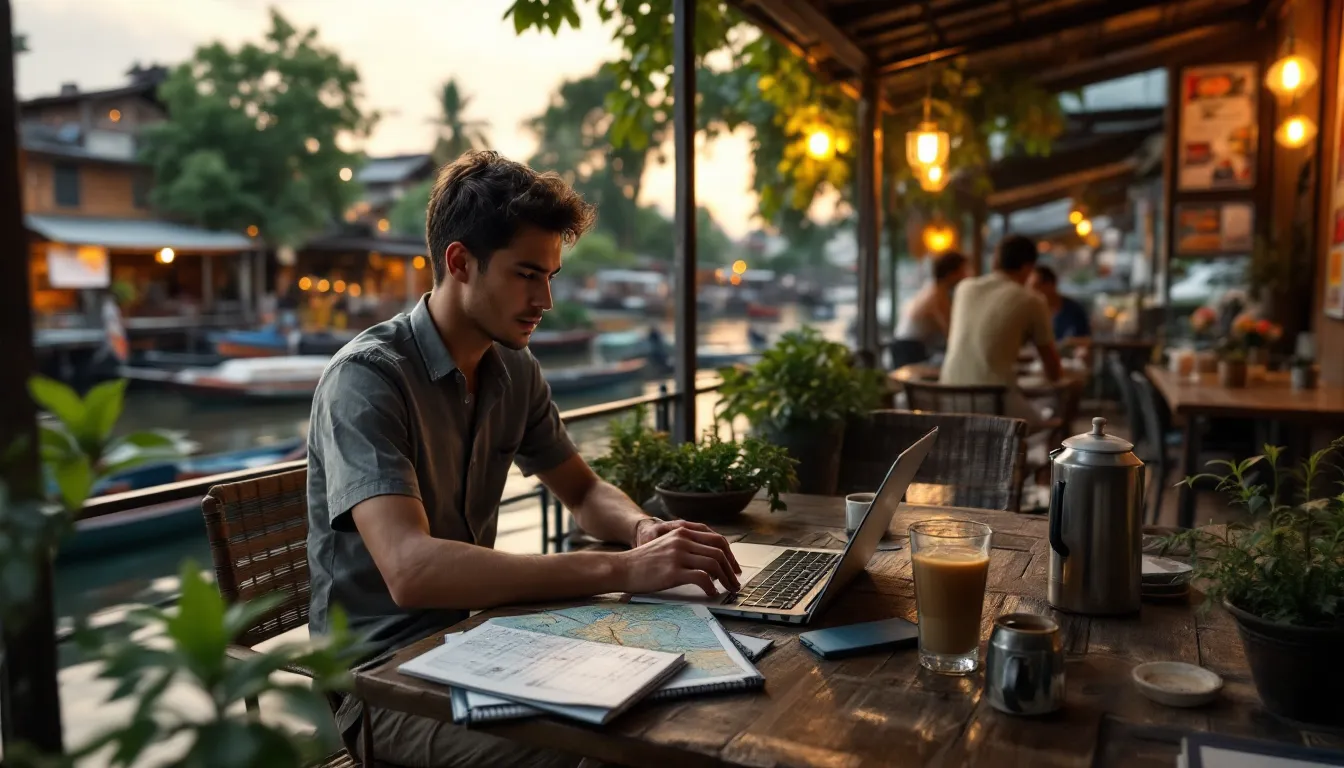
- A growing number of more modern cafes where you can get an espresso, cappuccino, or cold brew and log a couple hours of laptop time
If you’re used to third-wave coffee in places like Seattle or Austin, it’s fun to see how that culture is slowly weaving into a small Lao city built on coffee-growing soil.
Remote Work, Connectivity, And Slow Travel Essentials
If you’re carrying a laptop and chasing a balance between work and exploration, Pakse quietly delivers.
Wi-Fi and connectivity
- Most mid-range hotels and cafes in central Pakse have usable Wi-Fi.
- Speeds won’t rival fiber in the U.S., but they’re generally fine for email, writing, and video calls with a bit of planning.
- Grab a local SIM card (Unitel, Lao Telecom, or ETL) in town or at your entry point to Laos: data packages are generally cheap and can be a lifesaver when café Wi-Fi slows down.
Working from Pakse
You won’t find full-blown coworking spaces on every corner, but you don’t really need them. Instead, you get:
- Cafes with AC and decent coffee, where staff are used to travelers lingering
- Hotel lobbies and rooftop bars that are quiet during the day
Plan your day around the heat:
- Mornings: Deep work, writing, calls, focus time
- Early afternoon: Break for lunch and maybe a nap or coffee
- Late afternoon: Explore, temples, riverside walks, or a scooter ride out to a viewpoint
Slow travel mindset in Pakse
Pakse rewards you when you stop trying to maximize every day. Instead of rushing through a checklist, you might:
- Spend one afternoon simply wandering the market and playing with your camera
- Sit at the riverfront for an hour doing nothing but watching boats go by
- Chat with your guesthouse owner about life before tourism picked up
It’s not designed as a digital nomad hotspot, and that’s what makes it a refreshing base for a quieter, more grounded work–travel rhythm.
Money, Safety, And Budget Tips For Pakse
Laos in general, and Pakse in particular, is friendly to your wallet, especially if you’re coming from the U.S.
Typical daily budget
You can shape Pakse to fit different travel styles:
- Budget traveler: $20–$30 USD/day
- Simple guesthouse
- Street food and market meals
- Occasional tuk-tuk or shared transport
- Mid-range comfort: $35–$60 USD/day
- Nicer guesthouse or mid-range hotel
- Mix of local eateries and cafes
- Scooter rental for day trips
- Splashier stay: $60+ USD/day
- Higher-end hotel (by local standards)
- Guided tours, regular restaurant dining, massages, etc.
Currency and payments
- The local currency is the Lao kip (LAK).
- ATMs are available in Pakse, especially near the center and markets.
- Most smaller shops and tuk-tuks are cash-only: keep a mix of small notes.
Safety and scams
Pakse is generally safe and relaxed, even for solo travelers.
- Petty theft can happen anywhere, so use common sense: don’t flash big wads of cash, keep your phone close in markets, lock your room.
- Tuk-tuk drivers may quote tourist prices: just politely negotiate and agree on the fare before you hop in.
- If you’re riding a scooter, the main risk is the road: wear a helmet, avoid driving at night, and go slow on unfamiliar or muddy roads, especially in rainy season.
Overall, Pakse feels like a place where you can exhale a bit, it’s not a high-pressure environment, and locals are usually curious and kind rather than pushy.
Sample 3–5 Day Pakse Itinerary
To help you actually picture your time in Pakse, here’s a flexible 3–5 day itinerary you can adapt.
Day 1: Arrive, Riverfront, And Night Market Vibes
- Check into your guesthouse or hotel and take a breather.
- Do a gentle orientation walk around the center and down to the Mekong riverfront.
- Visit Wat Luang near sunset: listen to the chanting if you catch an evening ceremony.
- Dinner at or near Talat Dao Heuang (Daoheuang Market), sample grilled meats, noodles, and fruit shakes. Let your first night be low-key and sensory.
Day 2: Waterfalls And Coffee On The Bolaven Plateau
- After breakfast, rent a scooter or join a day tour to the Bolaven Plateau.
- Stop at Tad Yuang and Tad E Tu (or another nearby waterfall), swim if conditions allow and respect local signage.
- Have lunch at a small roadside restaurant or at a coffee farm, sipping Bolaven-grown beans.
- Roll back into Pakse before dark, shower off the waterfall mist, and head out for a relaxed dinner in town.
Day 3: Si Phan Don (4,000 Islands) Day Trip Or Overnighter
Option A – Ambitious day trip:
- Early departure by minivan/bus and boat to one of the islands (often Don Det or Don Khon).
- Rent a bicycle, cross the old railway bridge, and explore.
- Take a boat trip in search of Irrawaddy dolphins.
- Head back to Pakse in the late afternoon or early evening.
Option B – 1–2 night mini-escape:
- Bring an overnight bag and stay on the islands instead of returning the same day.
- Swap Wi-Fi for hammocks, river sunsets, and simple bungalows before looping back to Pakse.
Day 4: History, Viewpoints, And Coffee Time
- Sleep in a bit after your island or waterfall day.
- Visit the Champasak Historical Heritage Museum to get a feel for local culture and history.
- In the afternoon, head up to Wat Phou Salao (Golden Buddha) for sunset views over the Mekong and the city.
- On your way or afterwards, linger in a cafe with a strong Lao coffee, jotting down reflections or catching up on work.
Day 5: Wat Phu Champasak And Departure
If you have a fifth day and an extra bit of energy:
- Take a trip out to Wat Phu Champasak, the ancient Khmer temple complex that predates Angkor Wat. It’s about an hour or so from Pakse, often combined with a short boat or ferry crossing.
- Climb the stone steps, wander through the ruins, and let the weight of history sink in.
- Return to Pakse, grab a final market meal or coffee, and then make your way to the bus station or airport for your onward journey.
You can compress this into 3 days by dropping Si Phan Don or Wat Phu, or stretch it into a slow 6–7 day stay with more buffer and rest days. The key is not to try to do everything in a rush, southern Laos just doesn’t work that way.