
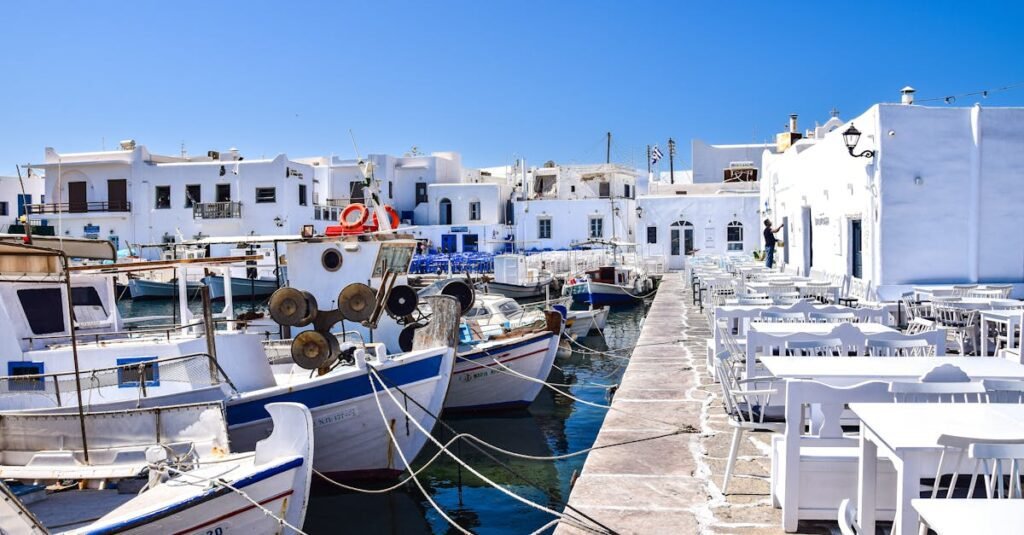
You first notice it as the ferry pulls into the harbor: that soft Cycladic light on white cube houses, fishing boats bobbing in the water, a little church perched on the edge of the sea.
Paros doesn’t come at you with the drama of Santorini or the gloss of Mykonos. Instead, it feels like somewhere you could actually live for a while.
If you’re the kind of traveler who loves a beautiful beach but also wants quiet backstreets, good food, and a sense of real local life, Paros Greek island life hits a sweet spot. It’s chic without being showy, lively without being overwhelming, and still (for now) more affordable than its celebrity neighbors.
This guide walks you through when to go, where to stay, what to do, and how to treat Paros as more than just another stop on a Cyclades island-hopping checklist.
Why Paros Belongs On Your Greece Shortlist
Paros sits roughly in the center of the Cyclades, and that position sums it up well: it’s a balanced island.
You get:
- Beaches ranging from wild coves to buzzy beach clubs.
- Villages with marble-paved alleys, tiny squares, and old men playing backgammon.
- Nightlife that’s fun but doesn’t swallow the island’s soul.
- Outdoor adventures like windsurfing, sailing, and hiking.
Compared to Mykonos and Santorini, Paros tends to be:
- More affordable (especially food, accommodation, and beach days).
- More livable for longer stays and remote work.
- More varied – you can party one night in Naoussa and drink wine in a quiet mountain village the next.
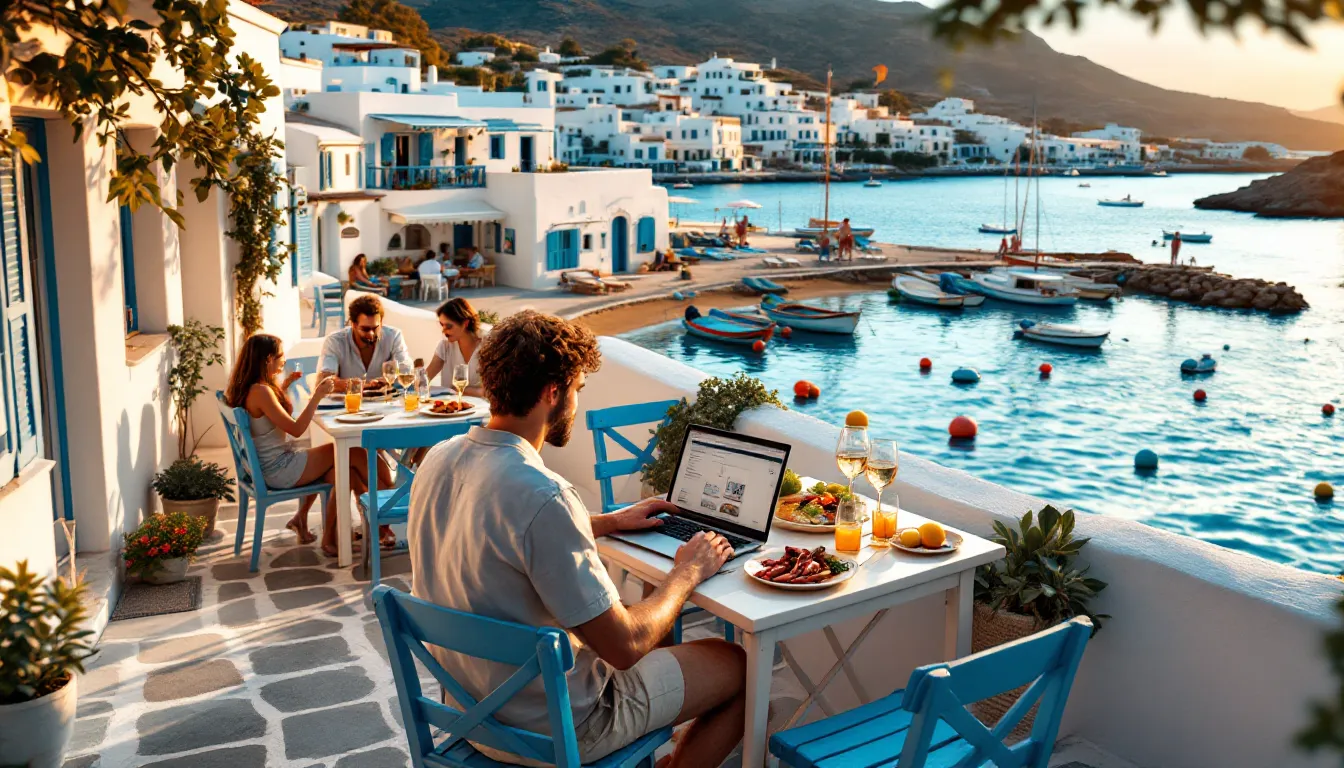
It works whether you’re traveling with friends, your partner, or solo with a laptop in your backpack. You can wake up to a swim before your first Zoom call, hop on a bus to a new beach in the afternoon, then have grilled octopus and local wine at a harbor taverna for dinner.
If you’re building a Greece itinerary, Paros slots in perfectly between more intense stops like Athens or Santorini – a place where you can slow down without feeling like you’re missing out.
Best Time To Visit Paros (And How To Avoid The Crowds)
You probably don’t want your Paros memories to be 90% sun, 10% elbowing through crowds. Timing matters.
Peak season (July–August)
- Weather: Hot, dry, classic Greek summer. Ideal for long beach days.
- Vibe: Busy, buzzy, especially in Naoussa and around popular beaches.
- Downside: Higher prices, more packed ferries and tavernas, harder to find last-minute accommodation.
If you love nightlife and don’t mind crowds, this can still be fun. Just book early and avoid the midday sun.
Shoulder seasons (May–June, September–October)
For most travelers, this is the sweet spot.
- May–June: Warm but not scorching, wildflowers still around in early May, sea warming up by June.
- September–early October: Sea is at its warmest, days still sunny, nights a bit cooler, crowds thinning.
You’ll find:
- Better prices on rooms and rentals.
- Easier restaurant reservations.
- A slower, more local pace that fits the whole slow travel vibe.
Winter and off-season (November–April)
- Pros: Ultra-quiet, very local, cheaper long-term stays.
- Cons: Some beach bars, hotels, and restaurants close. Weather is mild but can be windy and rainy.
If you’re after pure digital nomad hibernation with walks, writing, and simple local food, it can work – just don’t come expecting peak-island energy.
Where To Stay On Paros: Best Areas For Different Travel Styles
Your experience on Paros changes a lot depending on where you base yourself. The island isn’t huge, but picking the right “home” will save you time, money, and stress.
Parikia: Central Hub For First-Time Visitors
Parikia is the main port and one of the best bases if it’s your first time on the island.
Why you’ll like it:
- You can literally walk off the ferry to your hotel or guesthouse.
- There’s a charming old town with narrow alleys, bougainvillea, and little shops.
- The long Livadia Beach is walkable, so no car needed for daily swims.
- Buses to Naoussa, Lefkes, and major beaches leave from here.
Parikia is ideal if you:
- Want a no-car or mostly-bus trip.
- Like having plenty of dining options and supermarkets nearby.
- Are arriving late or leaving early by ferry.
Naoussa: Chic Harbor Town With Nightlife And Dining
Naoussa is the island’s pretty, polished harbor town. Think whitewashed alleys, stylish boutiques, and fishing boats tied up next to cocktail bars.
What to expect:
- Trendy restaurants and wine bars around the old port.
- Easy boat access to nearby beaches like Kolymbithres and Monastiri.
- Nightlife that goes late, especially in July and August.
Naoussa is great if you:
- Want a bit of Mykonos energy without Mykonos prices.
- Enjoy dressing up for dinner and bar-hopping.
- Don’t mind staying somewhere livelier and slightly pricier.
Lefkes And The Interior Villages: Quiet, Local, And Scenic
If you picture yourself sipping coffee in a stone-paved square while roosters crow in the distance, head inland.
Lefkes, once the island’s capital, sits in the hills surrounded by olive groves.
You’ll find:
- Neoclassical buildings, traditional houses, and big sky views.
- The start of the Byzantine Road, a stone path that leads down to Prodromos.
- Cooler evenings in summer and a slower pace.
Staying in Lefkes or another interior village suits you if you:
- Crave quiet and authenticity.
- Don’t mind renting a car or scooter.
- Want more of a long-stay, “live like a local“ atmosphere.
Beach Areas: Golden Beach, Piso Livadi, And Beyond
If you’re a “wake up, walk to the sand“ person, base yourself near the coast.
- Golden Beach (Chrissi Akti): Famous for windsurfing and kitesurfing. Breezier, with a sporty vibe and some beach bars.
- Piso Livadi: A small harbor village with family-run tavernas right by the sea. Great if you want calm, swimmable water and relaxed evenings.
- Santa Maria: Close to Naoussa, with beach clubs and loungers – good for day trips or if you want a lazy beach-focused base.
These areas work well if you:
- Plan to spend most days on the water or in the sand.
- Are traveling with kids and want easy beach access.
- Have a car or are happy to use the bus network for evening trips into Parikia or Naoussa.
Getting To Paros And Getting Around The Island
There’s no direct international airport on Paros, which is exactly why it still feels a bit more relaxed.
Getting to Paros
From Athens (Piraeus or Rafina):
- High-speed ferries: about 3–4 hours.
- Regular ferries: about 4–4.5 hours, usually cheaper.
You can also reach Paros by ferry from other Cyclades islands like Mykonos, Naxos, or Santorini, making it easy to fold into an island-hopping route.
There is a small domestic airport with flights from Athens, but most international travelers still find the ferry the easiest option.
Getting around Paros
You’ve got three main choices:
- Bus: In summer, buses run reliably between Parikia, Naoussa, Lefkes, Piso Livadi, and major beaches. It’s cheap and works well if you’re patient with timetables.
- Car rental: Best for flexibility. Ideal if you’re exploring inland villages, hidden coves, or traveling in a group.
- ATV/scooter: Fun, but only if you’re comfortable riding and aware of the wind and traffic.
If you’re staying more than a few days, consider at least one or two days of car rental to reach the more remote corners of the island.
Top Things To Do On Paros Beyond Just Beach Time
You’ll probably come for the beaches – and stay for everything else.
Swim, Sun, And Explore: Best Beaches On Paros
A few standout spots:
- Kolymbithres: Surreal granite rock formations and shallow turquoise water. You can climb over the rocks to find quieter pockets even on busy days.
- Monastiri Beach: Calm bay near Paros Park with loungers, a beach bar, and hiking trails starting right behind you.
- Golden Beach: Long, sandy, and windy – a windsurfing hotspot with rental schools.
- Kalogeros Beach: Known for its natural clay cliffs. People mix the clay with seawater, slather it on like a spa treatment, and rinse off in the sea.
- Livadia (Parikia): Super convenient if you’re staying in town and just want an easy swim.
Wander The Villages: Lefkes, Marpissa, And Prodromos
Give yourself at least a day away from the coastline.
- Lefkes: Start your walk at the main square, wander down the alleys, and stop for Greek coffee or a cold beer with a view over the valley.
- Byzantine Road: A stone path connecting Lefkes to Prodromos. The hike takes about an hour, passing olive trees and dry-stone walls.
- Marpissa: A hilltop village with old windmills, churches, and quiet corners where you can sit and just listen to the wind.
This is where you’ll feel the soul of Paros Greek island life most strongly – laundry flapping on balconies, kids biking through alleys, and zero pressure to be anywhere else.
Sailing, Day Trips, And Island-Hopping From Paros
One of the best ways to understand the Cyclades is from the water.
- Join a catamaran or sailboat day trip that loops around Paros and nearby Antiparos or Despotiko. Expect stops at blue lagoons, sea caves, and swim spots you’d never reach on foot.
- Hop over to Antiparos for a day – wander its small Chora, visit the famous Antiparos Cave, and swim at one of the quieter beaches.
If you’re planning a longer trip, Paros also connects easily with Naxos, Mykonos, and smaller islands, so it’s a practical base for a few days of island-hopping.
Food, Wine, And Nightlife: Eating And Going Out On Paros
You won’t go hungry here. Paros‘s food scene leans fresh, local, and unfussy – with just enough modern twists to keep it interesting.
Tavernas, Bakeries, And Local Dishes To Try
A few flavors to look out for:
- Grilled octopus and fresh fish at tavernas in Piso Livadi or Naoussa‘s harbor.
- Revithada (slow-cooked chickpeas) and fava – simple, comforting Cycladic staples.
- Local cheeses and cured meats paired with Parian wine.
- Spanakopita and other pastries from small bakeries – perfect cheap breakfast or snack.
Don’t overlook the little places on side streets with handwritten menus. That’s often where you’ll find the most memorable meals and friendly conversations.
Sunset Drinks, Beach Bars, And Nightlife Pockets
For drinks and going out:
- Naoussa: Small cocktail bars and wine bars clustered around the harbor and back lanes. It gets lively late, especially in summer.
- Punda & some beach bars: If you’re in the mood for dancing and party vibes.
- Parikia waterfront: More relaxed bars and cafés where you can watch the sunset with a glass of wine or a cold beer.
The nice thing about Paros is that you can go out and have fun, then disappear back to a quieter base the next day if you want a reset.
Practical Tips For Remote Workers And Longer Stays
If you’re eyeing Paros as a place to open your laptop for a week (or a month), you’re not alone. It’s increasingly popular with remote workers who want island life without completely dropping off the grid.
Wi-Fi, Coworking Options, And Good Work Cafés
- Wi-Fi: Generally solid in Parikia and Naoussa, with many hotels and apartments offering decent speeds.
- Mobile data: Grab a local SIM in Athens or Paros for backup hotspotting.
- Work-friendly cafés: Look for spots in Parikia or Naoussa that stay open through the afternoon, with covered outdoor seating and outlets. Many are relaxed about laptops if you order regularly and avoid the lunch rush.
You won’t find a ton of formal coworking spaces yet, but the café culture and decent connections make it workable for most remote jobs.
Costs, Budget Tips, And Choosing The Right Accommodation
Paros isn’t dirt cheap, but it’s more forgiving than Mykonos or Santorini.
Approximate ranges (in high-ish season):
- Budget rooms/guesthouses: from around $60–$90 per night.
- Mid-range hotels/apartments: $100–$180 per night.
- Beach clubs: Expect to pay for loungers (often consumable as credit toward food/drinks).
Money-saving tips:
- Travel in May–June or September–October for lower rates.
- Stay slightly off the waterfront or in a village instead of harborfront.
- Mix taverna dinners with gyros, bakery snacks, and supermarket picnics.
For longer stays, look at weekly or monthly rentals and don’t be afraid to negotiate a bit in shoulder season.
Slow Travel, Sustainability, And Respecting Local Life
Paros is getting more popular every year, and how you travel matters.
A few ways to keep your footprint light:
- Use buses when you can, or car-share with friends instead of renting multiple vehicles.
- Stick to marked trails when hiking and leave no trash – even in remote coves.
- Be mindful with drones and photography in quiet villages and churches.
- Support local-owned tavernas, bakeries, and shops instead of only international chains.
If you’re staying longer, try to learn a few Greek phrases, shop at local markets, and find “your” café or taverna. That’s where the island shifts from destination to temporary home.